
 Resources
Benefits of Teen Meditation: What the Research Shows
Published On 01-11-2026
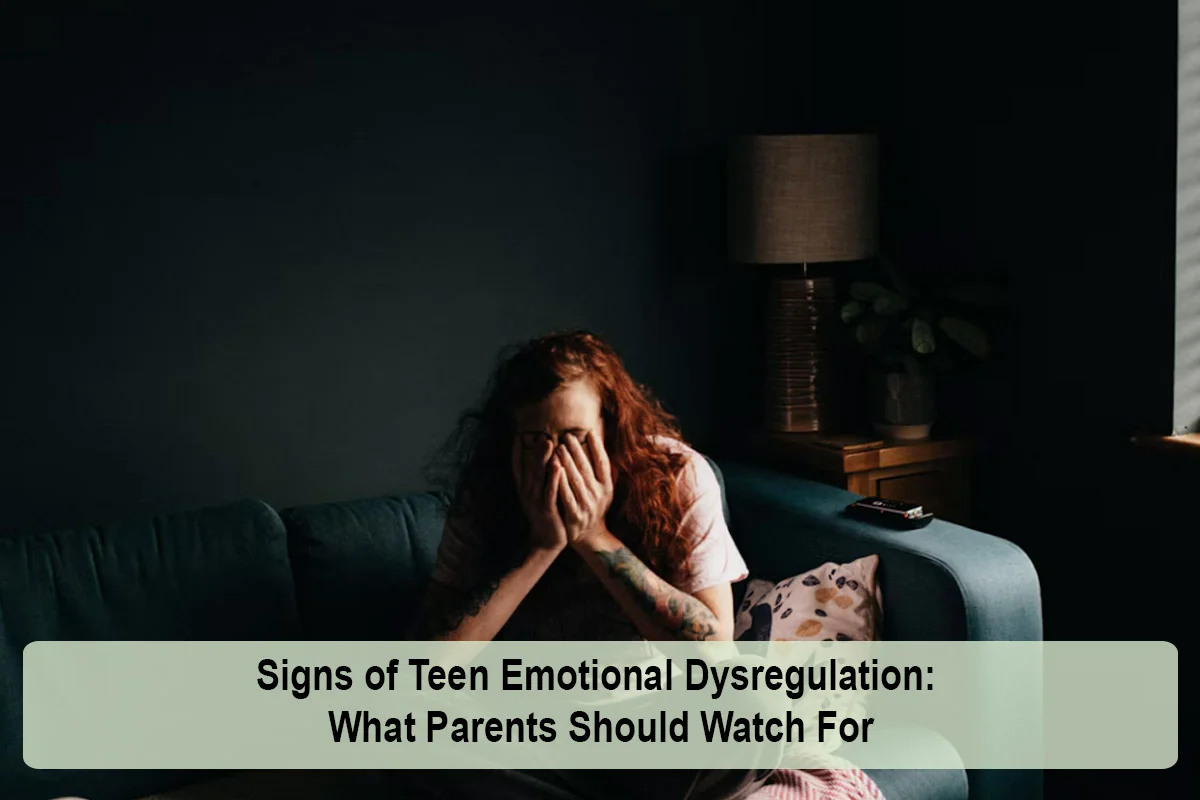
All teenagers have big feelings. But some parents notice something more: reactions that are far bigger than the situation, moods that swing hard and fast, and a teen who seems unable to calm down once upset. A forgotten charger leads to a screaming match. A text from a friend leads to hours of crying. A small correction leads to a slammed door and a broken picture frame. If this sounds familiar, you may be seeing signs of emotional dysregulation, a pattern in which a teen has real difficulty managing the intensity and duration of their emotions.
This guide focuses on recognizing the signs of teen emotional dysregulation: what it looks like emotionally, behaviorally, physically, socially and at school, how it differs from normal teenage moodiness, and which signs need prompt help. For a deeper look at why it happens, see our companion article on causes of emotional dysregulation in teens. If your teen talks about suicide or self-harm, call or text the 988 Suicide and Crisis Lifeline, or call 911 in an emergency.
Emotional regulation is the ability to notice a feeling, tolerate it and respond in a way that fits the situation. Emotional dysregulation means that process breaks down. Feelings come on faster, hit harder, last longer and are harder to bring back to baseline. Emotional dysregulation is not a diagnosis on its own. It is a pattern that can show up with ADHD, anxiety, depression, trauma, bipolar disorder, autism, substance use and conditions such as disruptive mood dysregulation disorder (DMDD).
Some degree of emotional intensity is expected in adolescence. The National Institute of Mental Health explains that the prefrontal cortex, which handles planning and decision-making, is one of the last brain areas to mature, and that teens may respond to stress differently than adults. Signs of teen emotional dysregulation go beyond that normal range in frequency, intensity and impact.
If property damage is a regular part of outbursts, our guide to teen destroying property at home covers safety steps.
Emotions live in the body, and dysregulated teens often show physical signs:
| Area | Normal teen moodiness | Signs of emotional dysregulation |
|---|---|---|
| Intensity | Strong but fits the situation | Far bigger than the trigger |
| Recovery | Calms within minutes to an hour | Stays upset for hours or the rest of the day |
| Frequency | Occasional, often tied to stress or fatigue | Several times a week or daily |
| Behavior | Eye rolls, sulking, sarcasm | Rage, destruction, self-harm or risky behavior |
| Settings | Mostly at home | Home, school and with friends |
| Impact | Life goes on mostly as usual | Relationships, school and safety are affected |
Our article on mood swings in teens explains typical adolescent mood changes in more detail.
Dysregulation can look different depending on the teen. According to CDC data, about 10% of boys ages 3 to 17 have a diagnosed behavior disorder, compared with 5% of girls, while 13% of girls have diagnosed anxiety, compared with 10% of boys. These are different conditions, but they hint at a common pattern. Boys more often show dysregulation outwardly through anger, aggression and risk-taking. Girls more often show it through tears, intense relationship conflict, anxiety and self-harm. Either pattern can appear in any teen. Our guides on anger issues in teenage girls and violent behavior in teen boys cover these differences.
Emotional dysregulation can look different across adolescence. In early adolescence, around ages 11 to 13, signs often resemble younger children's tantrums: crying, yelling, refusing and physical outbursts at home. In mid-adolescence, around 14 to 16, signs may shift toward slammed doors, cutting remarks, risky choices, online conflict and intense friendship drama. In older teens, dysregulation may show up as impulsive decisions with bigger consequences, such as quitting a job, reckless driving, substance use or volatile romantic relationships. Our article on teen reckless driving red flags covers one of the most dangerous of these.
Jordan, 14, had always been sensitive, but in eighth grade his reactions became explosive. A lost video game could lead to an hour of screaming and a dented wall. At school he walked out of class twice after teachers corrected him, and he cried for hours after a friend teased him in a group chat. His parents started a log and noticed outbursts were worst on nights with little sleep and after long days of school without a break. An evaluation found ADHD and anxiety. With medication, DBT skills groups and a family plan for cooling off, Jordan's outbursts dropped from daily to about once a week within a few months.
Contact a mental health professional soon if you notice:
If anyone is in danger, call 911. For suicidal thoughts, call or text 988.
| Try saying | Avoid saying |
|---|---|
| "Your feelings seem really big lately. That must be exhausting." | "You're being dramatic." |
| "Let's take a break and talk when we're both calmer." | "Calm down right now!" |
| "What was the hardest part of today?" | "Why do you always overreact?" |
| "I'd like us to talk to someone who can help with this." | "You need to control yourself." |
Before you see a professional, keep a simple log for two to three weeks. Note the date, what triggered the reaction, how intense it was on a scale of 1 to 10, how long it took your teen to calm down and what helped. Also track sleep, meals, screen time and substance use if you can. Patterns that seem random often become clear on paper, and this information helps a clinician tell the difference between DMDD, ADHD, anxiety, depression, trauma and bipolar disorder.
The good news is that emotion regulation is a skill, and skills can be learned. Effective treatments include dialectical behavior therapy (DBT), which was designed to build emotion regulation and distress tolerance; cognitive behavioral therapy; family therapy; and treatment for underlying conditions such as ADHD, anxiety, depression or trauma. Calming skills from positive coping skills for teens help at home.
When outpatient therapy is not enough, an intensive outpatient program, partial hospitalization or residential treatment can provide daily skill-building. Adolescent programs include Nexus Teen Academy Oak and Polaris Teen Center; confirm ages and services before enrolling. You can also search FindTreatment.gov or call the SAMHSA National Helpline at 1-800-662-4357.
Signs of teen emotional dysregulation include reactions far bigger than the trigger, trouble calming down, frequent outbursts, impulsive or risky behavior and problems that spread across home, school and friendships. These signs point to a skills gap and often an underlying condition, not a character flaw. Track what you see, respond with calm and validation, act quickly on red flags and connect your teen with treatment that teaches emotion regulation. With support, teens can learn to ride big feelings instead of being swept away by them.
This article was reviewed by the RehabsNearMe Editorial Team for accuracy, clarity, and relevance. Information may be sourced from publicly available treatment resources, government agencies, and healthcare references where applicable.
Last reviewed: November 2026
Resources
 Resources
 Resources
 Resources