
 Resources
Benefits of Teen Meditation: What the Research Shows
Published On 01-11-2026
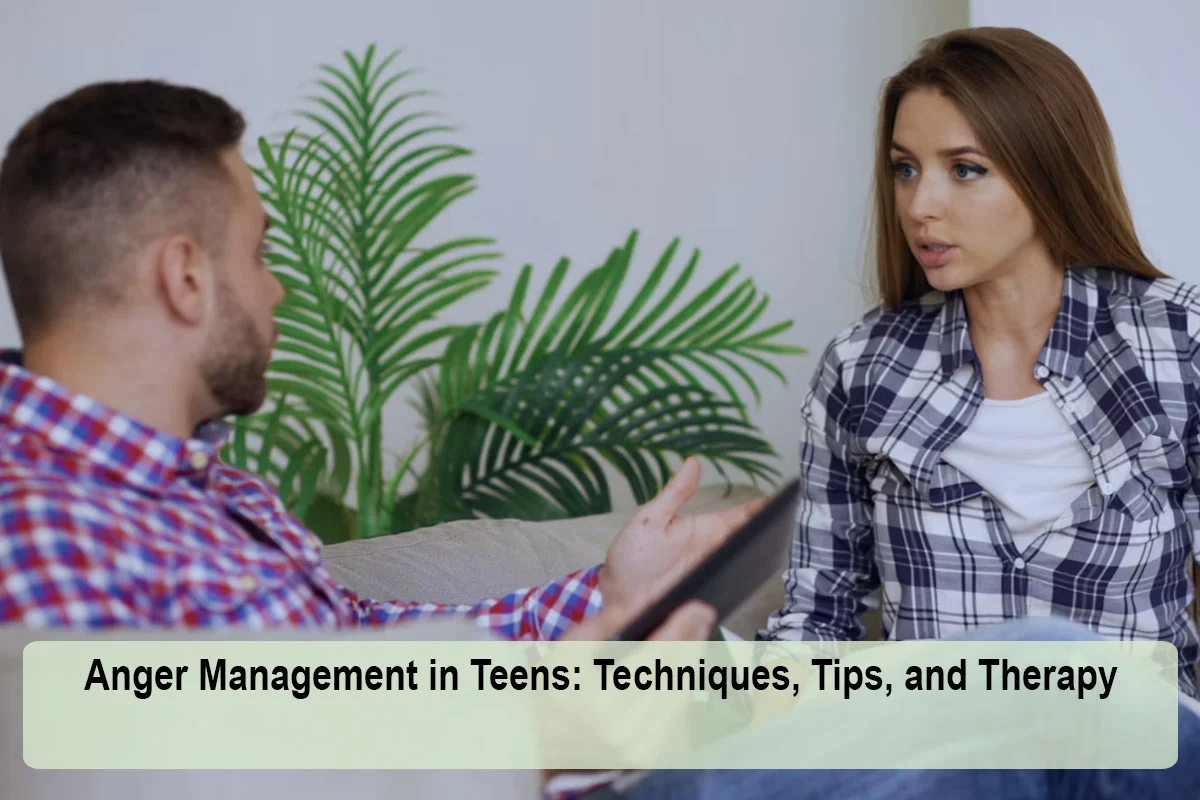
Anger is a normal, healthy emotion. It tells us when something feels unfair, threatening or wrong. The problem is not that teens get angry; it is what happens next. When a teen's anger leads to screaming matches, broken phones, punched walls, school suspensions or hurt relationships, it is time to focus on anger management. The good news is that anger management in teens is a set of learnable skills, not a personality transplant. With practice, teens can learn to notice anger early, cool down their bodies, rethink the situation and respond in ways that get them what they actually want.
This guide covers practical anger management techniques for teens, how to teach them at home, what anger management therapy involves and when anger signals something deeper. If anyone is in immediate danger, call 911. If your teen talks about suicide, call or text the 988 Suicide and Crisis Lifeline.
Several things make anger harder to manage in adolescence. The National Institute of Mental Health explains that the prefrontal cortex, which handles planning and decision-making, is one of the last brain regions to mature, and that teens may respond to stress differently than adults. Add sleep loss, academic pressure, social media conflict, hormones and a growing need for independence, and frustration can boil over quickly.
Anger also often sits on top of other feelings. Many therapists use the image of an anger iceberg: what you see is anger, but beneath the surface may be hurt, embarrassment, fear, jealousy, sadness, exhaustion or shame. Helping teens see what is under the iceberg is one of the core goals of anger management.
| Typical teen anger | Signs anger management is needed |
|---|---|
| Occasional arguments or slammed doors | Frequent outbursts several times a week |
| Calms down within a short time | Stays furious for hours |
| Anger fits the situation | Rage over small frustrations |
| Uses words, even harsh ones | Throws or breaks things, hits walls or people |
| Feels bad afterward and repairs | Blames others and does not take responsibility |
| Little effect on school or friends | Suspensions, lost friendships, legal trouble |
Anger rarely appears out of nowhere. Teens can learn to notice early signals: a hot face, clenched jaw, fast heartbeat, tight fists, racing thoughts, raised voice. The earlier they notice, the more choices they have.
Teens rate their anger from 1 to 10. At 1 to 3 they can talk it through. At 4 to 6 they need a calming skill. At 7 or higher they need a break before saying or doing anything. Posting the thermometer in a bedroom or phone note makes it easy to use.
A healthy time-out is not storming off. It is saying, "I'm getting too angry. I need 20 minutes," going somewhere safe, using a calming skill, and coming back to finish the conversation. Families agree on this plan ahead of time.
Anger is physical, so physical skills work fast:
Our guide to meditation techniques for teens includes breathing methods that work well for anger.
Angry thoughts tend to be extreme: "He did that on purpose," "She always disrespects me," "This is completely unfair." Teens can learn to ask: Is there another explanation? Am I using words like always or never? What would I tell a friend? This is a core skill in cognitive behavioral therapy.
"I'm angry" often means "I'm embarrassed" or "I'm hurt." Naming the real feeling reduces its power and makes it easier to ask for what you need.
"I feel frustrated when plans change without warning. I need a heads-up" works far better than "You never tell me anything!"
Once cooled down, teens can define the problem, brainstorm options, pick one and try it. Anger often signals a real problem worth solving.
Regular sleep, exercise, food and downtime raise a teen's anger threshold. A tired, hungry, overscheduled teen has a much shorter fuse.
| Step | Example |
|---|---|
| My common triggers | Being interrupted, losing in games, being told no |
| My early warning signs | Hot face, clenched fists, loud voice |
| What I do at 4 to 6 | Breathe slowly, step back, say "Give me a second" |
| What I do at 7 or higher | Say the code word, go to my room or outside for 20 minutes |
| Calming skills that work | Music, shooting hoops, cold water, breathing |
| Who I can talk to | Mom, coach, school counselor |
| How I repair | Apologize, fix what I broke, finish the conversation |
The goal of anger management is not to make teens stop feeling angry. Healthy anger is expressed in words, matches the situation, passes and leads to solving a problem or standing up for oneself. Unhealthy anger is explosive, out of proportion, aggressive or turned inward. Suppressing anger is not healthy either. Teens who bottle everything up may eventually explode, or turn the anger on themselves through self-criticism, anxiety, depression or self-harm. Teach your teen that anger is information worth listening to, as long as it is expressed safely.
Assertiveness sits between passive (staying silent) and aggressive (attacking). Teens can practice a simple formula: describe the situation, say how you feel, state what you need and suggest a solution. For example: "When you read my texts, I feel disrespected. I need privacy. Can we agree you'll ask first?" Role-play this at home with low-stakes topics before your teen tries it in a heated moment.
Help your teen gather tools in one place: a list of warning signs, their anger thermometer, three calming skills that work for them, a playlist, a stress ball or punching bag, a journal and names of people they can text. Physical outlets such as running, lifting, boxing or dancing give anger somewhere safe to go. Our guide to positive coping skills for teens has more ideas.
| Try saying | Avoid saying |
|---|---|
| "You seem really angry. Let's take a break." | "Calm down!" |
| "What happened right before you got so mad?" | "You're just like your father." |
| "I noticed you walked away. That took real control." | "You always lose it." |
| "Throwing things isn't okay. How will you fix it?" | "Get out of my sight." |
Parents do not have to win every moment. When your teen is at the top of the anger thermometer, stepping back is a strategy, not a surrender. Say something short like "I'm going to give us both some space, and we'll talk at 7," then follow through. Return to the issue when everyone is calm. Stepping back also means letting your teen use their skills without you hovering, and giving them room to make repairs on their own.
If anger is causing problems at school, partner with the counselor. Schools can offer a calm-down pass, a check-in with a trusted adult, counseling groups, and a behavior plan or 504 plan when a diagnosed condition is involved. Ask how the school handles outbursts so responses at home and school are consistent.
Anger management for teens can happen in individual therapy, group programs or family therapy. Sessions usually teach the skills above and help teens practice them in role-plays. Common approaches include:
Tyler, 14, exploded whenever his mom told him to get off his game. Controllers were thrown, doors slammed and insults flew. After one outburst cracked a TV screen, his parents sat down with him when everyone was calm. Together they made an anger thermometer and agreed on a code word, "pause," that either side could say. Tyler chose shooting hoops in the driveway as his cool-down, and his parents agreed to give a 15-minute warning before screen time ended. The first week was rough. By the third week Tyler was using "pause" on his own, and the outbursts dropped to once or twice a month. His family also saw a therapist, who helped Tyler notice that frustration at school often spilled over at home.
Ongoing anger can be a symptom of an underlying condition. Irritability and anger are common in teen depression, and NIMH lists getting easily frustrated, irritable or angry as a sign of depression in its teen depression guide. Anger can also be linked to ADHD, anxiety, trauma, substance use, DMDD, oppositional defiant disorder or conduct disorder. If anger management skills alone are not working, a full evaluation can identify what else needs treatment. Our related guides cover anger issues in teenage girls, violent behavior in teen boys and teenage anger toward mothers.
Seek professional help quickly if your teen's anger involves physical violence, threats, weapons, destruction of property, cruelty to animals, self-harm or substance use, or if family members feel unsafe. Options include an intensive outpatient program, partial hospitalization, an intensive family program or residential treatment. You can browse anger treatment programs and programs for adolescents, or teen programs such as MK Boys Academy and Hillcrest Adolescent Treatment Center; confirm ages and services first. You can also search FindTreatment.gov or call the SAMHSA National Helpline at 1-800-662-4357.
Anger management in teens is about learning skills, not suppressing feelings. Teach your teen to spot warning signs, rate their anger, take healthy time-outs, calm their body, rethink angry thoughts and solve problems once calm. Model the same skills yourself, stay calm during outbursts and praise every effort. If anger stays intense or dangerous, look for an underlying condition and get professional help. With practice and support, teens can turn anger from something that controls them into something they control.
This article was reviewed by the RehabsNearMe Editorial Team for accuracy, clarity, and relevance. Information may be sourced from publicly available treatment resources, government agencies, and healthcare references where applicable.
Last reviewed: November 2026
Resources
 Resources
 Resources
 Resources