
 Resources
Benefits of Teen Meditation: What the Research Shows
Published On 01-11-2026
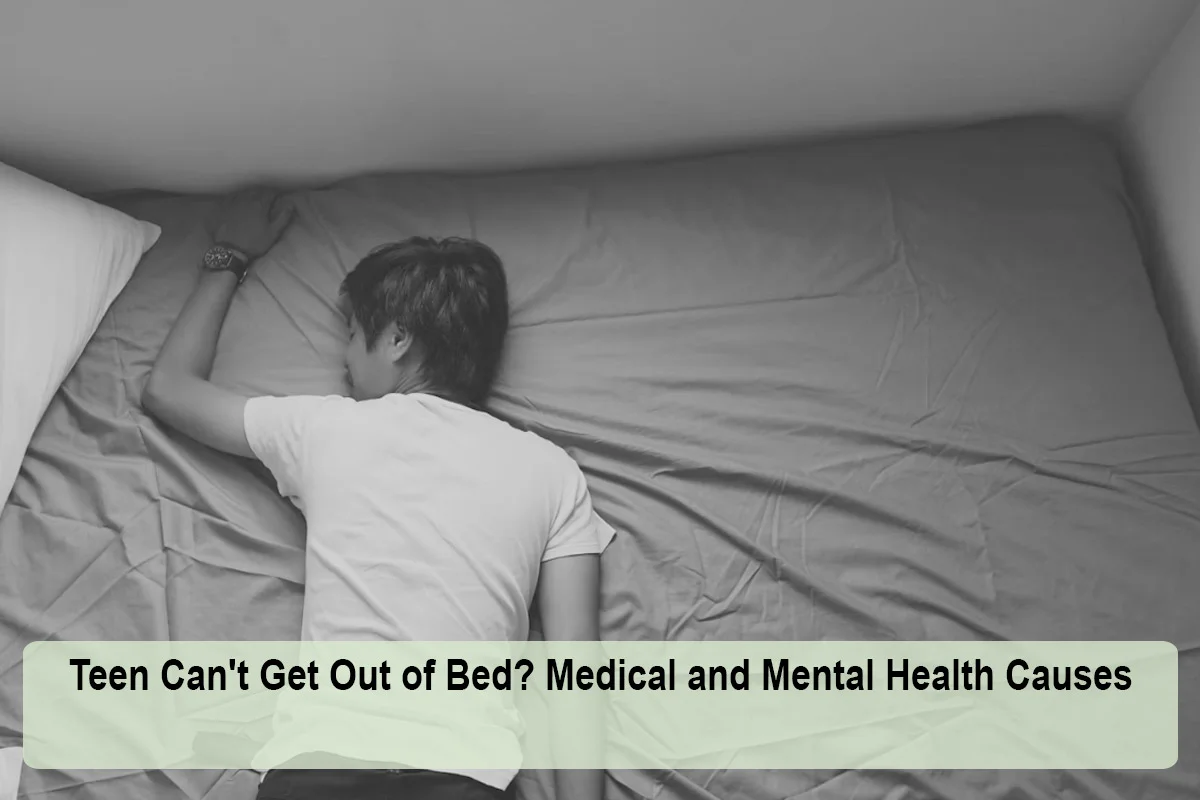
Every teenager likes to sleep in. But when your teen can't get out of bed day after day, even after a full night's sleep, even for things they used to enjoy, it is natural to wonder whether something more is going on. Is this laziness, a sleep schedule gone wrong, a medical problem or depression? The answer matters, because the fix for each is very different. Dragging a depressed teen out of bed will not cure depression, and treating a sleep disorder like a motivation problem will not work either.
This guide focuses on why a teen can't get out of bed: the medical, sleep-related and mental health causes behind it, the warning signs that point to each, and what a doctor will check. For practical morning strategies once you know the cause, see our companion guide on what to do when you can't get your teen out of bed. If your teen talks about hopelessness or suicide, call or text the 988 Suicide and Crisis Lifeline.
According to the CDC, the American Academy of Sleep Medicine recommends that teens ages 13 to 18 get 8 to 10 hours of sleep every 24 hours. Most do not come close. CDC data show that about 7 in 10 high school students and about 6 in 10 middle school students do not get enough sleep on school nights. The CDC links insufficient sleep in young people to higher risks of injuries, poor mental health and problems with attention and behavior.
So the first question is simple: is your teen actually getting 8 to 10 hours? A teen who goes to bed at 1 a.m. and has to be up at 6:30 is sleep deprived, and difficulty getting up is the expected result.
Late-night phones, gaming, homework, jobs and early school start times all cut into sleep. Teens also naturally shift toward later bedtimes during puberty, making early mornings especially hard. This is the most common cause and the easiest to test: protect sleep for two weeks and see what changes.
Depression is one of the most important causes to rule out. NIMH's teen depression guide lists fatigue, changes in sleeping habits, loss of interest in activities and withdrawing from friends and family among its signs. Depressed teens may sleep 12 hours and still feel exhausted, or lie awake at night and be unable to get up. In 2021, 20.1% of US adolescents had a major depressive episode, according to NIMH. See teen depressed at home and what happens if depression is left untreated.
Some teens stay in bed because getting up means facing school, a test, a bully or a social situation they dread. Stomachaches and headaches on school mornings that disappear on weekends are a clue.
MedlinePlus lists many medical causes of fatigue that apply to teens, including anemia and iron deficiency, an underactive or overactive thyroid, infections such as mononucleosis, eating disorders and malnutrition, diabetes and persistent pain.
MedlinePlus also lists sleep disorders such as insomnia, obstructive sleep apnea and narcolepsy as causes of fatigue. Signs include loud snoring, pauses in breathing, falling asleep in class or while driving, or sudden muscle weakness with strong emotions.
Regular alcohol or drug use is a known cause of fatigue. Cannabis, alcohol and other substances disrupt sleep quality, and withdrawal can make mornings worse. See marijuana addiction treatment and alcohol treatment.
Some medicines cause drowsiness, including antihistamines, certain antidepressants, sleeping pills and steroids, according to MedlinePlus. Ask your teen's doctor whether any current medication could be contributing.
MedlinePlus lists grief and emotional stress among emotional causes of fatigue. A recent loss, a breakup, family conflict or trauma can drain a teen's energy. See resources for teens who lost parents and teen trauma signs.
Many parents notice that the teen who cannot get up on Monday springs out of bed on Saturday for a game or a friend. That contrast is an important clue. It can mean the teen is simply catching up on lost sleep, since sleeping late on weekends is a classic sign of weekday sleep debt. It can also mean that something about school, such as a test, a teacher, a bully or a social situation, is what makes getting up so hard. When the problem appears only on school days, ask gently about school before assuming laziness. Persistent school-day avoidance can become school refusal, which is strongly linked to anxiety.
A defiant teen refuses to get up and argues about it. A shut-down teen seems unable to move, goes quiet, may cry or stare, and looks overwhelmed rather than oppositional. Shutdown often signals depression, anxiety or trauma and calls for support rather than consequences. Pushing harder on a shut-down teen usually deepens the freeze. Ask, "Is this a won't or a can't today?" and respond to what you see.
| What you notice | Possible cause |
|---|---|
| Up late on phone, fine on weekends after sleeping in | Sleep deprivation or late sleep schedule |
| Sleeps a lot but still exhausted, sad or irritable, lost interest in things | Depression |
| Fine on weekends, sick on school mornings | Anxiety or school avoidance |
| Loud snoring, gasping, dozing in class | Sleep apnea or another sleep disorder |
| Pale, short of breath, heavy periods or restricted eating | Anemia, iron deficiency or eating disorder |
| Weight change, feeling cold, dry skin, constipation | Thyroid problem |
| Recent illness with sore throat and swollen glands | Mononucleosis or post-viral fatigue |
| Red eyes, new friends, secrecy, missing money | Substance use |
MedlinePlus advises contacting a provider right away for fatigue with confusion or dizziness, blurred vision, little or no urine, recent swelling and weight gain, or thoughts of self-harm or suicide. It recommends making an appointment for unexplained fatigue, especially with fever, unintended weight loss or night sweats; signs such as constipation, dry skin, weight gain or cold intolerance; frequent night waking; frequent headaches; medicines or drugs that may cause drowsiness; sadness or depression; or insomnia.
A general rule for teens: if your teen can't get out of bed for more than two weeks despite reasonable sleep, or if it is affecting school, friendships or health, see the pediatrician.
Before the appointment, keep a one- to two-week log of bedtime, wake time, naps, mood and energy. It helps the doctor see patterns quickly.
| Try saying | Avoid saying |
|---|---|
| "You seem really wiped out lately. How are you feeling?" | "You're just lazy." |
| "Is something making mornings feel hard?" | "Get up right now or else." |
| "Let's get you checked out to make sure nothing's wrong." | "There's nothing wrong with you." |
| "Is anything happening at school or with friends?" | "When I was your age, I never slept in." |
Getting out of bed takes a burst of "activation energy," and for a struggling teen that first step is the hardest. Break it into tiny steps: a light on, a glass of water by the bed, sitting up, feet on the floor, then a shower. Keep the routine the same every day, prepare clothes and bags the night before, and offer a small, warm start such as breakfast together or a favorite song. Light stretching or a short walk outdoors can boost wakefulness. Balance support with responsibility by agreeing on clear expectations, such as being in the car by a set time, while staying curious about what is getting in the way.
If your teen has also started keeping the room dark and isolating, see teen keeps room dark all day and teen locked in room for days.
Sofia, 15, started missing first period two or three times a week. Her parents blamed late-night phone use and took the phone at 10 p.m., but nothing changed. She slept 11 hours on weekends and still napped after school. She also seemed pale and short of breath on stairs. Her pediatrician ran blood tests and found iron deficiency anemia, likely related to heavy periods and a recent shift to skipping meals. With iron treatment, regular meals and a consistent bedtime, Sofia's energy returned within a couple of months. Her parents were glad they had looked for a cause instead of simply enforcing stricter rules.
If your teen is missing school because they cannot get up, tell the school counselor or nurse what is going on. Ask about a temporary plan, such as a later first class, a check-in on arrival or flexibility on late work while you sort out the cause. Chronic absence can snowball, so early communication helps. Our article on teen truancy covers attendance problems in more depth.
If depression is the cause, treatment usually includes talk therapy, medication or both. Cognitive behavioral therapy, including behavioral activation, helps teens rebuild routines step by step. Our article on dysthymia in teens covers long-lasting, low-grade depression that often shows up as constant fatigue.
When outpatient care is not enough, or depression comes with self-harm, substance use or school refusal, an intensive outpatient program, partial hospitalization or residential treatment may help. Adolescent programs include Polaris Teen Center and Hillcrest Adolescent Treatment Center; confirm ages and services. You can also browse programs for adolescents, compare depression treatment options, search FindTreatment.gov or call the SAMHSA National Helpline at 1-800-662-4357.
When a teen can't get out of bed, the cause is rarely laziness. Sleep deprivation is the most common reason, but depression, anxiety, medical conditions like anemia or thyroid problems, sleep disorders, substance use and medications can all play a role. Track sleep and mood, talk with your teen without blame, and see the pediatrician if the problem lasts more than a couple of weeks or comes with other warning signs. Finding the real cause is the fastest way to get your teen back on their feet.
This article was reviewed by the RehabsNearMe Editorial Team for accuracy, clarity, and relevance. Information may be sourced from publicly available treatment resources, government agencies, and healthcare references where applicable.
Last reviewed: November 2026
Resources
 Resources
 Resources
 Resources