
 Resources
Teen Thinks Therapy Doesn't Work? How Parents Can Help
Published On 31-10-2026
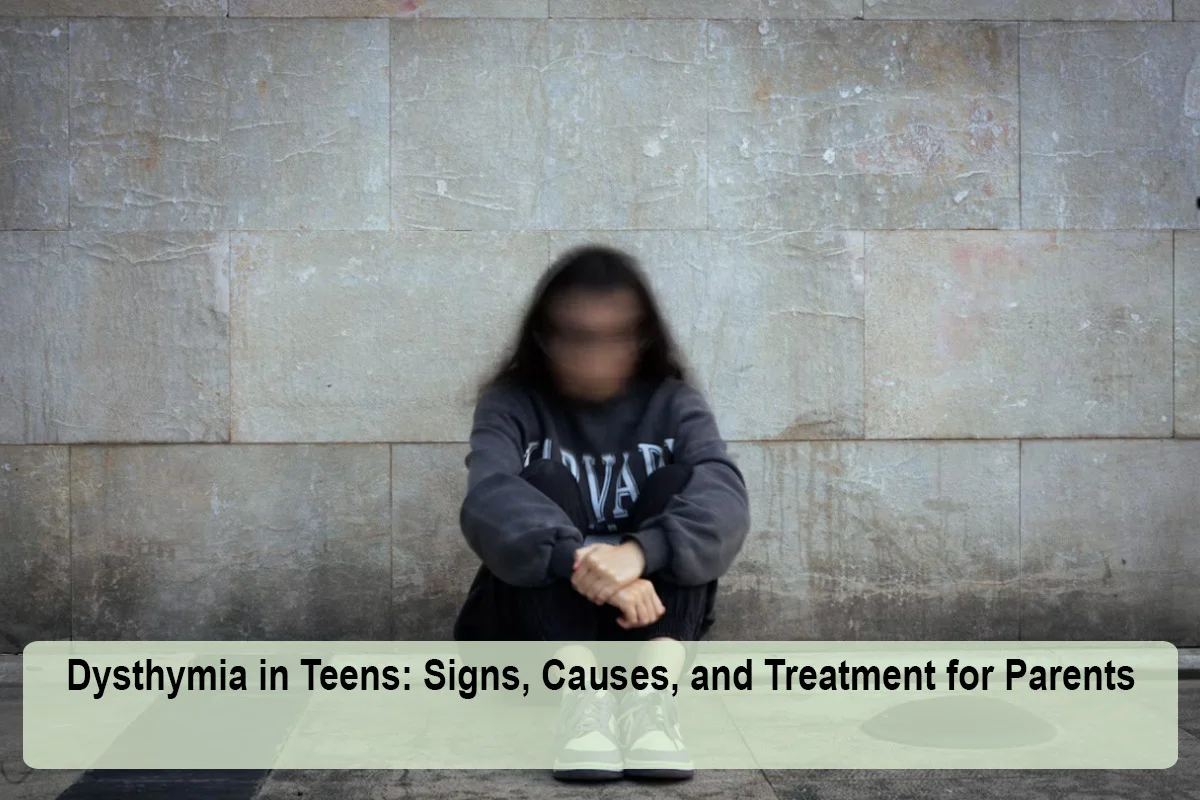
Your teen is not in crisis. They go to school, they answer when spoken to, and they still laugh now and then. But for a year or more, something has been off. They seem flat, snappish and tired most days. Nothing seems to excite them, and they talk about themselves in a quietly defeated way. When you ask, they shrug and say, "I'm fine. This is just how I am." That last sentence is often the clue. Dysthymia in teens, now called persistent depressive disorder, is a long-lasting, low-grade depression that can hide in plain sight because it becomes part of a young person's personality.
This guide explains what dysthymia in teens looks like, how it differs from ordinary moodiness and from major depression, why it matters even when it seems mild, and what treatment can do. If your teen ever talks about wanting to die or seems to be in danger, call or text the 988 Suicide and Crisis Lifeline right away, or call 911 if the danger is immediate.
Dysthymia is the older name for what clinicians now call persistent depressive disorder (PDD). The National Institute of Mental Health describes it as a chronic, low-level depression that is less severe than major depressive disorder but may last longer. In adults, the low mood has to be present most days for at least two years.
The rules are different for young people. According to MedlinePlus, in children and teens the mood can be irritable rather than sad, and it only needs to last at least one year. That detail matters. Many parents expect a depressed teen to look tearful. A teen with dysthymia is more likely to look grumpy, short-tempered and tired, which is easy to write off as attitude.
Along with the ongoing low or irritable mood, two or more of these symptoms are present most of the time:
Because these signs are steady rather than dramatic, teens with dysthymia often do not realize anything is wrong. They may have felt this way for so long that they assume it is their normal.
National survey data on dysthymia in teens specifically is limited. The NIMH figures come from adults: about 1.5% of US adults had persistent depressive disorder in the past year, and about 2.5% will have it at some point in their lives. Rates were higher in women (1.9%) than men (1.0%). Nearly half of adults with past-year PDD, 49.7%, had serious impairment, which shows that "mild" depression is not always mild in its effects.
Depression more broadly is very common in adolescence. NIMH reports that 20.1% of US adolescents ages 12 to 17 had a major depressive episode in 2021, including 29.2% of girls. The CDC's Youth Risk Behavior Survey found that 39.7% of high school students in 2023 felt persistently sad or hopeless for at least two weeks in the past year. Many of those teens are dealing with short episodes. Some are dealing with something that never fully lifts.
Parents often ask how to tell the difference. Ordinary teen moodiness comes and goes with events. Major depression usually arrives as a distinct, intense episode. Dysthymia is defined by how long it lasts.
| Feature | Normal teen moodiness | Dysthymia (PDD) | Major depressive episode |
|---|---|---|---|
| Duration | Hours to days, tied to events | Most days for 1 year or more in teens | At least 2 weeks, often months |
| Intensity | Mild, bounces back | Low-grade but steady | Severe, clearly different from usual self |
| Mood | Irritable or sad at times | Irritable, flat or gloomy most of the time | Deep sadness, emptiness or irritability |
| Enjoyment | Still enjoys favorite things | Enjoys things less, "nothing is that great" | Loses interest in almost everything |
| Functioning | Keeps up with school and friends | Gets by, but grades and friendships slowly slip | Often struggles to function day to day |
| How the teen explains it | "I had a bad day" | "This is just who I am" | "Everything is wrong," or no words at all |
A teen can also have both. Clinicians sometimes call this "double depression," when a major depressive episode develops on top of ongoing dysthymia. MedlinePlus notes that most people with PDD will have a major depressive episode at some point, which is one reason early treatment matters. For a closer look at telling depression apart from behavior problems, see our guide on teen depression or defiance.
Dysthymia in teens rarely announces itself. These everyday patterns are worth noticing when they last for months:
Snapping at siblings, sighing at every request and a short fuse that never seems to reset. In teens, irritability is often the main mood symptom, not sadness.
Comments like "What's the point?" or "It won't matter anyway" about school, friends or the future. They may not sound dramatic, but they reflect a steady negative view of life.
Calling themselves stupid, lazy or boring, or shrugging off praise. Our article on teen self-hate talk covers how to respond to a harsh inner critic.
Your teen sleeps a lot, or poorly, and still feels drained. Mornings can be a daily battle, similar to what we describe in can't get teen out of bed.
Not a sudden collapse, but a gradual slide: missing assignments, trouble focusing, less effort. Teachers may describe your teen as "capable but unmotivated."
Fewer friends, fewer invitations accepted and more time alone in their room. If this is your main worry, read our piece on teen depression and social withdrawal.
There is no single cause. MedlinePlus states that the exact cause is unknown and that PDD tends to run in families. In practice, clinicians look at a mix of factors:
None of these are anyone's fault. Knowing the likely drivers simply helps a clinician choose the right treatment.
Because it is "only" low-grade, persistent depressive disorder is often left alone for years. That is a costly mistake. Research summarized in Psychiatric Services found that half of all lifetime mental illness begins by age 14, and that the median delay between onset and treatment is nearly a decade. For a teen, a decade of untreated low mood can shape their grades, friendships, self-image and choices about the future.
There are also safety reasons. MedlinePlus notes that PDD increases the risk of suicide. Teens with chronic depression may also turn to alcohol, cannabis or vaping to feel better, which tends to deepen the problem. Our existing guide on what happens if depression is left untreated explains these long-term risks in more detail.
Teens with dysthymia often expect not to be understood. How you open the conversation can decide whether they let you in.
| Try saying | Avoid saying |
|---|---|
| "You've seemed worn down for a long time. I'm not mad, I'm worried about you." | "You need to fix your attitude." |
| "It sounds like things have felt heavy for a while. What's that like for you?" | "Everyone feels down sometimes. Snap out of it." |
| "Feeling this way for a long time isn't your fault, and it can get better." | "You have nothing to be depressed about." |
| "Would you be willing to talk to someone with me, just to check?" | "If you just tried harder, you'd feel fine." |
Expect a shrug or "I'm fine" at first. Keep the door open, check in regularly, and focus on spending low-pressure time together rather than pushing for a big talk.
A pediatrician, psychologist or psychiatrist can evaluate your teen. The process usually includes questions about mood, sleep, energy and how long symptoms have lasted, standard depression questionnaires, a check for anxiety, ADHD, substance use and other conditions, and sometimes a physical exam or lab tests to rule out medical causes such as thyroid problems. It helps to bring notes about when you first noticed changes. Because dysthymia is defined by time, a parent's long view is valuable evidence.
Persistent depressive disorder responds to treatment, although it can take longer than a single depressive episode. MedlinePlus notes that medicines are often effective for PDD, though they may work more slowly than they do for major depression.
Cognitive behavioral therapy (CBT) helps teens notice and challenge the automatic negative thoughts that keep low mood going, and build problem-solving skills. Interpersonal therapy techniques for teens focus on relationships and role changes. For teens who struggle with intense emotions, dialectical behavior therapy (DBT) may be added.
A psychiatrist may recommend an antidepressant, especially if symptoms are significant or a major depressive episode has developed. In NIMH-funded trials, antidepressants helped 61% of young people with depression compared with 50% on placebo. According to MedlinePlus drug information, fluoxetine and similar antidepressants may raise the risk of suicidal thoughts in people under 24, especially during the first few months or after a dose increase, so close monitoring is essential. Medication should never be stopped suddenly without a doctor's guidance.
Family therapy can reduce conflict at home and help parents respond to irritability without escalating it. Many programs build in family involvement as a standard part of care.
Regular sleep, physical activity, time outdoors, balanced meals and avoiding alcohol and drugs all support recovery. Our article on teen nutrition and mental health covers the food and mood link.
Most teens with dysthymia are treated in outpatient therapy. A higher level of care may help if your teen is not improving after several months, if a major depressive episode develops, or if substance use, self-harm or school refusal enters the picture. Options include an intensive outpatient program, a partial hospitalization program, or residential treatment for teens with depression and co-occurring conditions. Adolescent-focused programs include Nexus Teen Academy Oak in Scottsdale and Polaris Teen Center in Tarzana. Always confirm that a program treats teens your child's age. You can also browse programs for adolescents or search FindTreatment.gov.
Get help immediately if your teen talks about suicide, says they want to disappear, gives away belongings or seems to be planning to hurt themselves. Call or text 988, or call 911. Our guide to inpatient treatment for suicidal teens explains what happens if hospital care is needed.
Living with a teen who is irritable and low for months is draining. Parents often feel rejected, frustrated or guilty. Find someone to talk to, whether a partner, friend, support group or your own therapist. Remember that your teen's irritability is a symptom, not a verdict on your parenting. The SAMHSA National Helpline at 1-800-662-4357 offers free, confidential referrals 24 hours a day.
Dysthymia in teens is a real, treatable form of depression, not a personality flaw or a phase. Its quiet, steady nature is exactly what makes it easy to miss. If your teen has seemed irritable, tired, hopeless or flat for a year or more, trust that observation and ask for an evaluation. With therapy, sometimes medication and a supportive family, many teens with persistent depressive disorder recover and finally discover that "this is just how I am" was never the whole truth.
This article was reviewed by the RehabsNearMe Editorial Team for accuracy, clarity, and relevance. Information may be sourced from publicly available treatment resources, government agencies, and healthcare references where applicable.
Last reviewed: October 2026
Resources
 Resources
 Resources
 Resources