
 Resources
Teen Boys After a Breakup: Grief, Anger, and How Parents Can Help
Published On 25-10-2026
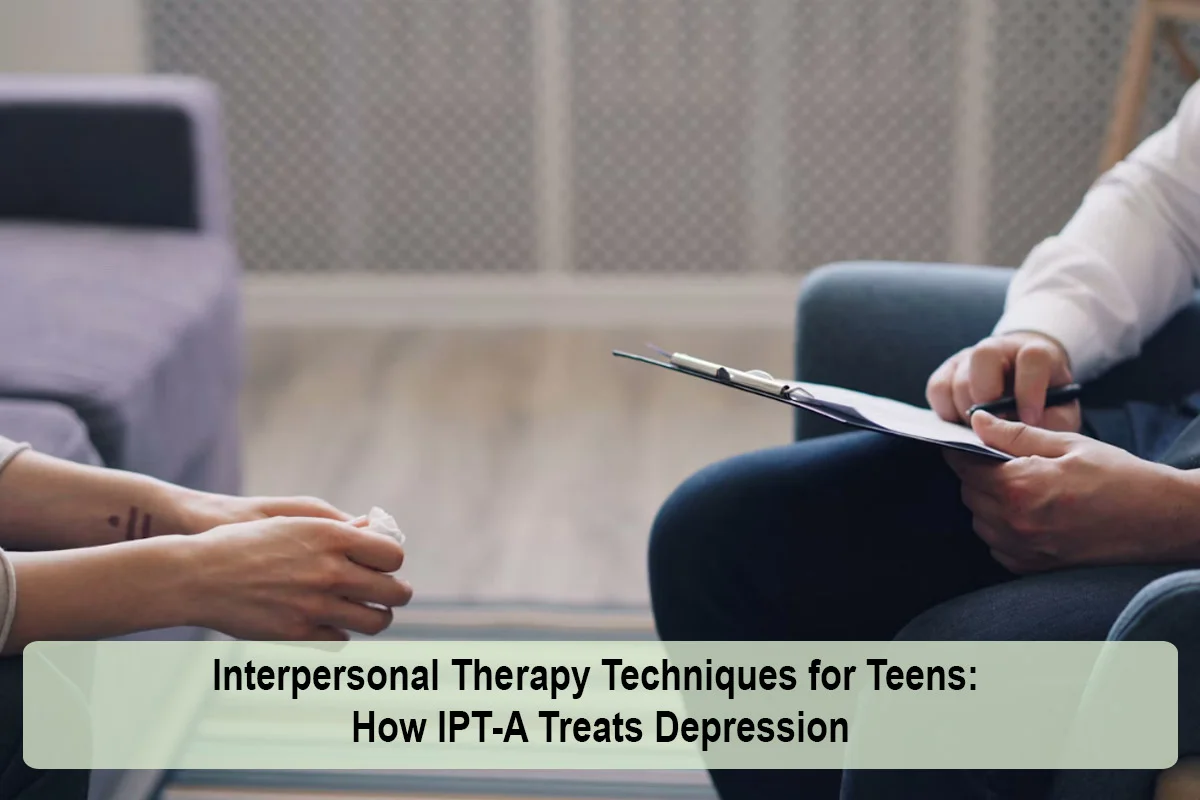
Relationships are at the center of a teenager's world. Conflicts with parents, friendship breakups, romantic heartbreak, moving to a new school, or the loss of a loved one can all trigger or worsen depression. Interpersonal therapy (IPT) is a structured, evidence-based treatment built around this idea: improving relationships and how teens handle social changes can relieve depression. A version adapted for adolescents, called interpersonal psychotherapy for depressed adolescents (IPT-A), is widely used in clinics, schools, and treatment programs. This guide explains what interpersonal therapy is, the four problem areas it targets, the key techniques therapists use with teens, what sessions look like, who benefits most, and how it compares to other therapies.
Interpersonal psychotherapy is a time-limited therapy, often around 12 to 16 weekly sessions, that focuses on the connection between mood and relationships. Rather than exploring childhood in depth or focusing mainly on thoughts, IPT looks at current relationships and life changes, and helps teens build skills to manage them. IPT-A adapts the approach for adolescents by addressing developmental issues such as independence from parents, peer pressure, dating, and family conflict, and often includes parents in some sessions.
Depression is common among teens. The National Institute of Mental Health estimates that 20.1% of adolescents ages 12 to 17 had a major depressive episode in 2021, and relationship stress is one of the most frequent triggers. Learn more about depression treatment.
IPT-A typically focuses on one or two of four interpersonal problem areas, identified at the start of treatment:
| Problem Area | What It Means | Examples for Teens |
|---|---|---|
| Grief | Depression connected to the death of someone important | Loss of a parent, grandparent, friend, or pet |
| Role disputes | Ongoing conflict with someone important because of different expectations | Arguments with parents about rules, independence, or friends; conflict with a best friend or partner |
| Role transitions | Difficulty adjusting to a major life change | Moving, changing schools, parents' divorce, starting high school, a breakup, or coming out |
| Interpersonal deficits | Trouble forming or keeping relationships | Social isolation, few friends, difficulty starting conversations |
Research has examined which teens benefit most. A study published in the Journal of Consulting and Clinical Psychology found that IPT-A was particularly helpful for depressed adolescents with high conflict with their mothers or social difficulties with friends compared with usual care in school-based health clinics, though the authors called for larger studies.
The therapist and teen map out important relationships, such as parents, siblings, friends, partners, and teachers, exploring what is going well, what is difficult, and how each relationship affects mood. This helps identify where change is needed.
Teens rate their mood each week and connect changes to interpersonal events. For example, "My mood dropped to a 3 after my fight with my dad." This builds awareness of how relationships affect feelings.
The therapist and teen review a specific conversation step by step, such as an argument with a parent, to see what was said, how it was said, what the teen hoped for, and what happened. Together they identify more effective ways to communicate.
Teens practice difficult conversations in session, such as asking a parent for more independence, setting a boundary with a friend, or expressing hurt feelings. Role-play builds confidence before trying it in real life.
For a specific problem, the teen brainstorms possible options, considers the pros and cons of each, chooses one to try, and reviews how it went.
Therapists help teens identify and name emotions, especially ones they avoid, like anger toward a parent or sadness after a loss, and express them in healthy ways.
The therapist helps the teen notice patterns and contradictions, such as wanting closeness with friends while avoiding social plans, to increase understanding.
Teens are encouraged to try new skills between sessions, such as having a calm conversation with a parent or reaching out to a friend, and then discuss the results.
Parents may join sessions to learn about depression, improve communication, and negotiate issues like rules and independence. This is especially useful for role disputes with parents.
Early in treatment, the therapist explains that depression is a real illness that can make some tasks harder. Teens and parents may temporarily adjust expectations while the teen works toward full functioning, which reduces blame and guilt.
| Problem Area | Techniques Often Used |
|---|---|
| Grief | Talking about the person and the relationship, expressing feelings about the loss, and gradually re-engaging with others and activities |
| Role disputes | Communication analysis, role-play, negotiating expectations, and parent sessions |
| Role transitions | Exploring what was lost and gained, building new skills and supports, and finding positive aspects of the new role |
| Interpersonal deficits | Social skills practice, role-play, reducing isolation, and building new connections |
IPT has also been adapted for other concerns, such as anxiety, eating disorders, and for teens at risk of depression.
| Therapy | Main Focus | Best For |
|---|---|---|
| Interpersonal therapy (IPT-A) | Relationships and life transitions | Depression linked to conflict, loss, change, or isolation |
| Cognitive behavioral therapy | Thoughts and behaviors | Depression, anxiety, and many other conditions |
| Dialectical behavior therapy | Emotion regulation and distress tolerance | Self-harm, suicidal thoughts, and intense emotions |
Many therapists combine elements of these approaches based on a teen's needs.
Learn more about family therapy and our guides on when a teen suddenly hates the family and supporting teen boys after a breakup.
A session often begins with the teen rating their mood for the week. The therapist then asks about interpersonal events that may have affected mood, such as an argument, a social event, or a new challenge. Together, they focus on the chosen problem area, using techniques like communication analysis or role-play to practice new approaches. The session usually ends with a plan for something to try during the week, such as a calm conversation with a parent or reaching out to a friend.
Consider a 15-year-old who argues constantly with her mother about curfew and friends, and has become withdrawn and depressed. In IPT-A, the therapist might help her review a recent argument, identify what each person wanted, and notice how the conversation escalated. They might role-play a calmer way to ask for more freedom and suggest a compromise. In a joint session, the therapist could help mother and daughter negotiate expectations. As the conflict eases, her mood often improves.
Yes. IPT-A has been delivered in school-based health clinics, and group versions allow teens to practice interpersonal skills with peers. Group formats can be especially useful for teens with interpersonal deficits who benefit from practicing social skills in a supportive setting.
Ask potential therapists whether they have specific training in interpersonal psychotherapy for adolescents, how they involve parents, and how many sessions they typically use. Browse programs on our adolescent treatment page, including Nexus Teen Academy in Scottsdale and Nexus Teen Academy in Cave Creek. For free referrals, call the SAMHSA National Helpline at 1-800-662-4357. If your teen is in crisis, call or text 988.
Interpersonal therapy for teens, or IPT-A, is a structured, time-limited treatment that relieves depression by improving relationships and helping teens manage grief, conflicts, life transitions, and social difficulties. Key techniques include the interpersonal inventory, mood rating, communication analysis, role-playing, decision analysis, expressing feelings, and parent involvement. IPT-A can be especially helpful for teens whose depression is linked to family conflict or friendship problems.
This article was reviewed by the RehabsNearMe Editorial Team for accuracy, clarity, and relevance. Information may be sourced from publicly available treatment resources, government agencies, and healthcare references where applicable.
Last reviewed: October 2026
Resources
 Resources
 Resources
 Resources