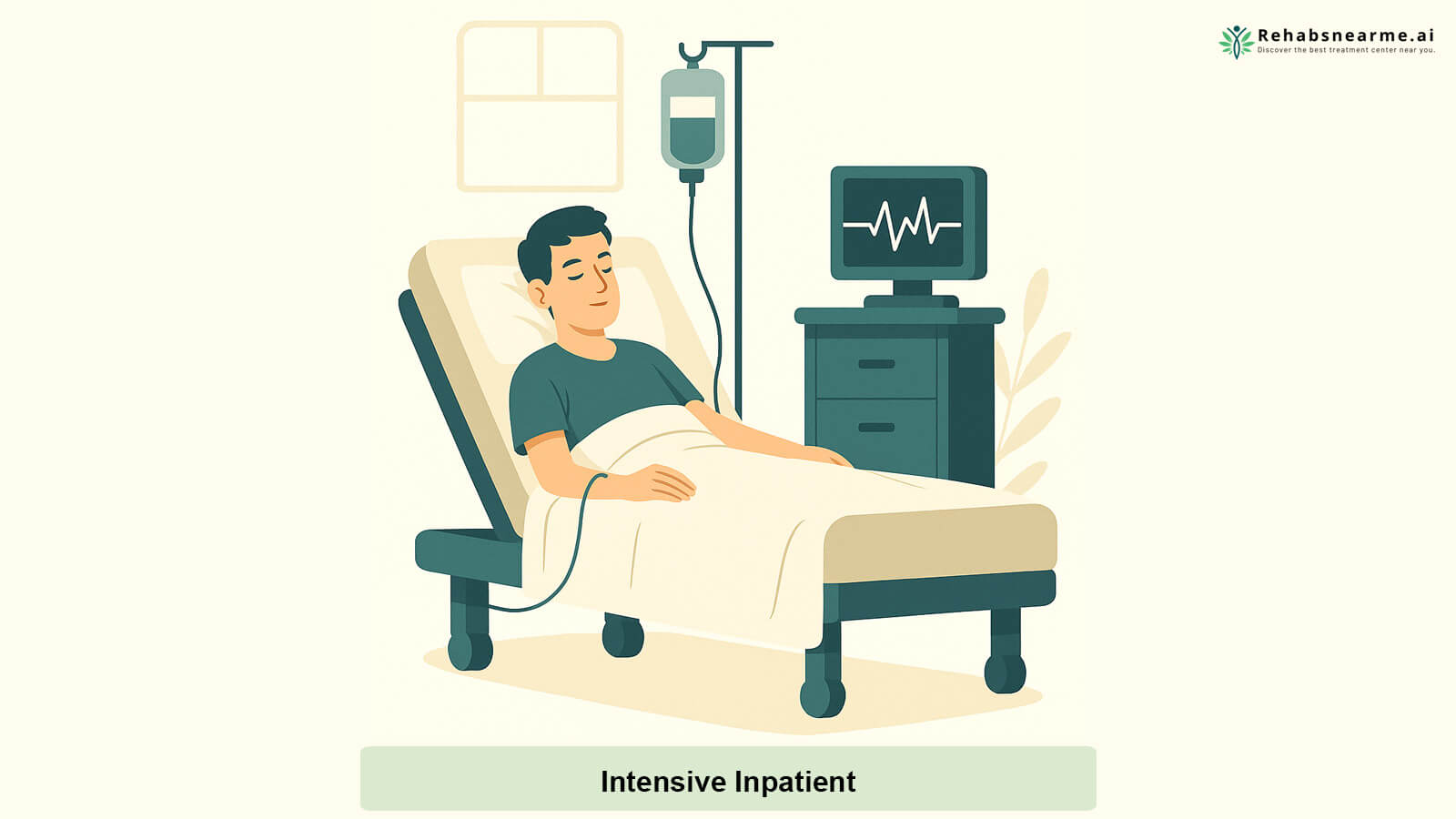
What Is Intensive Inpatient Treatment?
Intensive inpatient treatment, also known as residential rehab or inpatient care, is a program where individuals live at a treatment facility while receiving structured therapy and medical support. This level of care is designed for individuals who require constant supervision and a highly controlled environment.
Programs typically include detox, therapy sessions, behavioral interventions, and ongoing monitoring to ensure safety and progress.
How Intensive Inpatient Treatment Works
Patients reside at the facility for the duration of the program, which can range from 30 to 90 days or longer. Each day follows a structured schedule that includes therapy sessions, group counseling, medical check-ins, and recovery-focused activities.
This immersive approach removes external distractions and allows individuals to focus entirely on recovery.
Who Needs Intensive Inpatient Treatment?
- Individuals with severe drug or alcohol addiction
- People experiencing withdrawal symptoms requiring medical supervision
- Individuals with co-occurring mental health disorders (dual diagnosis)
- Those who have relapsed after outpatient treatment
- People in unsafe or unstable living environments
Daily Schedule Inside Inpatient Rehab
A typical day in an inpatient program is highly structured to promote stability and consistency. Schedules often include morning check-ins, therapy sessions, educational workshops, and evening reflection or support groups.
This structured routine helps individuals develop discipline, reduce anxiety, and build healthier habits over time.
Types of Therapies Used in Inpatient Treatment
Benefits of Intensive Inpatient Treatment
- 24/7 medical and emotional support
- Structured, distraction-free environment
- Immediate access to professional care
- Comprehensive treatment for addiction and mental health
- Higher level of accountability and safety
Private & High-End Inpatient Rehab Options
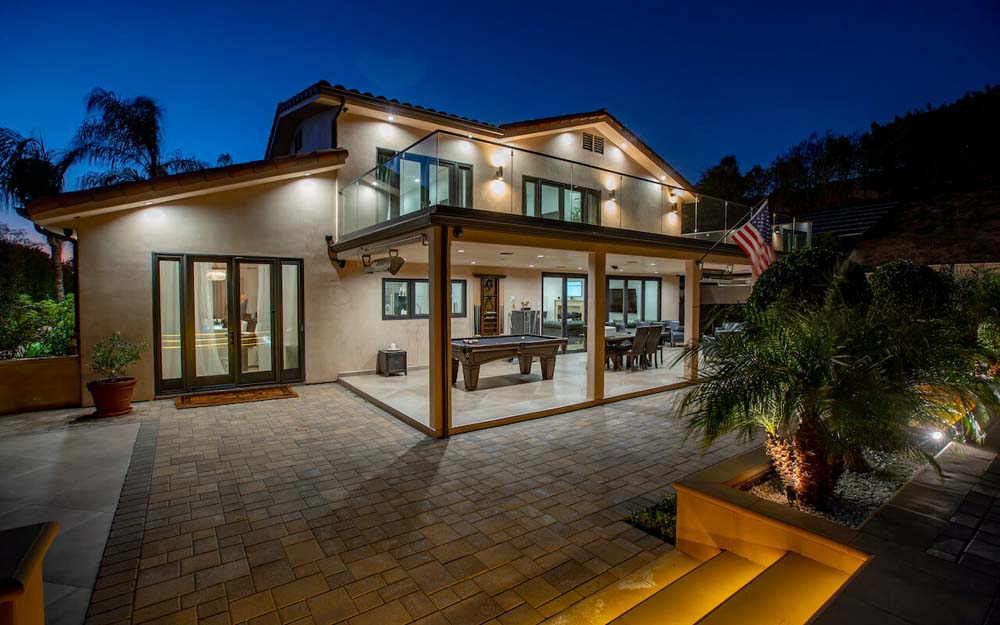
Some inpatient programs offer a more personalized and private experience with smaller group sizes, individualized care plans, and enhanced comfort. These programs focus on both clinical excellence and a supportive environment tailored to each individual’s needs.
Private inpatient treatment may include flexible therapy schedules, specialized treatment approaches, and a higher level of personal attention.
Inpatient vs Outpatient Treatment
| Feature |
Inpatient Treatment |
Outpatient Treatment |
| Living Arrangement |
On-site at facility |
At home |
| Level of Care |
High (24/7 supervision) |
Moderate to low |
| Structure |
Highly structured |
Flexible |
| Best For |
Severe conditions |
Mild to moderate cases |
Conditions Treated in Inpatient Rehab
- Substance use disorders (drug and alcohol addiction)
- Severe depression and anxiety
- PTSD and trauma
- Dual diagnosis conditions
- Behavioral health disorders
Cost of Intensive Inpatient Treatment
The cost of inpatient rehab varies based on program length, facility type, and level of care. Many treatment centers accept insurance, while others offer private pay options and financing plans.
How to Find the Best Inpatient Rehab Near You
When searching for “inpatient rehab near me” or “residential treatment center,” focus on accreditation, clinical staff experience, and treatment approaches. Look for programs that offer comprehensive care, including detox, therapy, and aftercare planning.
Choosing the right facility can significantly impact recovery outcomes and long-term success.
Transitioning After Inpatient Treatment
Recovery does not end after inpatient care. Many individuals transition into outpatient programs, recovery coaching, or aftercare services to maintain progress. A strong aftercare plan is essential for preventing relapse and supporting long-term recovery.
Start Your Recovery with Intensive Inpatient Care
Intensive inpatient treatment provides the structure, support, and medical care needed to begin recovery safely and effectively. With the right program, individuals can build a strong foundation for lasting change and improved mental health.