
 Resources
Positive Coping Skills for Teens: 44 Healthy Ways to Manage Stress
Published On 25-10-2026
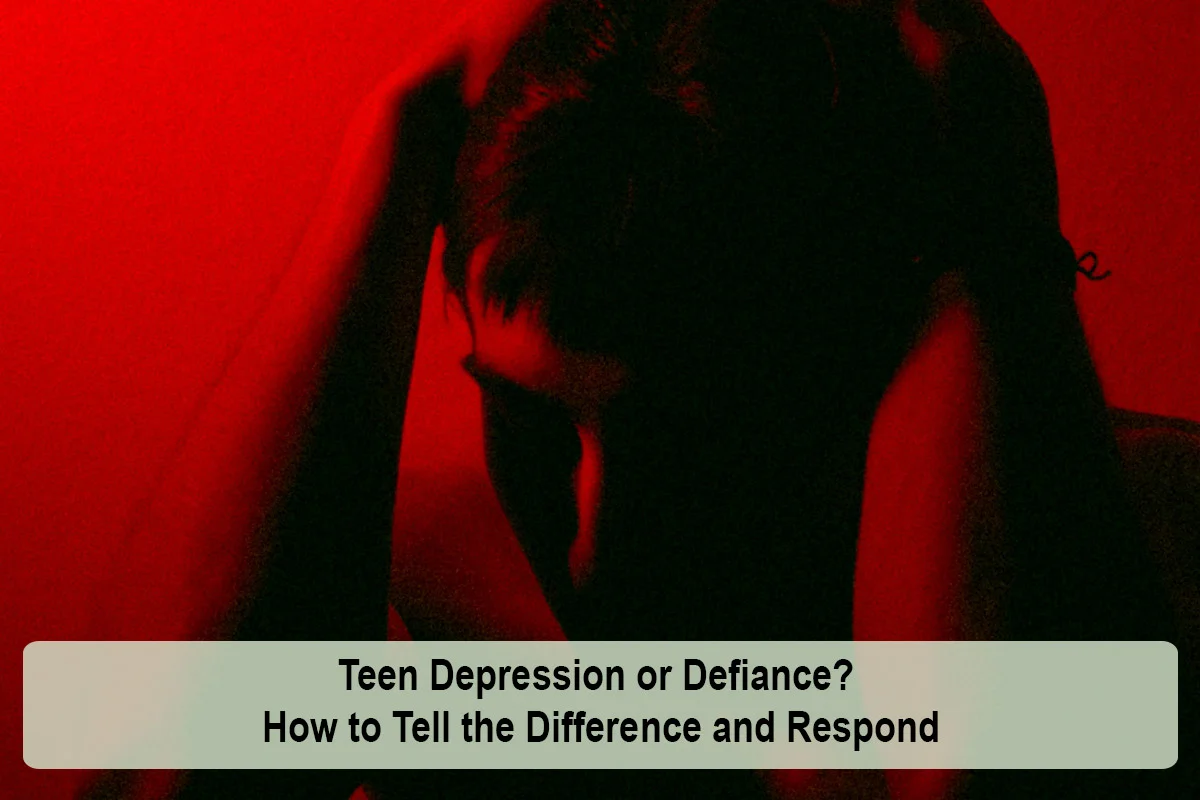
Your teen refuses to do homework, snaps at you, ignores rules, and seems to have stopped caring. Is it defiance, or is it depression? Many parents struggle with this question because the two can look strikingly similar. In teens, depression often shows up as irritability, anger, and refusal rather than sadness, and defiant behavior can hide emotional pain underneath. Getting the answer right matters, because responding to depression with punishment alone can make it worse, while ignoring true defiance can let problems grow. This guide explains how teen depression and defiance overlap, the key differences, how to tell which may be driving your teen's behavior, when both may be present, and how to respond.
Depression in teens frequently looks different from depression in adults. Instead of tearfulness, teens may be irritable, angry, argumentative, and unmotivated. They may stop doing chores and homework, withdraw from family, and push back on rules, all of which can look like defiance. The National Institute of Mental Health estimates that 20.1% of adolescents ages 12 to 17 had a major depressive episode in 2021, so depression is common enough that it should always be considered.
At the same time, oppositional defiant disorder (ODD) and other behavior problems involve persistent anger, arguing, and refusal. The CDC describes ODD symptoms as including often losing one's temper, arguing with adults, refusing to comply with rules, being resentful or spiteful, deliberately annoying others, and blaming others.
| Factor | More Likely Depression | More Likely Defiance or ODD |
|---|---|---|
| Underlying feeling | Sadness, emptiness, hopelessness, low self-worth | Anger and resentment toward authority |
| Energy | Low energy, fatigue, oversleeping | Usually normal energy |
| Interest in activities | Lost interest in things they used to enjoy | Still enjoys preferred activities |
| Refusal style | "I can't" or "What's the point?" | "I won't" or "You can't make me" |
| Where it shows up | Across many areas of life, including activities they like | Mostly with authority figures and rules |
| Sleep and appetite | Often changed | Usually unchanged |
| Self-talk | "I'm worthless," "Nothing matters" | Blames others for problems |
| Onset | Often a change from how the teen used to be | Often a long-standing pattern starting earlier in childhood |
| Safety concerns | May include thoughts of self-harm or suicide | More likely aggression toward others |
These are general patterns. Many teens show features of both, and only a professional evaluation can sort them out.
Before deciding what is driving your teen's behavior, it can help to step back and reflect on a few questions:
Write your answers down and bring them to your teen's doctor or therapist. Specific observations make an evaluation more accurate.
Learn more about depression treatment and our guide on a teen who seems depressed at home.
See our guide on parenting tips for teen ODD.
Depression and behavior problems often occur together. A teen with long-standing defiance may develop depression after repeated conflict, school failure, or rejection. A depressed teen may become increasingly defiant as frustration builds. Other conditions, such as ADHD, anxiety, trauma, or substance use, can also contribute to both. In these cases, treatment needs to address both the emotional pain and the behavior.
Irritability is one of the most common symptoms of depression in children and teens, and diagnostic criteria recognize that in young people, an irritable mood can take the place of a sad mood. Irritability is also a core feature of ODD. That shared symptom is why the two conditions get confused so often. The difference is usually in what comes with the irritability. Paired with hopelessness, fatigue, and loss of interest, it suggests depression. Paired with deliberate rule-breaking and blaming others while energy and interests remain intact, it suggests defiance.
Very severe, nearly constant irritability with frequent temper outbursts may point to another condition, disruptive mood dysregulation disorder (DMDD), which is diagnosed in children and young teens. A mental health professional can sort out which diagnosis fits best.
Consider two 15-year-olds who both refuse to do homework. The first has argued with every rule since she was six, still spends hours drawing and texting friends, and tells her parents, "You can't make me." The second was a strong student until this year, has quit soccer, sleeps until noon on weekends, and says, "Why bother? I'm going to fail anyway." Both are refusing homework, but the first pattern suggests defiance, while the second strongly suggests depression. The same behavior calls for very different responses.
Teachers often see a different side of your teen. Ask whether they notice defiance in class, or instead see a student who seems tired, distracted, withdrawn, or tearful. Their observations can help clarify whether the problem is mainly with authority at home or a broader change in mood. If depression or behavior problems are affecting learning, ask the school counselor about support plans, check-ins with a trusted adult, or a 504 plan.
A professional evaluation can identify depression, ODD, or other conditions and guide treatment. Effective approaches include cognitive behavioral therapy, interpersonal therapy for depression, dialectical behavior therapy, family therapy, parent management training, and medication when appropriate. When depression and behavior problems are severe, intensive or residential treatment may help. Browse programs on our adolescent treatment page, including Nexus Teen Academy in Scottsdale and Nexus Teen Academy in Cave Creek. If your teen talks about self-harm or suicide, call or text 988 or call 911.
Teen depression and defiance can look alike because depressed teens are often irritable, unmotivated, and resistant to rules. Clues that depression may be involved include a change from your teen's usual self, low energy, loss of interest, sleep and appetite changes, and hopeless comments. Defiance or ODD is more often a long-standing pattern of anger directed at authority with normal energy and interests. Many teens have both. When in doubt, respond with curiosity and empathy, keep reasonable limits, ask about safety, and get a professional evaluation.
This article was reviewed by the RehabsNearMe Editorial Team for accuracy, clarity, and relevance. Information may be sourced from publicly available treatment resources, government agencies, and healthcare references where applicable.
Last reviewed: October 2026
Resources
 Resources
 Resources
 Resources