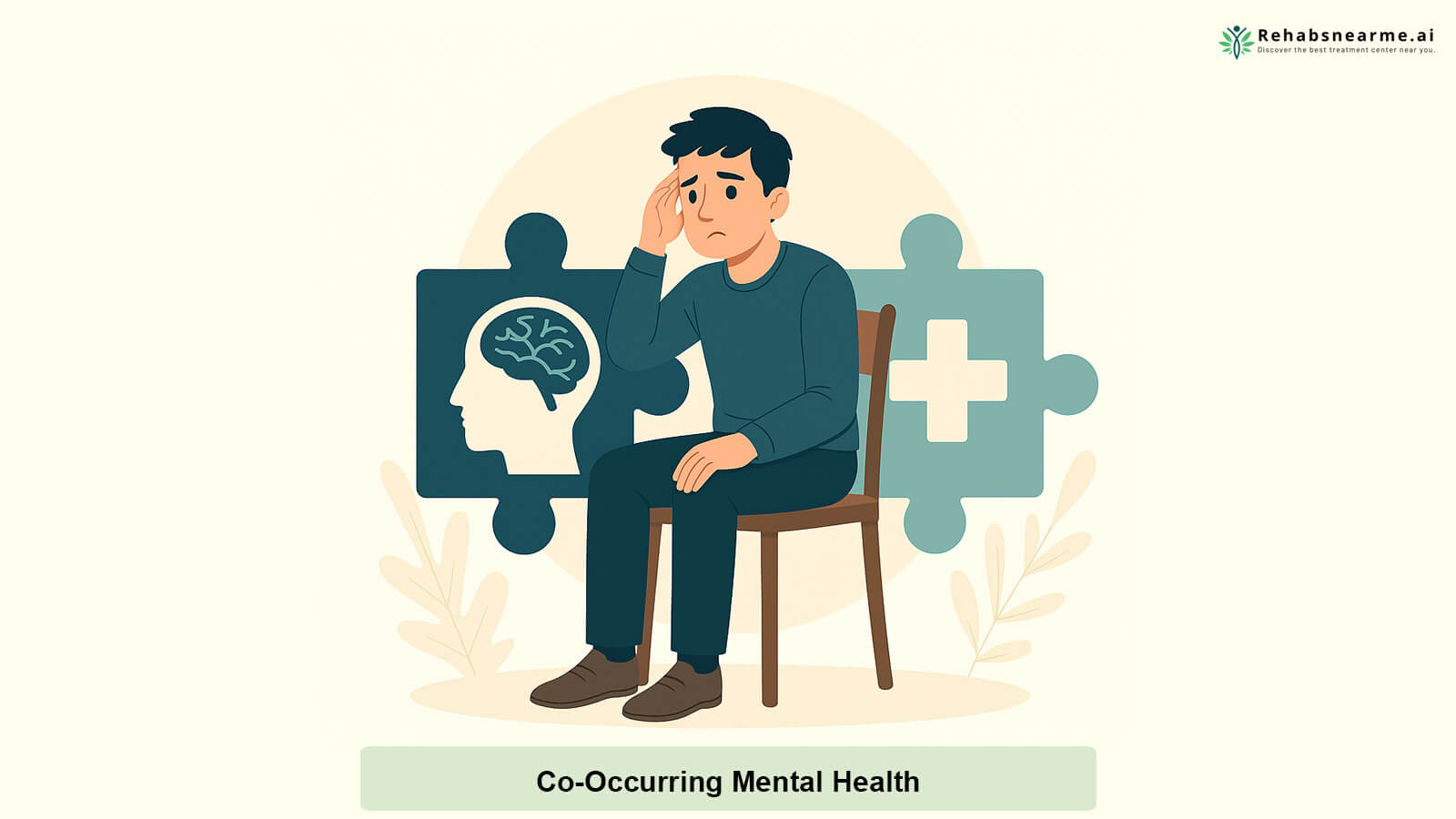
What "Co-Occurring Disorders" Actually Means Clinically
Clinical researchers describe a few different ways the two conditions can relate to each other. Sometimes a mental health condition emerges first and substance use develops as a coping response. Sometimes heavy substance use triggers or unmasks a psychiatric condition. In other cases the two appear to reinforce each other in an ongoing cycle. Which pattern applies changes what treatment should prioritize first, which is why intake assessment for co-occurring disorders looks different from assessment for a single condition.
The Three Levels of Integrated Care
Not all programs that claim to treat "dual diagnosis" are structured the same way. SAMHSA identifies three distinct models, and the difference between them has a real effect on outcomes.
Coordinated Care
Separate mental health and substance use teams, often in different locations, who communicate and share information about the same patient. This is the loosest form of integration.
Co-Located Care
Both types of providers work in the same facility, making handoffs faster, but treatment plans may still be developed somewhat separately.
Fully Integrated Care
A single clinical team treats both conditions together, in the same sessions, with one coordinated plan from intake onward. This is the model SAMHSA identifies as the standard of care, because it avoids the common failure point of one condition being treated while the other is deprioritized or missed entirely.
When comparing programs, it is worth asking directly which of these three models a facility actually uses. The marketing phrase "dual diagnosis treatment" does not tell you that on its own.
Why Treating Only One Condition Tends to Fail
People with co-occurring disorders are hospitalized at higher rates than people with either condition alone. Part of the reason: treating addiction without addressing the psychiatric condition underneath it, or vice versa, tends to produce short-term stabilization followed by relapse, because the untreated condition keeps generating the pressure that drove the substance use in the first place.
SAMHSA's guidance operates on a principle it calls "no wrong door," meaning a person should be able to access appropriate co-occurring treatment regardless of which provider or system they first reach out to, rather than being bounced between separate mental health and addiction systems until they find the right fit.
What Actually Happens in Integrated Treatment
A fully integrated program typically combines the following elements.
- Concurrent treatment of both conditions from day one, rather than treating one first and adding the other later
- Medication management where appropriate, for example pairing a substance use disorder medication such as naltrexone or acamprosate with an antidepressant, managed by the same team rather than two disconnected prescribers
- Evidence-based psychotherapy, most commonly Cognitive Behavioral Therapy (CBT) or Dialectical Behavior Therapy (DBT), adapted to address both conditions in the same sessions
- Staged treatment matched to readiness, since SAMHSA's model explicitly stages care through engagement, persuasion, active treatment, and relapse prevention rather than assuming everyone enters ready for the same intensity
- Continuing care planning built in from intake, not added afterward. Step-down levels of care, a consistent therapist, and ongoing psychiatric support after residential treatment measurably improve retention and long-term outcomes compared with leaving without a plan
Conditions Most Commonly Treated Together
- Depression and alcohol or substance use disorder
- Anxiety disorders and addiction
- PTSD and substance use
- Bipolar disorder and substance use
- ADHD and addiction
Care Models Compared
| Model |
Team Structure |
Location |
Treatment Planning |
| Coordinated care |
Separate teams |
Often different locations |
Shared through communication only |
| Co-located care |
Separate teams |
Same facility |
Faster handoffs, plans often still separate |
| Fully integrated care |
Single team |
Same facility, same sessions |
One coordinated plan from intake |
Questions Worth Asking a Program Directly
- Which of the three integration models, coordinated, co-located, or fully integrated, does this program use?
- Is the same clinical team managing both the psychiatric condition and the substance use disorder, or are they handled separately?
- What does the plan look like after residential or intensive treatment ends?
- How does the program stage treatment for someone who is not yet ready for full engagement?
Long-Term Outlook
Recovery from co-occurring disorders tends to be a longer, non-linear process rather than a fixed-length program. The strongest predictor of sustained recovery is not the intensity of the initial treatment episode. It is whether continuing care, including step-down support, a consistent therapist, and ongoing psychiatric management, is built into the plan from the start.