
 Resources
Teen Thinks Therapy Doesn't Work? How Parents Can Help
Published On 31-10-2026
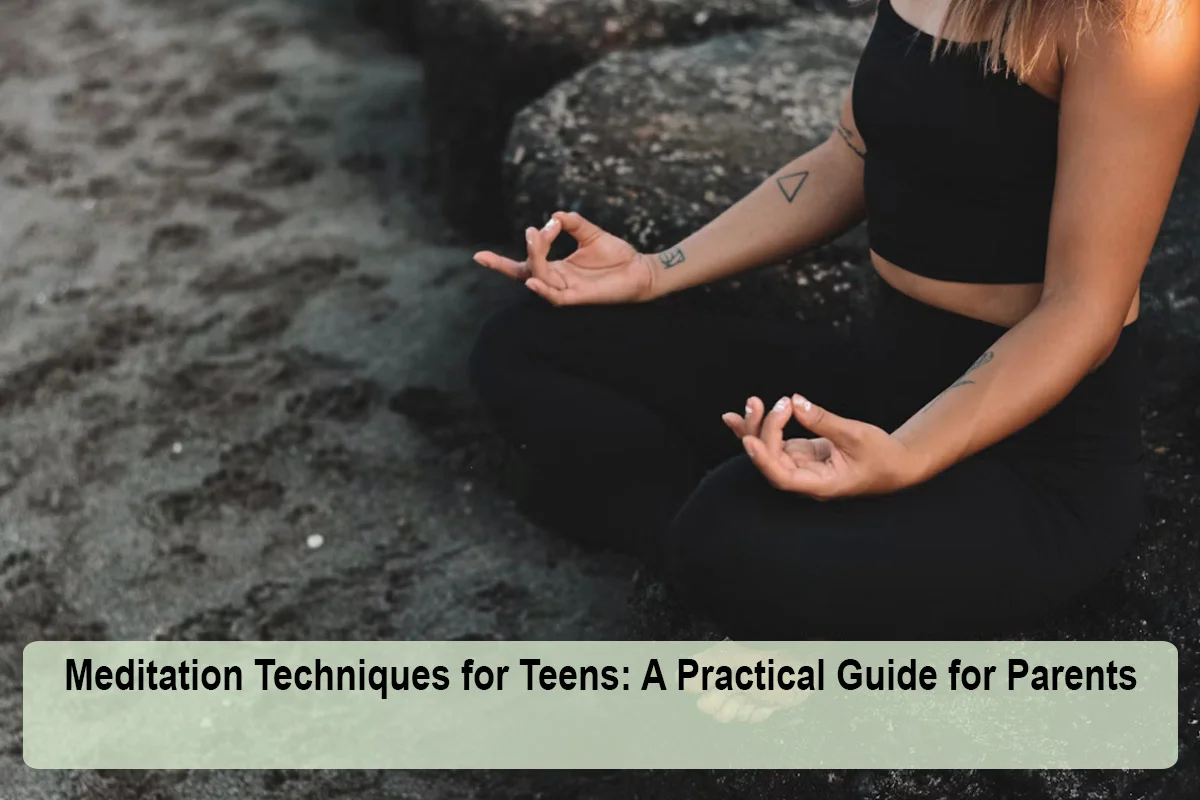
You have probably heard that meditation could help your stressed, anxious or sleepless teen. You may have even suggested it, only to get an eye roll and "That doesn't work for me." The truth is that most teens who say meditation does not work tried one style, for too long, at the wrong moment. Meditation is not one thing. It is a family of techniques, and the right one depends on what your teen needs: calming a racing heart before a test, falling asleep, cooling down after an argument, or getting out of their own head.
This guide walks through practical meditation techniques for teens, step by step, with advice on matching each technique to a problem, introducing it without a fight, and knowing when meditation is not enough. If you are looking for broader games and exercises, our earlier article on mindfulness activities for teens covers group and classroom ideas. This article focuses on the core techniques themselves.
The research is encouraging, with honest limits. The National Center for Complementary and Integrative Health (NCCIH) reports that mindfulness-based practices may help with anxiety and depression, may reduce insomnia and improve sleep quality, and may help people in recovery from substance use by increasing awareness of cravings. In some studies, mindfulness programs performed about as well as established treatments such as cognitive behavioral therapy.
For young people specifically, NCCIH's guidance on mind and body practices for children and teens lists mindfulness, guided imagery, biofeedback and yoga among the approaches with the best evidence and low risk. It also notes that older children and teens can practice relaxation techniques and deep breathing on their own or with a parent's help.
The need is real. The CDC's Youth Risk Behavior Survey found that 39.7% of high school students felt persistently sad or hopeless in 2023, and NIMH estimates that 31.9% of adolescents will have an anxiety disorder. Only about 24% of high schoolers get eight or more hours of sleep on school nights. Meditation will not solve all of that, but it is a free, portable skill that supports every other kind of help.
Start with the problem, not the technique. This table matches common teen struggles with the techniques that tend to fit best.
| What your teen is dealing with | Technique to try first | Time needed |
|---|---|---|
| Panic or test anxiety | Box breathing or 4-7-8 breathing | 1 to 3 minutes |
| Trouble falling asleep | Body scan or guided imagery | 10 to 20 minutes |
| Anger or frustration | Counted breaths plus a walk | 3 to 5 minutes |
| Overthinking and rumination | Noting meditation or 5-4-3-2-1 grounding | 3 to 10 minutes |
| Harsh self-criticism | Loving-kindness meditation | 5 to 10 minutes |
| Restlessness or ADHD | Walking meditation or mindful movement | 5 to 10 minutes |
| Cravings or urges | Urge surfing | 3 to 10 minutes |
Breathing techniques are the best starting point because they work quickly and can be done anywhere, including a classroom, locker room or car.
Teens often like that athletes and first responders use this method. It gives a busy mind something simple to count.
Breathe in for 4, hold for 7, and breathe out slowly through the mouth for 8. The long exhale is the key part. If holding for 7 feels uncomfortable, shorten every count while keeping the out-breath longer than the in-breath.
Count each exhale from 1 to 10, then start again. When the mind wanders and the count is lost, simply start back at 1. This teaches the core skill of meditation: noticing distraction and returning without judgment.
Lying down or sitting, your teen moves attention slowly from the toes up to the head, noticing sensations such as warmth, pressure or tension without trying to change them. When they find tight areas, they can imagine breathing into them. A body scan is one of the most useful meditation techniques for teens who cannot sleep, since it shifts attention away from worries.
Tense a muscle group for about five seconds, then release for ten, working from the feet upward. The contrast helps teens learn what relaxation actually feels like. It is especially helpful for teens who say they "don't know how to relax."
Walk slowly, paying attention to each step: the heel landing, the weight shifting, the foot lifting. Teens who cannot sit still, including many with ADHD, often find this far easier than seated practice. Our article on activities for teens with ADHD has more movement-friendly ideas.
Name five things you can see, four you can feel, three you can hear, two you can smell and one you can taste. This pulls attention out of spiraling thoughts and into the present moment.
While breathing calmly, your teen silently labels whatever comes up: "thinking," "worrying," "planning," "hearing." Labeling thoughts helps teens see them as passing events rather than facts. This pairs well with skills from cognitive behavioral therapy.
Your teen imagines a calm, safe place in detail: what it looks like, sounds like and feels like. Free guided recordings can help beginners. NCCIH lists guided imagery among the mind and body practices with the best evidence for young people.
Your teen silently repeats kind phrases, first toward themselves ("May I be safe. May I be okay."), then toward someone they love, then toward someone neutral. For teens with a harsh inner voice, this can feel awkward at first. That awkwardness is part of the work. Our articles on teen self-hate talk and teen self-image explore the inner critic further.
When a strong urge arrives, such as to vape, use, scroll or lash out, your teen pictures it as a wave. They notice where it shows up in the body, breathe and watch it rise, peak and fall without acting on it. Urges usually pass within minutes. This technique is used in mindfulness-based therapies and relapse prevention counseling.
Teens resist anything that feels forced or preachy. These approaches tend to work better:
Avoid using meditation as a punishment or as a response in the middle of a heated argument ("Go meditate!"). Teach skills when everyone is calm so they are available when things heat up.
| Day | Technique | When |
|---|---|---|
| 1 | Box breathing, 4 rounds | Before school |
| 2 | 5-4-3-2-1 grounding | After school |
| 3 | Body scan, 10 minutes | At bedtime |
| 4 | Walking meditation, 5 minutes | Before homework |
| 5 | Counted breaths, 3 minutes | Before a stressful event |
| 6 | Loving-kindness, 5 minutes | Any calm moment |
| 7 | Teen's choice of favorite | Whenever they like |
At the end of the week, ask which technique felt most useful and keep that one. Consistency matters more than variety.
Meditation is generally safe, but it is not risk-free for everyone. NCCIH notes that in an analysis of studies involving more than 6,000 people, about 8% reported negative effects, most often increased anxiety or depression, a rate similar to that of psychological therapies. NCCIH also reports rare cases where relaxation techniques may worsen symptoms in people with certain psychiatric conditions or a history of abuse or trauma.
For teens with trauma, closing the eyes or focusing inward can sometimes bring up distressing memories. Safer options include keeping eyes open, focusing on outside sounds or objects, using movement-based practices, and stopping at any time. Trauma-informed clinicians adapt meditation carefully. If your teen becomes more anxious, dissociated or upset during practice, stop and talk to their provider.
Meditation techniques for teens are a support, not a replacement for treatment. Seek a professional evaluation if your teen has ongoing anxiety or depression, panic attacks, self-harm, substance use or thoughts of suicide. Many treatment programs build meditation into a fuller plan through mindfulness therapy, dialectical behavior therapy and yoga. Adolescent programs such as Nexus Teen Academy Mesquite and Hillcrest Adolescent Treatment Center list services for teens; confirm the program serves your child's age. You can also browse programs for adolescents or read our guide to positive coping skills for teens.
If your teen talks about suicide or is in danger, call or text the 988 Suicide and Crisis Lifeline or call 911. For treatment referrals, the SAMHSA National Helpline is free and available 24 hours a day at 1-800-662-4357.
The best meditation techniques for teens are short, practical and matched to a real need. Breathing works fast for anxiety, body scans help with sleep, walking meditation suits restless teens and loving-kindness softens a harsh inner voice. Start small, let your teen choose, practice alongside them and watch for signs that more help is needed. A two-minute reset that your teen actually uses is worth more than a perfect routine they ignore.
This article was reviewed by the RehabsNearMe Editorial Team for accuracy, clarity, and relevance. Information may be sourced from publicly available treatment resources, government agencies, and healthcare references where applicable.
Last reviewed: October 2026
Resources
 Resources
 Resources
 Resources