Loading...

Activities for Teens With ADHD: Sports, Hobbies, and Focus-Building Ideas

Resources
Published On 15-10-2026
7 min read

Published by RehabsNearMe Research & Editorial Team

Activities for Teens With ADHD: Sports, Hobbies, and Focus-Building Ideas

Teens with ADHD often have energy, creativity, and curiosity to spare, but they may struggle with focus, organization, impulse control, and boredom. The right activities for teens with ADHD can channel that energy, strengthen executive function skills, build confidence, and give them healthy ways to manage stress. This guide covers why activities matter for ADHD, the best sports, hobbies, and creative outlets for teens with ADHD, activities that build focus and organization, study strategies, and how activities fit alongside medical treatment.

ADHD in Teens: Key Facts

ADHD is one of the most common conditions in childhood and adolescence. According to the CDC's ADHD data and statistics, an estimated 7 million U.S. children ages 3 to 17 (11.7%) had a current ADHD diagnosis in 2024. Boys are diagnosed more often than girls (13% vs. 7%), although girls are often under-recognized because they tend to show more inattentive symptoms than hyperactive ones.

The CDC also reports that in 2022, about 30% of children with current ADHD received neither medication nor behavior treatment, while about 32% received both. That means many teens are not getting the full support that can help them thrive.

Why Activities Matter for Teens With ADHD

  • Burn off restless energy in healthy ways
  • Build executive function skills such as planning, organization, and working memory
  • Improve focus through activities that naturally hold attention
  • Boost self-esteem for teens who may feel they always fall short at school
  • Build social skills through teamwork and shared interests
  • Reduce stress, anxiety, and low mood, which commonly occur alongside ADHD
  • Lower the risk of unhealthy coping, such as substance use or excessive gaming

The CDC notes that healthy habits, including physical activity, good nutrition, and enough sleep, can help keep ADHD symptoms from getting worse.

Best Sports and Physical Activities for Teens With ADHD

Exercise is one of the most helpful activities for teens with ADHD. Movement can improve mood, attention, and sleep.

  • Martial arts: Karate, taekwondo, and jiu-jitsu build discipline, self-control, and focus through structured routines and clear goals.
  • Swimming: Repetitive, rhythmic movement with individual progress, and less waiting around than many team sports.
  • Track and cross-country running: Constant movement and personal bests to chase.
  • Rock climbing: Requires full attention, problem-solving, and planning each move.
  • Skateboarding, BMX, and surfing: High-energy activities that reward practice and persistence.
  • Dance: Combines movement, music, memory, and self-expression.
  • Fast-paced team sports: Soccer, basketball, lacrosse, and hockey keep players moving and engaged.
  • Yoga: Builds body awareness and calming skills, especially helpful for impulsivity and stress.

Sports with long periods of standing and waiting, like some outfield positions in baseball, may be harder for teens with ADHD, though every teen is different.

Hobbies and Creative Activities for Teens With ADHD

  • Music: Learning an instrument builds focus, memory, and discipline, and drumming is a great outlet for energy. See our page on music therapy.
  • Art and design: Drawing, painting, graphic design, and photography allow creativity and hyperfocus in a positive direction. Try our art therapy ideas for teens.
  • Building and making: Robotics, woodworking, LEGO Technic, model building, and electronics kits offer hands-on problem-solving.
  • Cooking and baking: Following recipes builds sequencing and planning skills, with a tasty reward at the end.
  • Theater and improv: Channel energy and quick thinking, and build social confidence.
  • Coding and game design: Many teens with ADHD enjoy the immediate feedback of programming, which can turn screen interest into a skill.
  • Gardening and animal care: Responsibility, routine, and calming time outdoors.
  • Volunteering: Active, purpose-driven tasks build confidence and connection.

Activities That Build Focus and Executive Function

ActivitySkill It BuildsHow to Use It
Strategy games (chess, Settlers of Catan)Planning, patience, working memoryPlay weekly as a family or with friends
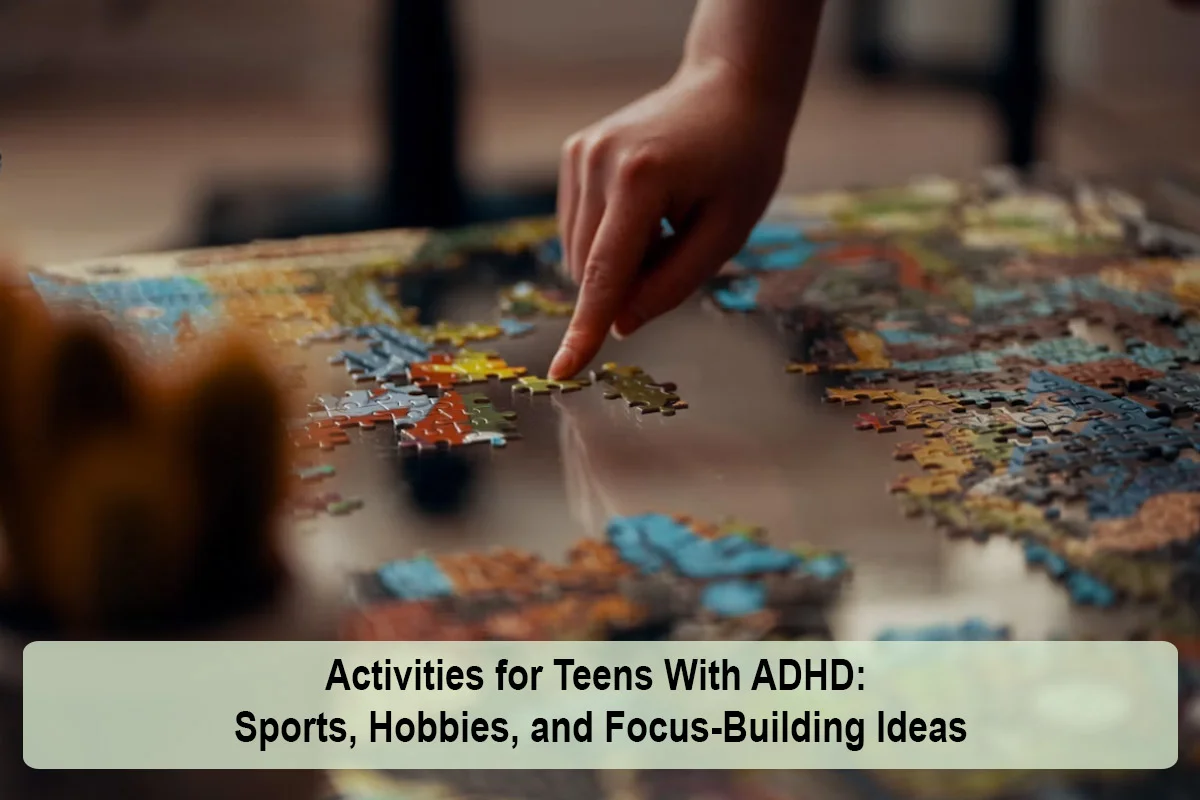
Puzzles and SudokuSustained attention, problem-solvingStart with short sessions and build up
Memory card gamesWorking memoryIncrease the number of cards as skills improve
Timed challengesTime awareness, task initiationUse a visual timer to race the clock on chores
Planning a trip or eventOrganization, budgeting, sequencingLet your teen plan a family outing step by step
Mindfulness and breathingImpulse control, emotional regulationPractice a few minutes daily with our mindfulness activities for teens
Journaling or bullet journalingOrganization, reflectionUse bullet points, color coding, and checklists

ADHD Study Strategies and School Activities

  1. Use the Pomodoro method. Work for 15 to 25 minutes, then take a 5-minute movement break.
  2. Break big assignments into small steps. Write each step on a checklist and check them off.
  3. Use visual tools. Color-coded folders, wall calendars, and phone reminders help with time management.
  4. Allow movement. Standing desks, fidget tools, or studying while pacing can improve focus for some teens.
  5. Reduce distractions. Study in a quiet space with phones in another room or apps blocked.
  6. Body doubling. Working alongside a parent, sibling, or study buddy helps many teens stay on task.
  7. Ask about school supports. Teens with ADHD may qualify for accommodations under a 504 plan or IEP, such as extra test time or preferential seating.

Daily Routines That Help Teens With ADHD

  • Consistent wake-up and bedtimes to protect sleep
  • A regular time for homework, ideally after a snack and some movement
  • Limits on screen time before bed
  • Daily physical activity
  • Regular meals, especially if stimulant medication reduces appetite
  • A visual checklist for morning and evening routines

Summer and Weekend Activities for Teens With ADHD

Unstructured time can be hard for teens with ADHD, often leading to boredom, excessive screen time, or impulsive choices. Planning ahead helps.

  • Specialized or active summer camps: Sports, outdoor adventure, STEM, or arts camps provide structure and new challenges.
  • Part-time jobs: Active jobs such as lifeguarding, landscaping, food service, or working at a camp build responsibility and confidence.
  • Outdoor adventures: Hiking, kayaking, fishing, and camping combine movement with time in nature.
  • Passion projects: Starting a YouTube channel, small business, garden, or building project gives teens a goal they care about.
  • Weekly routine anchors: Even during breaks, keep regular wake times, meals, and one or two scheduled activities each day.

Screen Time, Gaming, and ADHD

Many teens with ADHD are drawn to video games and social media because they offer constant stimulation and instant rewards. Games can be a fun, social outlet, but excessive gaming can crowd out sleep, homework, and exercise and can become hard to stop. Helpful steps include agreeing on gaming times in advance, using timers and parental controls, keeping devices out of the bedroom at night, and balancing screen time with physical activity. If gaming causes major conflict or your teen cannot cut back, learn more on our gaming addiction page.

Activities Are Part of Treatment, Not a Replacement

Activities support teens with ADHD, but they work best alongside evidence-based treatment. The CDC's ADHD treatment guidance explains that for children 6 and older, recommendations include medication and behavior therapy together. Effective behavioral approaches for adolescents include parent training, classroom behavioral interventions, peer interventions, and organizational skills training, which are often most effective when used together. Cognitive behavioral therapy can also help teens with ADHD manage procrastination, emotions, and self-esteem.

If your teen takes stimulant medication, talk to the prescriber about side effects like reduced appetite or sleep problems, and store medication securely. Our guide to Adderall uses, effects, and misuse risk explains why secure storage matters.

ADHD, Mental Health, and Substance Use

Teens with ADHD are more likely to experience anxiety, depression, and substance use, sometimes as a way to self-medicate restlessness or low mood. Engaging activities, strong routines, and proper treatment all help lower this risk. Seek professional help if your teen with ADHD shows signs of depression, anxiety, substance use, school refusal, or serious conflict at home. Learn more on our ADHD treatment page, our neurodivergent-friendly programs, and our ADHD treatment guide. Programs that use adventure therapy and recreation therapy can be especially engaging for teens with ADHD. Browse programs on our adolescent treatment page, including Nexus Teen Academy in Scottsdale and Nexus Teen Academy in Cave Creek.

Tips for Parents Choosing Activities

  • Follow your teen's interests. Motivation matters more for ADHD than for almost anything else.
  • Try short commitments first, such as a summer session instead of a full-year program.
  • Look for coaches and instructors who are patient and give clear instructions.
  • Expect some trial and error. Losing interest in one activity is not failure.
  • Avoid overscheduling. Downtime is important for rest and emotional regulation.
  • Celebrate effort and progress, not just results.

Signs an Activity Is a Good Fit

Your teen looks forward to it, stays engaged for most of the session, feels proud afterward, and seems calmer or more focused later in the day. If an activity consistently leads to frustration, shutdowns, or conflict, it may be the wrong match, the wrong instructor, or the wrong time of day. Adjust rather than abandon the idea of activities altogether.

The Bottom Line

The best activities for teens with ADHD keep them moving, engaged, and building skills: martial arts, swimming, climbing, dance, music, art, building projects, cooking, strategy games, and mindfulness. With about 7 million U.S. children living with ADHD, these activities offer powerful support for focus, confidence, and mood. They work best alongside medication and behavior therapy as recommended by the CDC, consistent routines, and school accommodations. If your teen is struggling with mood, substance use, or school despite support, professional help can make a real difference.

Frequently asked questions

Great activities for teens with ADHD include martial arts, swimming, running, rock climbing, dance, music, art, robotics and building projects, cooking, strategy games, theater, coding, and mindfulness. The best choice is one that matches your teen's interests.

Sports with constant movement and clear goals work well, such as martial arts, swimming, track, cross-country, rock climbing, soccer, basketball, and hockey. Activities with long waiting periods may be harder for some teens with ADHD.

Helpful strategies include short work sessions with movement breaks, breaking tasks into steps, visual checklists and calendars, reducing phone distractions, body doubling, regular exercise, enough sleep, and evidence-based treatment.

Physical activity can improve mood, attention, and sleep, and the CDC notes that healthy habits like exercise, nutrition, and sleep can help keep ADHD symptoms from getting worse. Exercise works best alongside treatment.

The CDC estimates that about 7 million U.S. children ages 3 to 17, or 11.7%, had a current ADHD diagnosis in 2024. Boys are diagnosed more often than girls, though girls are often under-recognized.

For children 6 and older, CDC guidance recommends medication and behavior therapy together. Effective behavioral approaches include parent training, classroom interventions, peer interventions, and organizational skills training.

This article was reviewed by the RehabsNearMe Editorial Team for accuracy, clarity, and relevance. Information may be sourced from publicly available treatment resources, government agencies, and healthcare references where applicable.

Last reviewed: October 2026

Related articles

Top