
 Resources
Scromiting: Meaning, Symptoms, Causes, and Treatment
Published On 17-11-2026
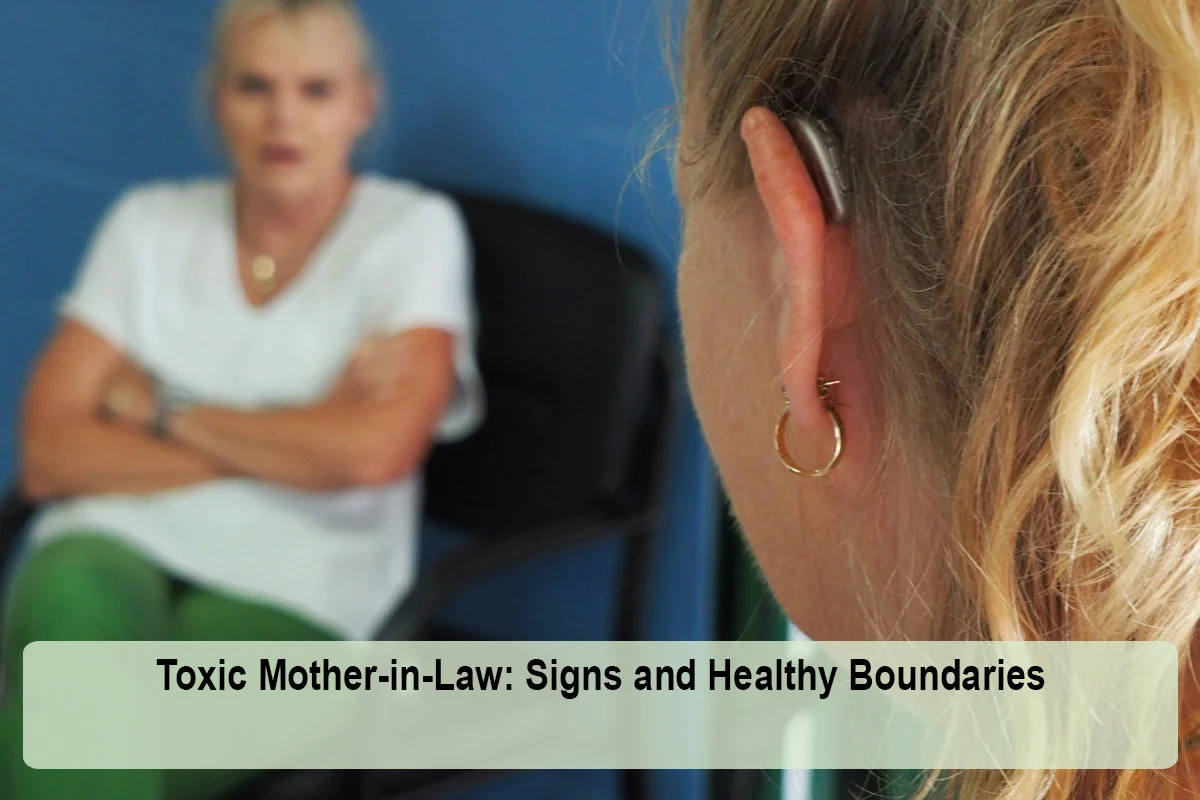
A toxic mother-in-law is one whose behavior repeatedly harms your well-being or your marriage, through constant criticism, control, manipulation, disrespect for boundaries or attempts to come between you and your spouse. Plenty of in-law relationships are awkward or tense without being toxic. The difference lies in the pattern: toxic behavior keeps happening after you have clearly asked for change, and it leaves you anxious, diminished or at odds with your partner. This guide covers the signs, a three-level boundary plan you can scale up or down, ready-to-use scripts, and the most important factor in how this ends: what your spouse does.
In-law tension is common, and it falls unevenly. Cambridge psychologist Terri Apter reported that more than 60% of women described their in-law relationships as stressed, compared with about 15% of men.
A long-running University of Michigan study adds a surprising twist. Researcher Terri Orbuch followed 373 couples for 26 years. According to a summary of the findings, husbands who felt close to their wife's parents were 20% less likely to divorce, while wives who felt close to their husband's parents were 20% more likely to divorce. Orbuch suggested that women who are close to in-laws may find it harder to set boundaries and may experience well-meant advice as interference in their roles as spouse and parent. In other words, healthy distance is not a failure. For many couples, it is protective.
| Type | What it looks like | What usually helps |
|---|---|---|
| Different | Different traditions, tastes or parenting views, expressed respectfully | Patience, curiosity, light compromise |
| Difficult | Unsolicited advice, occasional overstepping, hurt feelings on both sides | Clear, kind boundaries and direct conversation |
| Toxic | Repeated disrespect, manipulation or control that continues after boundaries are set | Firm boundaries, reduced contact, a united front with your spouse, sometimes professional help |
Some of these patterns overlap with traits discussed in our guides to signs of a narcissistic mother and how to deal with a toxic mother. Those articles are written from the adult child's view, which can help your spouse understand what they grew up with.
The single most important factor is how your partner responds. Many family therapists use a simple rule: each partner handles their own parents. When your spouse sets limits with their mother, the message is "we decided," not "your daughter-in-law is making me do this."
| Helpful spouse responses | Unhelpful spouse responses |
|---|---|
| "Mom, we've decided, and I need you to respect that." | "That's just how she is. Ignore it." |
| Speaking up in the moment when she criticizes you | Staying silent, then asking you to keep the peace |
| Sharing decisions as a couple | Telling her private things you shared in confidence |
| Checking in with you after visits | Treating your hurt as overreacting |
If your spouse struggles to stand up to their mother, it is often not a lack of love for you. Many adult children were raised to keep the peace at all costs. Couples counseling can help them practice new responses, and patterns such as codependency are well worth exploring with a therapist.
Boundaries are not punishments. They are decisions about what you will do to protect your family. Start at the lowest level that works, and move up only if needed.
| Situation | What you can say |
|---|---|
| Parenting criticism | "I know you mean well. We've chosen to do it this way, and we're not changing it." |
| Unannounced visits | "Today doesn't work. Let's find a time this week that does." |
| Guilt trips | "I can hear you're disappointed. Our answer is still no." |
| Comments about your body or home | "Please don't comment on that. Let's talk about something else." |
| Undermining with the kids | "In our house, the kids follow our rules. If that's hard, visits will need to be shorter." |
| Triangulating through your spouse | "If you have a concern about me, please bring it to me directly." |
Keep the tone calm, the words few and the follow-through consistent. Long explanations invite debate. The same principles apply in other close relationships, as explored in our article on jealousy in relationships.
Holidays are where in-law tension most often boils over, because expectations run high and traditions feel sacred. Planning ahead lowers the stakes:
It is normal for a mother-in-law to feel sad about changing traditions. Sadness is not the same as toxicity. What matters is whether she respects the plan once it is made.
Children notice when a grandparent belittles a parent. Watch for signs that time with their grandmother is affecting them, such as repeating insults about you, keeping "secrets" from you, or anxiety before visits. Explain boundaries to children in simple, age-appropriate terms, without criticizing their grandmother: "Grandma and we have different rules, and at our house we follow ours." If you have concerns about safety, such as drinking while caring for children, unsafe driving or harsh punishment, supervised contact is reasonable.
Sometimes toxic behavior is driven by untreated mental illness, a personality disorder, or substance use. That does not make hurtful behavior acceptable, but it can change how you respond. If heavy drinking or drug use is part of the picture, your spouse may want to learn about approaches for families, including our guide on what to do when someone refuses addiction treatment.
Conflict has two sides, and it is worth a moment of honesty. Ask yourself whether you have shut her out entirely without explaining why, criticized her to your spouse often, or made it hard for your children to have any relationship with her. If so, a few changes on your side, such as inviting her to one low-key event or thanking her for something specific, can lower the temperature. Healthy boundaries limit harmful behavior; they do not need to erase the person.
Constant in-law conflict can lead to anxiety before family events, resentment toward your spouse and a sense that you are always on guard. Practical steps help:
When everyone is willing, family therapy can provide a neutral space to reset expectations. When the mother-in-law is not willing, couples or individual therapy is still valuable.
Setting limits with a toxic mother-in-law can feel harsh, especially if you were raised to respect elders above all. But boundaries are what make continued contact possible. They protect your marriage, your children and, often, the relationship with her as well. Start small, act as a team with your spouse, stay consistent, and get support if the strain begins to affect your health or your marriage.
This article was reviewed by the RehabsNearMe Editorial Team for accuracy, clarity, and relevance. Information may be sourced from publicly available treatment resources, government agencies, and healthcare references where applicable.
Last reviewed: November 2026
Resources
 Resources
 Resources
 Resources