Loading...

Street Names for Methamphetamine: Meth Slang, Emojis and Warning Signs

Resources
Published On 04-10-2026
7 min read

Published by RehabsNearMe Research & Editorial Team

Street Names for Methamphetamine: Meth Slang, Emojis and Warning Signs

Methamphetamine has more street names than almost any other drug, and new ones appear regularly. Some describe its glass-like appearance, others its effects, and others come from countries where the drug is widely used. If you have seen an unfamiliar word in a loved one's messages or heard a term you did not recognize, this guide can help. It lists common street names for meth based on Drug Enforcement Administration (DEA) materials, explains what they mean, covers emoji codes, and offers guidance on what to do next.

The DEA's List of Street Names for Meth

The DEA's drug prevention resources list the following as street names for methamphetamine:

Batu, Bikers Coffee, Black Beauties, Chalk, Chicken Feed, Crank, Crystal, Glass, Go-Fast, Hiropon, Ice, Meth, Methlies Quick, Poor Man's Cocaine, Shabu, Shards, Speed, Stove Top, Tina, Trash, Tweak, Uppers, Ventana, Vidrio, Yaba, and Yellow Bam.

That list is a starting point. Below, these and other common terms are grouped by where they come from, which can make them easier to recognize.

Names Based on Appearance

Crystal meth resembles glass fragments or shiny blue-white rocks, which inspired many of its names:

  • Ice: one of the most common terms for crystal meth
  • Glass: referring to its glassy shards
  • Crystal: a direct description
  • Shards: referring to broken-glass-like pieces
  • Vidrio and Ventana: Spanish for glass and window
  • Chalk: referring to powdered or lower-quality meth
  • Chicken Feed: referring to its granular appearance
  • Yellow Bam: referring to yellowish meth
  • Blue or Blue Ice: popularized by television, referring to bluish crystals

For a detailed description of the drug's forms, see our guide to what crystal meth looks like.

Names Based on Effects

Meth is a powerful stimulant, and many names reflect its energizing effects:

  • Speed: used for meth and other amphetamines
  • Go-Fast: referring to increased energy
  • Uppers: a general term for stimulants
  • Crank: an older term, possibly linked to its energizing effect; also sometimes used for cocaine
  • Tweak: also used to describe the agitated state of someone high on meth (tweaking)
  • Bikers Coffee: reflecting historical associations with motorcycle groups and staying awake
  • Poor Man's Cocaine: reflecting its stimulant effects and lower cost compared with cocaine

Names Based on How or Where It Is Made

  • Stove Top: referring to home production
  • Trash: sometimes referring to low-quality meth
  • Cook, Cooking: referring to manufacturing

International Names

Several names come from countries where methamphetamine has a long history:

  • Shabu: widely used in the Philippines, Japan, and Hawaii
  • Batu: a term used in Hawaii and among Filipino communities
  • Hiropon: a Japanese term dating back to a brand name of methamphetamine sold in Japan in the mid-twentieth century
  • Yaba: from Thai, referring to methamphetamine tablets common in Southeast Asia, often red or orange and frequently mixed with caffeine
  • Tik: used in South Africa

Names Used in Social and Party Settings

  • Tina and Christina: commonly used in some LGBTQ+ communities and party scenes, often in connection with sexualized drug use sometimes called "party and play" (PnP) or "chemsex"
  • T: a shortened form of Tina
  • Methlies Quick: a playful variation listed by the DEA

Methamphetamine use in sexualized settings carries particular risks, including higher rates of HIV and other sexually transmitted infections, and is a specific focus of some LGBTQ+ affirming treatment programs. Our guide to LGBTQ+ affirming rehab explains what to look for.

Slang for Meth Combined With Other Drugs

Methamphetamine is frequently used with other substances, and some combinations have their own names:

  • Goofball: methamphetamine combined with heroin or another opioid. This combination has become more common in some regions and is very dangerous, as stimulants can mask the effects of opioids until breathing slows.
  • Speedball: traditionally cocaine with heroin, but sometimes used loosely for meth with opioids.

Use of meth together with fentanyl has risen sharply. In Southern Nevada, for example, preliminary health district research found that 95 percent of people who used fentanyl also reported using methamphetamine, as described in our guide to drug and alcohol rehab in Las Vegas.

Terms Describing Meth Use and Its Effects

  • Tweaking: the restless, agitated, sometimes paranoid state during or after heavy use
  • Spun or Geeked: being very high
  • Crashing or Coming down: the exhaustion and low mood after use
  • Run or Binge: a period of continuous use, sometimes for days
  • Shadow people: hallucinations reported after long periods without sleep
  • Meth mites: the sensation of bugs crawling on the skin, leading to picking
  • Tweaker: a stigmatizing term for someone who uses meth

Our article on meth face and the effects of meth on skin and teeth explains the physical changes behind some of these terms.

Emoji Codes for Meth

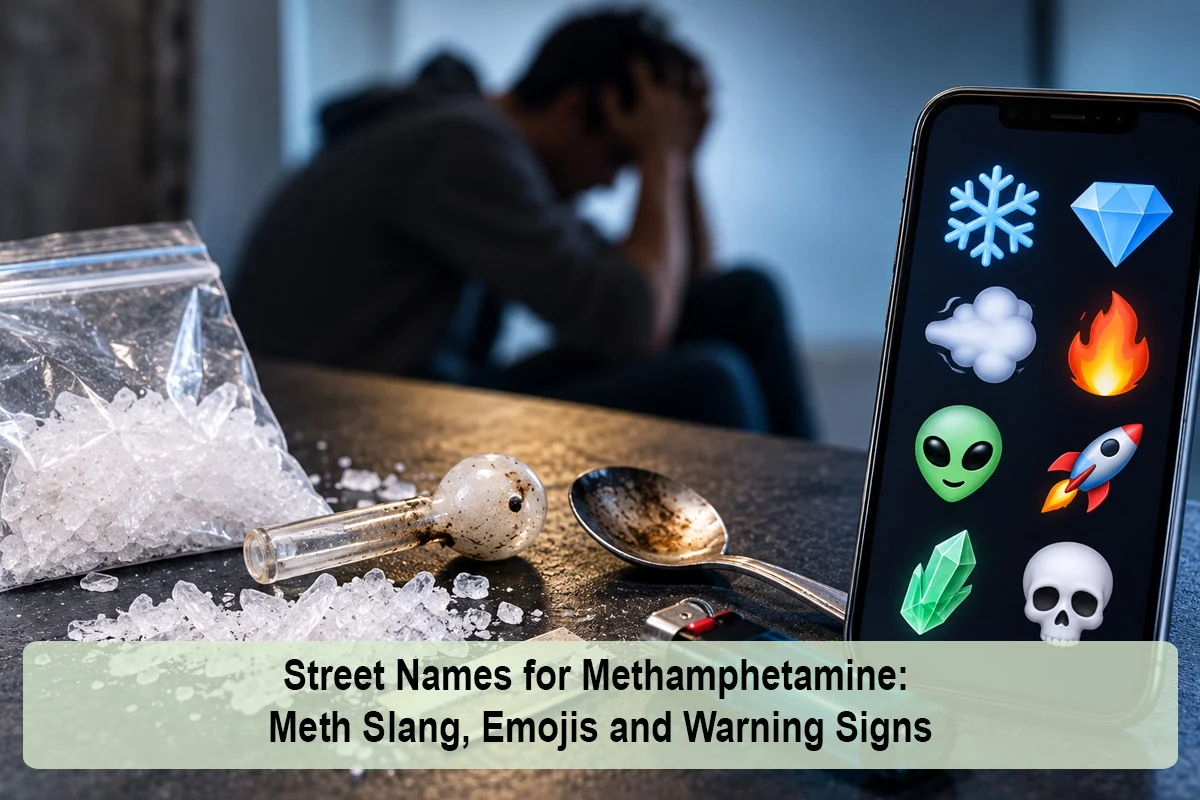
Drug-related conversations increasingly happen through emojis on social media and messaging apps. According to reporting on a DEA guide for parents, a blue heart emoji may be used to refer to methamphetamine. Crystal, gem, ice cube, and diamond emojis are also associated with crystal meth because of its appearance.

The DEA emphasizes that emojis on their own should not be treated as evidence of illegal activity. They become meaningful when combined with changes in behavior, appearance, or finances. Emoji meanings also change quickly.

The History Behind Meth's Many Names

Methamphetamine's long and varied history helps explain why it has so many names. It was used widely as a stimulant by military forces during World War II and was later sold in some countries, including Japan, as a medication, which is where terms like hiropon originated. In the United States, motorcycle gangs were associated with meth production and distribution in the later twentieth century, giving rise to terms like crank and bikers coffee. As production shifted toward large-scale operations and crystal meth became more common, appearance-based names such as ice and glass became dominant. Popular culture, including television dramas about meth production, added more recent terms and associations, such as "blue."

Talking to Young People About Meth

Many teens and young adults have heard meth slang through music, television, or social media long before they encounter the drug. Conversations can start there:

  • Ask what they know. Let them explain terms they have heard, which can open an honest dialogue.
  • Be direct about risks. Explain that meth is highly addictive and that the drug supply may contain fentanyl.
  • Address party settings. Young adults, including LGBTQ+ youth, may encounter meth in nightlife or sexualized settings. Discuss safety and how to leave uncomfortable situations.
  • Keep the door open. Make clear they can come to you for help without fear of an explosive reaction.

Why No List Is Complete

Drug slang is constantly evolving. New terms emerge from music, social media, and local communities, and existing words can shift meaning. Terms also vary by region and social group, and some, such as "crank" and "speed," overlap with other drugs. Many terms are ordinary words with innocent meanings. Our companion guide to street names for cocaine and crack covers terms that overlap between the two stimulants.

The most reliable approach is to look at the full picture rather than any single word.

Warning Signs Beyond Language

  • Staying awake for very long periods followed by heavy sleep
  • Rapid weight loss
  • Skin sores, picking, or scratching
  • Dental problems
  • Extreme energy, talkativeness, or repetitive behaviors
  • Paranoia, aggression, or hallucinations
  • Glass pipes with bulbs, burned foil, torch lighters, or small bags
  • Secretiveness and money problems

What to Do If You See Meth Slang in a Loved One's Messages

  1. Consider the context. A single word is not proof. Look for patterns and other signs.
  2. Stay calm. Responding with anger often leads to secrecy.
  3. Talk at the right time. Choose a moment when the person is not high or crashing. Share specific concerns and express care.
  4. Listen without judgment. Ask open questions and try to understand what is happening.
  5. Get guidance. A counselor or addiction specialist can help plan next steps. Approaches like CRAFT help families encourage treatment effectively.
  6. Keep naloxone on hand. Because meth is often contaminated with or used alongside fentanyl, naloxone can save a life.

Our guide on how to talk to someone about going to rehab offers practical strategies.

If You Are Using Meth Yourself

If you found this page because you use methamphetamine and are wondering whether it has become a problem, that question matters. Signs that use has become harder to control include using more or longer than planned, going days without sleep, feeling paranoid, or noticing that work, relationships, or health are suffering. You do not have to hit bottom to get help. Reaching out to a doctor, counselor, or treatment program is a confidential first step, and carrying naloxone protects you if your supply contains fentanyl.

Getting Help for Meth Addiction

Methamphetamine addiction is treatable. Contingency management has the strongest evidence among behavioral treatments, alongside cognitive behavioral therapy and the Matrix Model. Treatment for co-occurring mental health conditions, including psychosis, depression, and anxiety, is also essential. You can explore options through our methamphetamine treatment directory, or call the SAMHSA National Helpline at 1-800-662-4357 for free, confidential referrals.

The Bottom Line

Common street names for methamphetamine include meth, ice, glass, crystal, shards, crank, speed, tweak, and Tina, along with international terms such as shabu, batu, hiropon, and yaba. The DEA lists more than two dozen names, and new slang appears regularly. Emojis such as a blue heart or crystal may be used as code, but the DEA cautions that emojis alone are not evidence. Focus on the overall picture, respond with concern, keep naloxone nearby, and remember that effective treatment is available.

Frequently asked questions

Common street names for methamphetamine include meth, ice, glass, crystal, shards, crank, speed, tweak, chalk, and Tina. The DEA's list also includes batu, bikers coffee, go-fast, hiropon, poor man's cocaine, shabu, stove top, uppers, ventana, vidrio, yaba, and yellow bam.

Tina, and sometimes Christina or T, is slang for crystal methamphetamine. It is commonly used in some LGBTQ+ communities and party scenes, often in connection with sexualized drug use known as party and play or chemsex.

Shabu is a street name for methamphetamine, especially crystal meth, widely used in the Philippines, Japan, and Hawaii. Batu is another term for meth used in Hawaii and Filipino communities.

Yaba is a Thai term for methamphetamine tablets common in Southeast Asia. The pills are often red or orange and frequently contain caffeine in addition to methamphetamine.

According to reporting on a DEA guide for parents, a blue heart emoji may refer to methamphetamine. Crystal, gem, diamond, and ice cube emojis are also associated with crystal meth. The DEA cautions that emojis alone are not evidence of drug activity.

A goofball is methamphetamine combined with heroin or another opioid. It is very dangerous because the stimulant can mask the effects of the opioid, increasing the risk of fatal overdose. Meth and fentanyl co-use has risen sharply in many regions.

This article was reviewed by the RehabsNearMe Editorial Team for accuracy, clarity, and relevance. Information may be sourced from publicly available treatment resources, government agencies, and healthcare references where applicable.

Last reviewed: October 2026

Related articles

Top