
 Resources
Positive Coping Skills for Teens: 44 Healthy Ways to Manage Stress
Published On 25-10-2026
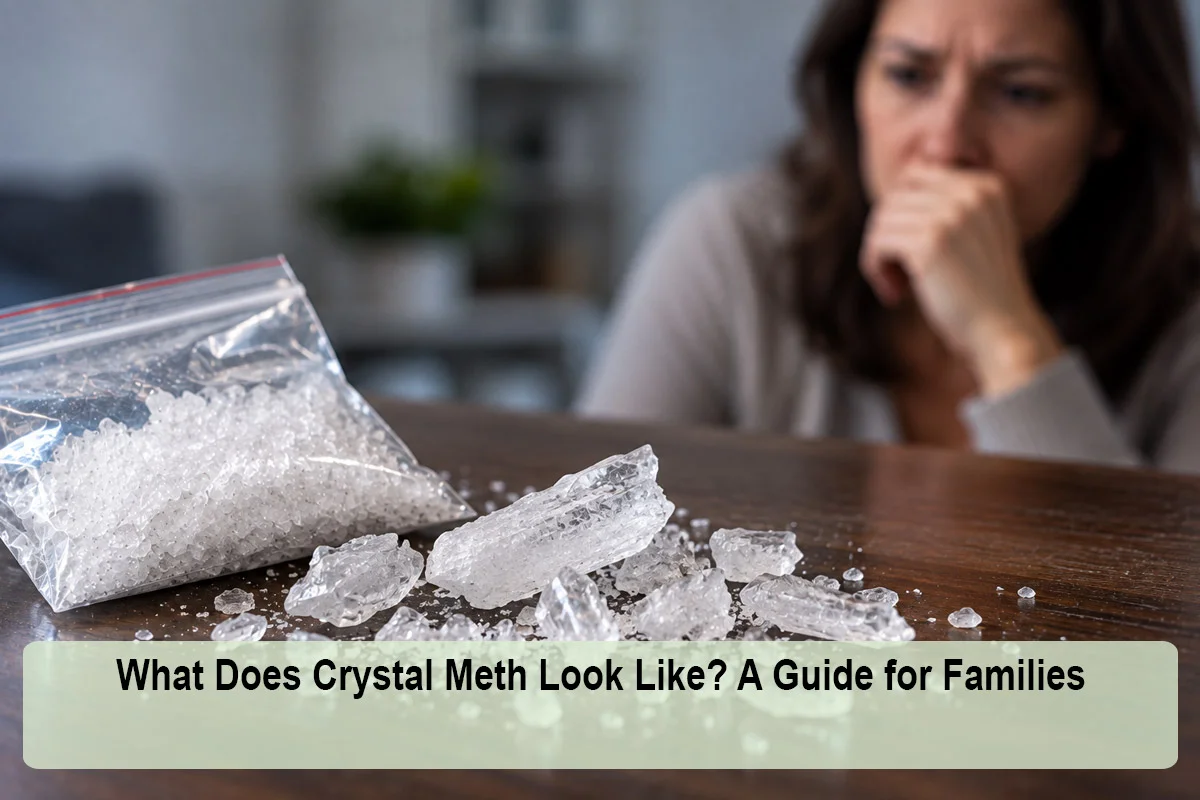
Finding a small bag of shiny, glass-like crystals can be frightening, especially if it belongs to someone you love. This guide explains what crystal meth looks like according to the Drug Enforcement Administration (DEA), the other forms methamphetamine can take, what meth pipes and other paraphernalia look like, the physical and behavioral signs of use, and what to do if you find it. It is written for families and friends trying to understand what they are seeing.
The DEA describes crystal meth as resembling glass fragments or shiny blue-white "rocks" of various sizes. A federal drug intelligence report describes it as a colorless, odorless form of methamphetamine. In practice, crystal meth typically appears as:
Its appearance explains many of its street names, such as ice, glass, crystal, and shards. Our guide to street names for methamphetamine lists these and others.
Crystal is not the only form of meth. According to the DEA, regular methamphetamine is a pill or powder.
| Form | Appearance | How It Is Usually Used |
|---|---|---|
| Crystal meth | Clear or blue-white glass-like shards or rocks | Most often smoked; can also be injected |
| Powder meth | White to off-white powder, sometimes yellowish or pinkish; may look like powder cocaine | Snorted, swallowed, or dissolved and injected |
| Meth pills | Small pills in various colors, sometimes stamped with logos; tablets called yaba are often red or orange and may contain caffeine | Swallowed or crushed |
| Liquid meth | Clear or tinted liquid, sometimes disguised in beverage bottles for smuggling | Rarely used directly; usually converted to crystal |
The only legal methamphetamine product in the United States is Desoxyn, a prescription medication used in limited cases for ADHD and obesity.
Crystal meth and crack are both smoked stimulants and can look somewhat similar, but there are differences:
Our guide to what crack cocaine looks like covers crack in more detail.
Several household items look similar to crystal meth:
It is impossible to confirm what a substance is just by looking at it. Paraphernalia and behavior changes give much more meaningful context.
Families often find paraphernalia before they find the drug. Items linked to meth use include:
Over time, these effects can change a person's appearance significantly. Our guide to meth face and how meth affects the skin and teeth explains these changes and which improve in recovery.
No single sign proves meth use, but a combination should prompt a conversation.
Methamphetamine use frequently escalates over time. Some people start using occasionally, on weekends or to stay awake for work or study. Because tolerance builds quickly, they may begin using more often or in larger amounts to get the same effect. Many people move from snorting or swallowing meth to smoking or injecting it, which produces a faster, more intense high and raises the risk of addiction.
Heavy use often takes the form of binges, sometimes called runs, where a person uses repeatedly for days without sleep, followed by a long crash. Over time, these cycles can lead to severe sleep deprivation, which contributes to paranoia, hallucinations, and psychosis.
Methamphetamine in the illegal drug supply is increasingly found alongside or contaminated with fentanyl. In some regions, a large majority of people who use fentanyl also use meth. People who believe they are using only meth may be exposed to fentanyl without knowing it, and they may have no opioid tolerance. If someone you love may be using meth, keep naloxone (Narcan) at home and learn how to use it. Naloxone is available without a prescription at most pharmacies. Our article on harm reduction explains how it and fentanyl test strips work.
Call 911 if someone using meth shows:
Give naloxone if the person is unresponsive or breathing slowly while you wait for help.
If you suspect meth is being made in a home, which can involve toxic and flammable chemicals, do not investigate yourself. Leave the area and contact law enforcement.
There are no FDA-approved medications specifically for methamphetamine use disorder, but effective treatment exists. Contingency management has the strongest evidence of any behavioral treatment for stimulant use. Our guide to contingency management explains how it works. Cognitive behavioral therapy, the Matrix Model, and treatment for co-occurring depression, anxiety, or psychosis are also important. You can explore programs through our methamphetamine treatment directory.
Recovery from methamphetamine often takes time, and early recovery can be difficult. Many people experience low energy, poor concentration, depression, and strong cravings for weeks or months after stopping. Families can help by being patient, encouraging regular sleep and meals, supporting attendance at treatment and support groups, and recognizing progress rather than focusing only on setbacks. If a return to use happens, it does not mean recovery has failed. It is a signal to strengthen support and adjust the plan. Family members also benefit from their own support, whether through counseling, family therapy, or groups designed for loved ones of people with addiction.
Crystal meth typically looks like clear or blue-white shards resembling broken glass or ice, often found in small plastic bags. Methamphetamine can also come as powder, pills, or liquid. Meth pipes often have a round bulb, which helps distinguish them from crack pipes. Appearance alone cannot confirm what a substance is, but combined with paraphernalia, physical signs, and behavior changes, it can signal a serious problem. Keep naloxone on hand because of fentanyl contamination, and remember that meth addiction is treatable.
This article was reviewed by the RehabsNearMe Editorial Team for accuracy, clarity, and relevance. Information may be sourced from publicly available treatment resources, government agencies, and healthcare references where applicable.
Last reviewed: October 2026
Resources
 Resources
 Resources
 Resources