
 Resources
Teen Destroying Property at Home: Is It a Mental Health Crisis?
Published On 18-10-2026
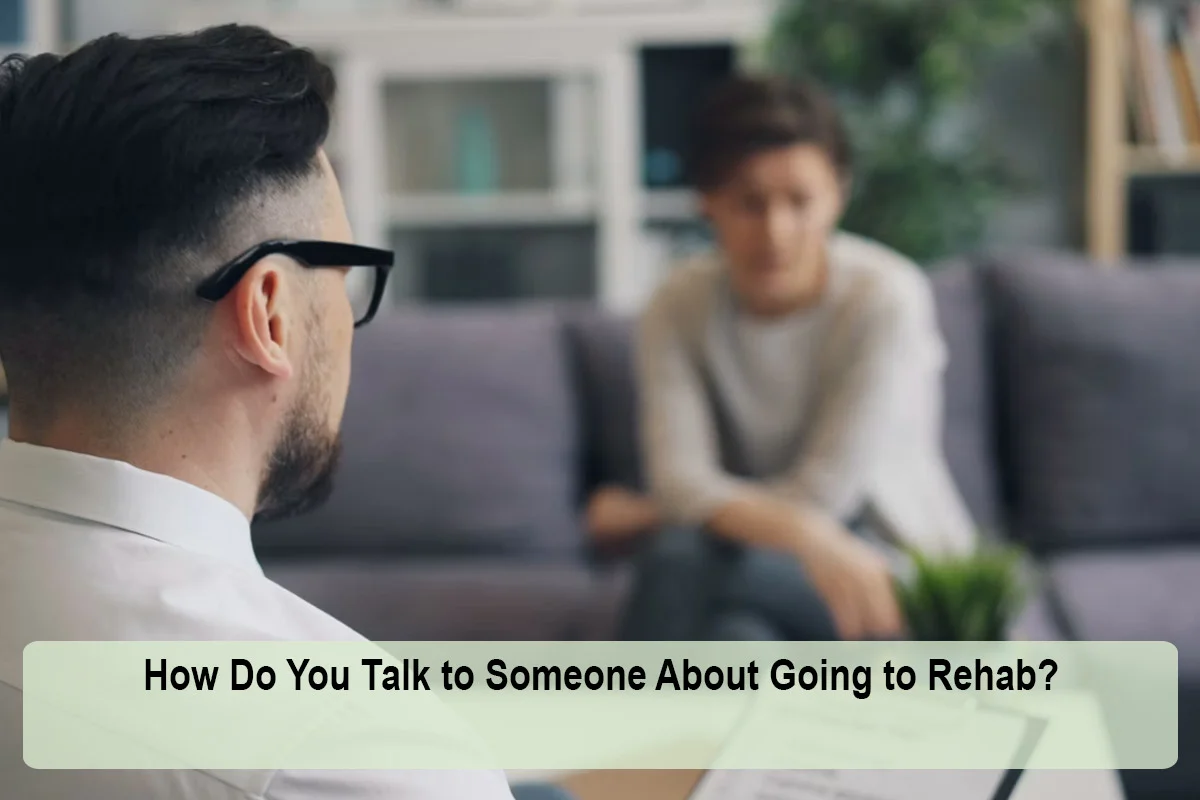
Knowing someone needs help and knowing what to actually say to them are two different problems, and most people get stuck on the second one even after they have fully resolved the first. This piece picks up specifically where our guide on recognizing when a loved one may need treatment leaves off, focused entirely on the mechanics of the conversation itself: when to have it, what to say, what to avoid, and how to respond when it does not go the way you hoped.
Healthcare providers use a structured approach called SBIRT, Screening, Brief Intervention, and Referral to Treatment, endorsed by SAMHSA and adopted across primary care and emergency medicine specifically because it works in brief, real-world conversations rather than requiring a formal, extended therapy session. In fact, brief interventions built on this model are designed to fit into as little as five minutes of focused conversation, with more structured versions running fifteen to thirty minutes, which is a useful reminder that an effective conversation does not need to be a marathon sit-down to be worthwhile. The "brief intervention" piece of SBIRT is built on motivational interviewing principles, and it offers a genuinely useful template for a family conversation, not just a clinical one.
A commonly taught structure within this approach is FRAMES: Feedback (sharing specific, observed concerns, not vague worry), Responsibility (making clear the choice is theirs, not something being forced on them), Advice (offering clear information or a recommendation, with permission), Menu of options (presenting more than one possible next step rather than a single ultimatum), Empathy (approaching the conversation with warmth rather than judgment), and Self-efficacy (expressing genuine belief in their ability to change). Conversations built around these elements consistently outperform confrontational or purely fact-based approaches at actually moving someone toward treatment.
Motivational interviewing research identifies four specific communication skills, often remembered by the acronym OARS, that make the biggest difference in how a conversation lands:
| Skill | What It Looks Like |
|---|---|
| Open-ended questions | "What's been going on with your drinking lately?" instead of "Are you drinking too much?" |
| Affirmations | Genuinely acknowledging something real, "I know how hard you've been trying to hold things together," rather than empty praise |
| Reflective listening | Repeating back what you heard in your own words before responding, so the person feels heard rather than immediately corrected or argued with |
| Summarizing | Periodically recapping the conversation so far, which reinforces that you are actually listening and helps surface the person's own stated reasons for considering change |
Research on this approach specifically tracks something called "change talk," language where the person themselves starts articulating reasons to change, versus "sustain talk," language defending the status quo. A skilled conversation partner uses open questions and reflective listening specifically to draw out more change talk, since people are consistently more persuaded by reasons they generate themselves than by reasons someone else hands them.
The same message lands completely differently depending on when it is delivered. A conversation attempted in the middle of an argument, immediately after discovering evidence of use, or while the person is actively intoxicated is far less likely to be heard than the same conversation offered calmly, privately, and at a moment when the person is sober and not in crisis. This does not mean waiting for a perfect moment that may never arrive; it means deliberately choosing a calm window rather than defaulting to the moment your own frustration or fear peaks.
It is also worth recognizing, and using, a specific kind of window: a moment when the person has just experienced a natural consequence of their use, a missed obligation, a health scare, a difficult morning after, without you needing to manufacture or exaggerate that consequence. Research on family-based engagement approaches specifically emphasizes striking during these naturally occurring windows of receptiveness rather than waiting for a scheduled, formal conversation that may miss the moment entirely.
A conversation built on the FRAMES structure might sound something like this in practice: starting with specific, observed feedback rather than accusation ("I've noticed you've missed work three times this month, and I'm worried"), making clear the decision is theirs ("I can't make this choice for you, and I'm not trying to"), offering a concrete next step with permission ("Would it be okay if I shared some information about a counselor I found?"), presenting more than one option rather than an ultimatum ("There's an option to talk to your doctor first, or to call a specific program directly, whichever feels more comfortable"), and closing with genuine belief in their capacity ("I've seen you handle hard things before, and I believe you can handle this too").
Notice what is absent from this structure: threats, comparisons to other people's worse situations, exhaustive lists of every past incident, and language that reduces the person to their substance use rather than treating them as someone capable of change. None of these absent elements are wrong because they are unkind in the abstract; they are specifically counterproductive because they tend to increase defensiveness and sustain talk rather than open genuine consideration.
A single conversation rarely resolves this on the first attempt, and that is normal, not a sign of failure. If the person becomes defensive, denies there is a problem, or shuts the conversation down entirely, the most productive response is usually to avoid escalating into an argument, acknowledge their reaction without abandoning your concern, and leave the door open for a future conversation rather than treating this attempt as a final verdict. "I hear that you don't see it the way I do right now. I still love you and this concern isn't going away, and I'm here whenever you want to talk about it again" does more long-term work than pushing harder in a single sitting once it is clear the person has closed off.
It is worth preparing yourself emotionally for this outcome before the conversation happens, precisely because the instinct to escalate when met with denial or anger is strong and understandable. Motivational interviewing research specifically describes "rolling with resistance" rather than confronting it directly, meaning that pushback from the other person is treated as useful information about where they currently stand, not as an obstacle to argue through in the moment. A conversation that ends without agreement but without also damaging the relationship keeps the door open for the next attempt, while a conversation that escalates into conflict often makes the next attempt considerably harder to have.
Bringing in additional voices, a spouse, a sibling, a close friend, can strengthen a conversation, but the same principles apply regardless of how many people are involved. A gathering that feels like an ambush, multiple people speaking in sequence with prepared statements in a room the person did not know they were walking into, tends to trigger the same defensive reaction a single confrontational conversation would, simply amplified. If involving others, it generally works better to have one person lead a calm, structured conversation using the FRAMES approach, with others present to offer support and their own specific observations when invited, rather than treating the moment as a formal, staged event the person is confronted with unexpectedly.
Consider a parent who has been rehearsing a confrontational speech for weeks, planning to deliver it the next time their adult child comes home late and clearly under the influence. Using the framework above instead, they wait for a quiet Sunday morning when their child is sober and relaxed, open with a specific, non-accusatory observation about a missed family event rather than a general character judgment, ask an open question about how things have been going rather than leading with their own theory, and end by offering, not insisting on, a specific next step. The conversation does not end in an immediate agreement to enter treatment. But the child does not shut down defensively either, and two weeks later brings the subject up again on their own, referencing the earlier conversation directly. That delayed, self-initiated follow-up is a common and meaningful outcome of a well-timed, non-confrontational conversation, even when it does not produce an immediate yes.
If this is the first time you are approaching this topic, our guide to recognizing when a loved one may need treatment covers the broader strategic approach, including the research on CRAFT as a structured family training program, which this article's conversation techniques are designed to work within. Once someone is willing to consider treatment, our guide to choosing a rehab center is the natural next step, and our overview of intensive family programs is worth exploring if ongoing family involvement in treatment feels important for your situation.
This article was reviewed by the RehabsNearMe Editorial Team for accuracy, clarity, and relevance. Information may be sourced from publicly available treatment resources, government agencies, and healthcare references where applicable.
Last reviewed: September 2026
Resources
 Resources
 Resources
 Resources