
 Resources
Positive Coping Skills for Teens: 44 Healthy Ways to Manage Stress
Published On 25-10-2026
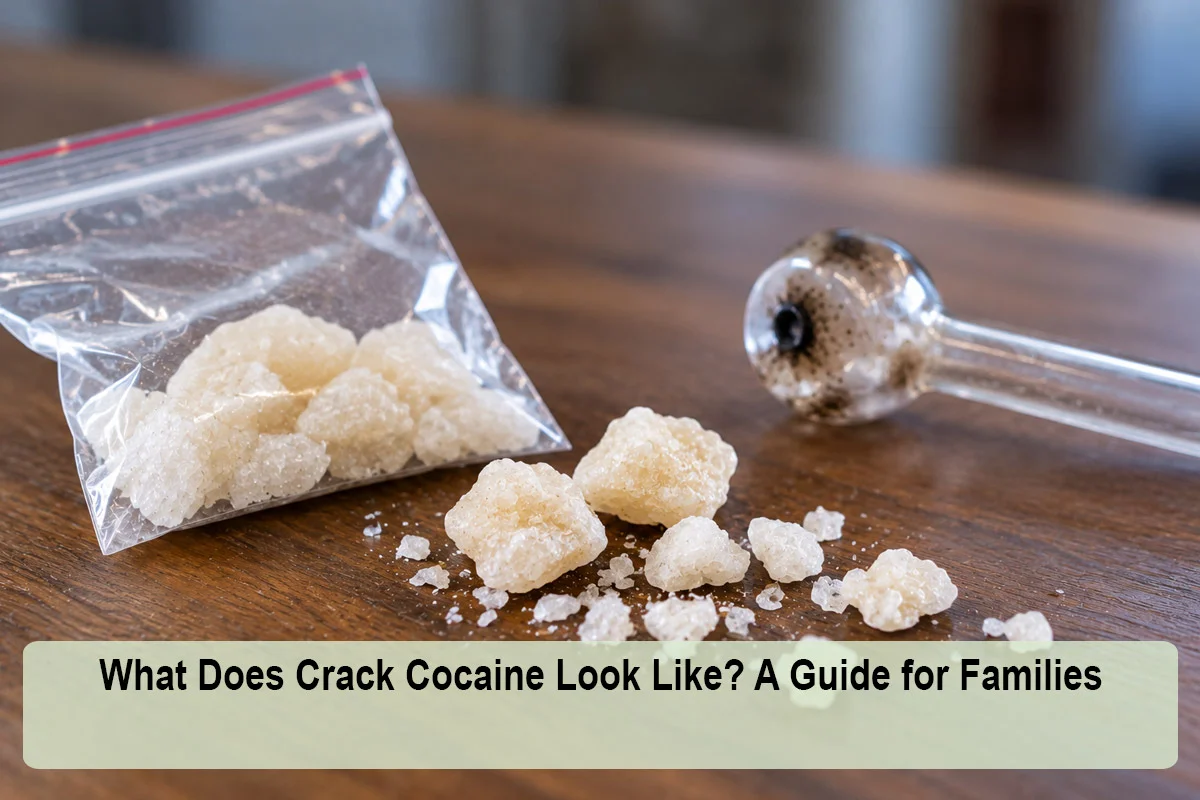
If you have found something in a loved one's room, car, or pocket and are wondering whether it could be crack cocaine, you are not alone. Parents, partners, and friends search this question every day, often in a moment of fear. This guide explains what crack cocaine looks like according to the Drug Enforcement Administration (DEA), how it differs from powder cocaine, what crack paraphernalia looks like, the physical and behavioral signs of use, and what to do next. It is written for families trying to understand what they are seeing, not as a guide to using or buying drugs.
According to the DEA, crack cocaine looks like small, irregularly shaped white rocks. More specifically, crack typically appears as:
Crack is sometimes compared to small chunks of candle wax, broken bits of chalk, or soap shavings. Because appearance alone can be misleading, it is impossible to know for certain what a substance is just by looking at it.
Crack and powder cocaine are the same drug in different chemical forms. The DEA describes cocaine hydrochloride, the powder form, as a white, crystalline powder derived from coca leaves. Crack is cocaine base, processed into a form that can be smoked.
| Powder Cocaine | Crack Cocaine | |
|---|---|---|
| Appearance | Fine, white, crystalline powder | Small, irregular off-white to yellowish rocks |
| How it is usually used | Snorted, or dissolved and injected | Smoked |
| Onset of effects | Minutes when snorted | Within seconds when smoked |
| Duration of high | Longer than crack, often 15 to 30 minutes or more | Very short, often 5 to 10 minutes |
| Common paraphernalia | Rolled bills, cut straws, small mirrors, razor blades | Glass pipes, steel wool or copper mesh, lighters |
Because crack reaches the brain within seconds and the high fades quickly, people who use it often use repeatedly over short periods. This pattern of intense highs and rapid crashes contributes to how quickly crack use can become compulsive. For more on the drug itself, see our overview of cocaine addiction.
Several harmless or less concerning substances can look similar to crack, including:
Crack can also be confused with crystal methamphetamine, which tends to look clearer and more glass-like. Our guide to what crystal meth looks like explains the differences. Finding paraphernalia alongside a substance, or noticing behavioral changes, gives much more meaningful information than the substance alone.
Often, families find paraphernalia before they find the drug itself. Items associated with smoking crack include:
Crack use often leaves physical clues, especially with repeated use:
No single sign proves crack use. Many of these signs can have other causes. But a combination of paraphernalia, physical signs, and behavior change is a strong reason to start a conversation. Our guide on how to know if a loved one needs addiction treatment can help you think it through.
Crack's speed is a large part of its danger. When smoked, it reaches the brain within seconds and produces an intense rush of euphoria, followed by a crash just minutes later. That rapid rise and fall creates powerful cravings to use again almost immediately. Many people describe using crack in binges, smoking repeatedly over hours or days until they run out of money or become exhausted.
The DEA notes that people who use cocaine often binge until they are exhausted or run out of the drug, and that the crash which follows brings mental and physical exhaustion, sleep, and depression lasting several days, after which cravings return. This cycle can quickly take over a person's time, finances, and relationships.
One of the most important things families need to know is that crack and powder cocaine in the illegal drug supply can be contaminated with fentanyl, a powerful synthetic opioid. People who use cocaine may not expect or have tolerance to opioids, which makes contaminated cocaine especially dangerous. A person who uses crack can overdose on fentanyl without knowing it was there.
If someone you love may be using crack, keeping naloxone (Narcan) in your home and learning how to use it can save their life. Naloxone is available without a prescription at most pharmacies. Fentanyl test strips, which can detect fentanyl in a drug sample, are also legal in many states. Our article on harm reduction explains how these tools work.
Call 911 immediately if someone shows signs of overdose, which can include:
If the person is unresponsive or breathing very slowly, opioids such as fentanyl may be involved. Give naloxone if available while waiting for help. Our guide to signs of a cocaine overdose covers this in more detail.
There are currently no FDA-approved medications specifically for cocaine use disorder, but effective treatment exists. Contingency management, which provides rewards for drug-free tests, has strong evidence for stimulant use disorders, along with cognitive behavioral therapy and treatment for co-occurring mental health conditions. Because crack use often involves intense cravings and repeated binges, structured treatment, such as residential or intensive outpatient care, can be especially helpful early on. You can explore programs through our cocaine treatment directory.
Crack cocaine typically looks like small, irregular, off-white to yellowish rocks, often found in small baggies. It is the smokable form of cocaine and is usually used with glass pipes, steel wool or copper mesh, and lighters. Appearance alone cannot confirm what a substance is, but combined with paraphernalia, physical signs such as burned fingertips or lips, and behavior changes, it can signal a serious problem. Because the drug supply may contain fentanyl, keep naloxone on hand, and remember that crack addiction is treatable.
This article was reviewed by the RehabsNearMe Editorial Team for accuracy, clarity, and relevance. Information may be sourced from publicly available treatment resources, government agencies, and healthcare references where applicable.
Last reviewed: October 2026
Resources
 Resources
 Resources
 Resources