Loading...

Street Names for Cocaine and Crack: Slang, Emojis and Warning Signs

Resources
Published On 04-10-2026
7 min read

Published by RehabsNearMe Research & Editorial Team

Street Names for Cocaine and Crack: Slang, Emojis and Warning Signs

If you have seen an unfamiliar word in a text message, on social media, or in a conversation and wondered whether it refers to cocaine, this guide is for you. Drug slang changes constantly and varies by region, generation, and social group, but many terms for cocaine and crack have been in use for decades. This guide lists common street names for cocaine and crack, drawing on Drug Enforcement Administration (DEA) materials, explains how emojis are used as code, and offers advice on what to do if you see these terms. It is intended for parents, partners, educators, and anyone trying to understand what a loved one may be involved in.

Why Street Names Matter

Slang serves to disguise what is being discussed, whether to avoid attention from parents, employers, or law enforcement. Recognizing these terms can help families notice a problem earlier. But context matters. Many slang words are also ordinary words with innocent meanings. A single word in a message is not proof of drug use. Patterns, combined with changes in behavior, are much more meaningful.

Common Street Names for Cocaine

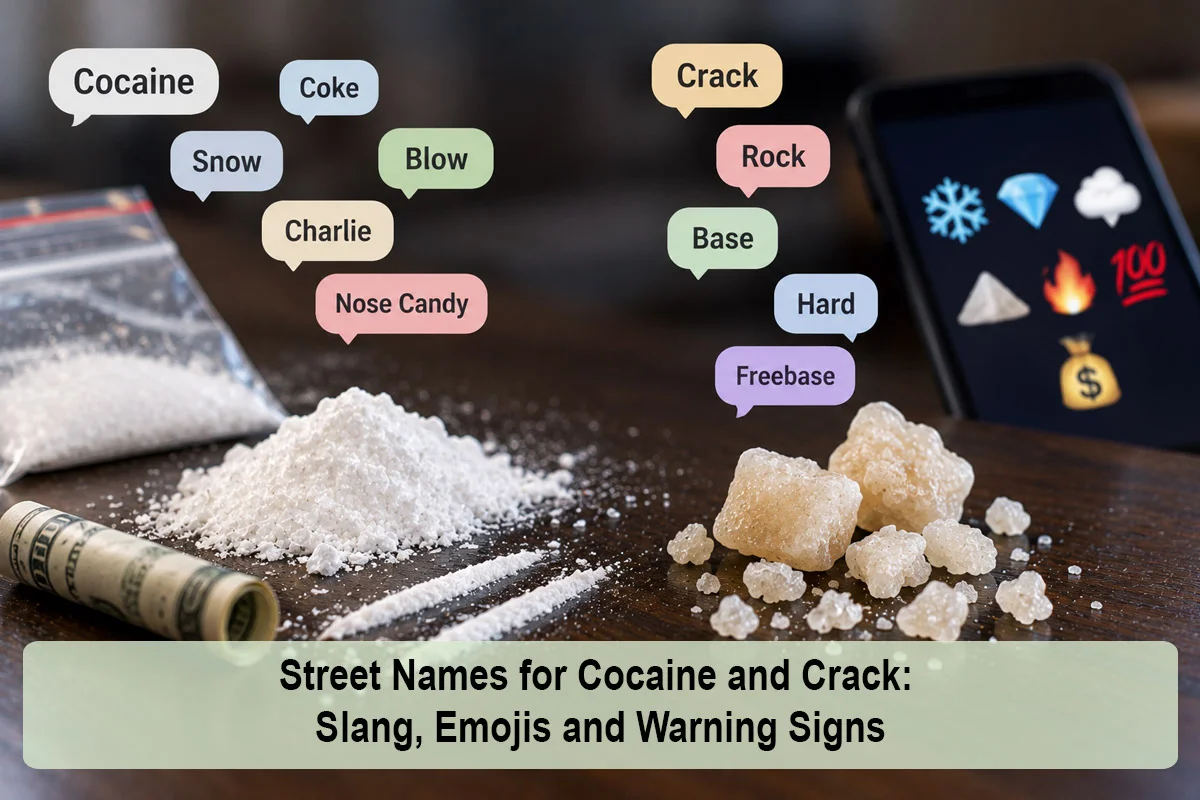
The DEA lists the following as common street names for cocaine: Blow, Coca, Coke, Crack, Crank, Flake, Rock, Snow, and Soda Cot. Many other terms are widely used. They tend to fall into a few categories.

Names Based on Appearance

  • Snow and White: referring to its white color
  • Flake: referring to its flaky, crystalline texture
  • Powder or Pearl: referring to its form or appearance
  • Snowball: a variation on snow

Names Based on How It Is Used

  • Blow: one of the most widely recognized terms, referring to snorting
  • Nose candy: referring to snorting
  • Line or Bump: often used to describe an amount taken at one time

Shortened and Variant Names

  • Coke: a common shortening of cocaine
  • Coca: from the coca plant
  • C or Big C: a simple abbreviation
  • Yayo or Yeyo: popularized through film and music
  • Charlie: especially common in the United Kingdom and Ireland
  • Soda Cot: listed by the DEA

Names Implying Status or Glamour

  • Booger sugar, Toot, and similar playful or joking terms
  • Terms that reference wealth or parties, reflecting the drug's long association with nightlife

Common Street Names for Crack Cocaine

Crack has its own vocabulary, often based on its rock-like form:

  • Rock or Rocks: the most common term, describing its appearance
  • Hard: contrasting crack with "soft," which refers to powder cocaine
  • Base or Freebase: referring to cocaine base
  • Crack: from the crackling sound it makes when heated
  • Nuggets, Gravel, or Pebbles: describing its shape
  • Dice or Candy: other appearance-based terms
  • Cookies: sometimes used for larger amounts

"Hard" and "soft" are important to recognize. In many communities, these terms are used to distinguish crack from powder cocaine without naming either.

Slang for Cocaine Combined With Other Drugs

Cocaine is often mixed or used with other substances, and these combinations have their own names. Recognizing them matters because combinations can be especially dangerous.

  • Speedball: cocaine combined with heroin or another opioid. This combination is extremely dangerous because stimulant effects can mask the depressant effects of the opioid until breathing slows dangerously.
  • Snowball: also sometimes used for cocaine and heroin together.
  • Cocaine and alcohol: while not always given a slang name, combining the two produces cocaethylene, which places extra strain on the heart. Our guide to cocaine detection explains more.

Terms Associated With Cocaine Use

Beyond names for the drug itself, some words describe the experience or behaviors around use:

  • Geeking or Tweaking: being highly agitated or intensely high (also used for methamphetamine)
  • Crashing: the exhaustion and low mood after the high wears off
  • Binge or Run: a period of repeated use
  • Chasing the high: using repeatedly to recapture an initial high
  • Cokehead or Crackhead: stigmatizing terms for people who use the drug, which can discourage people from seeking help

It is worth noting that labels like "crackhead" carry heavy stigma and can make it harder for people to ask for help. Our guide on what to avoid saying to someone struggling with addiction explains why language matters.

Emoji Codes for Cocaine

Drug-related communication increasingly happens through social media and messaging apps, often using emojis. The DEA released a guide for parents decoding emojis that may be used in drug transactions. Among the examples reported from that guide, a combination of cookie, snowman, box, and parachute emojis can signal that a large batch of cocaine has arrived. Snowflake and snowman emojis are commonly associated with cocaine.

The DEA emphasizes an important caveat: emojis on their own should not be treated as evidence of illegal activity. They become meaningful when combined with changes in behavior, appearance, or unexplained changes in money. Emoji usage also shifts quickly, so any list is a snapshot rather than a definitive code.

Why Slang Lists Have Limits

Several factors make it difficult to rely on a fixed list of street names:

  • Constant change. New terms appear, often from music, social media, or local culture, and older ones fade.
  • Regional variation. The same term can mean different things in different cities or countries. For example, "crank" is listed by the DEA for cocaine but is more commonly associated with methamphetamine. Our guide to street names for methamphetamine covers that overlap.
  • Everyday words. Terms like "snow," "candy," and "white" have obvious innocent meanings.
  • Private codes. Friend groups often invent their own terms that will not appear on any list.

Rather than trying to memorize every possible term, focus on the overall picture: secrecy, unusual messages, behavior changes, and physical signs.

Where Slang Comes From Today

Much of today's drug slang spreads through music, movies, television, and social media. Terms like "yayo" became widely known through film, and lyrics regularly introduce new nicknames or revive old ones. On social media and messaging apps, people may use abbreviations, intentional misspellings, hashtags, or emojis to avoid content filters. Disappearing messages and private accounts can make this harder for parents to see.

For families, the takeaway is not to monitor every word but to stay engaged. Knowing which apps a young person uses, who they talk to, and how they spend their time often reveals more than decoding individual terms.

Talking to Teens About Drug Slang

Learning street names can also open the door to prevention conversations. Some approaches that help:

  • Ask what they have heard. Teens often know more slang than adults. Asking them to explain terms can start an honest conversation.
  • Share facts, not scare tactics. Explain real risks, such as fentanyl contamination, in a calm, direct way.
  • Talk about pressure. Discuss how they might respond if someone offers them drugs, and make sure they know they can call you for a ride with no immediate interrogation.
  • Keep talking. Prevention works best as an ongoing conversation rather than a single lecture.

Warning Signs Beyond Language

If you are worried about cocaine use, look for patterns such as:

  • Bursts of high energy, talkativeness, and confidence followed by exhaustion
  • Frequent nosebleeds, runny nose, or sniffing (with powder cocaine)
  • Burned fingertips or lips (with crack)
  • Dilated pupils
  • Decreased appetite and weight loss
  • Unexplained spending or missing money
  • Paranoia, anxiety, or irritability
  • Small baggies, rolled bills, cut straws, glass pipes, or steel wool

Our guide to what crack cocaine looks like describes the drug and its paraphernalia in more detail.

The Fentanyl Warning

Cocaine in the illegal drug supply can be contaminated with fentanyl. People who use cocaine often have no tolerance to opioids, which makes accidental exposure especially deadly. If someone you know may be using cocaine, keep naloxone on hand and learn the signs of opioid overdose, including slow or stopped breathing, unresponsiveness, and blue or gray lips. Call 911 immediately in an overdose.

What to Do If You Find Cocaine Slang in a Loved One's Messages

  1. Do not panic. One message is not proof. Consider the context and whether other signs are present.
  2. Gather your thoughts. Note specific concerns, such as behavior changes, rather than focusing only on the messages.
  3. Choose a calm time to talk. Express care and concern. Leading with accusations about reading their messages can shut the conversation down.
  4. Listen. Ask open questions and try to understand what is going on.
  5. Seek guidance. A doctor, counselor, or addiction specialist can help you plan next steps. Approaches like CRAFT are designed to help families encourage a loved one toward treatment.

Our guide on how to talk to someone about going to rehab offers practical, evidence-based strategies.

Getting Help for Cocaine Addiction

Cocaine and crack addiction are treatable. Effective approaches include contingency management, cognitive behavioral therapy, and integrated treatment for co-occurring mental health conditions. Treatment may be outpatient, intensive outpatient, or residential depending on severity. You can explore options through our cocaine treatment directory, or call the SAMHSA National Helpline at 1-800-662-4357 for free, confidential referrals.

The Bottom Line

Common street names for cocaine include blow, coke, snow, flake, white, yayo, and charlie, while crack is often called rock, hard, base, or freebase. The DEA's list also includes coca, crank, and soda cot. Emojis such as snowflakes and snowmen may be used as code, but the DEA cautions that emojis alone are not evidence of drug activity. Slang changes constantly, so focus on the whole picture, including behavior, physical signs, and secrecy, and respond with concern rather than accusation.

Frequently asked questions

The DEA lists blow, coca, coke, crack, crank, flake, rock, snow, and soda cot. Other widely used terms include white, powder, nose candy, yayo, charlie, and C. Slang varies by region and changes over time.

Common street names for crack include rock, rocks, hard, base, freebase, nuggets, gravel, and candy. The term hard is often used to distinguish crack from powder cocaine, which may be called soft.

Snowflake and snowman emojis are commonly associated with cocaine. A DEA guide for parents reported that a combination of cookie, snowman, box, and parachute emojis can signal a large batch of cocaine. The DEA cautions that emojis alone are not evidence of illegal activity.

A speedball is cocaine combined with heroin or another opioid. It is extremely dangerous because the stimulant effects of cocaine can mask the depressant effects of the opioid, increasing the risk of fatal overdose when the cocaine wears off.

In drug slang, hard typically refers to crack cocaine, the solid rock form, while soft refers to powder cocaine. These terms let people distinguish between the two without naming either directly.

Stay calm and consider the context, since many slang terms have innocent meanings. Look for other warning signs such as behavior changes or paraphernalia. Choose a calm time to express concern without accusations, and consider talking with a counselor or addiction specialist about next steps.

This article was reviewed by the RehabsNearMe Editorial Team for accuracy, clarity, and relevance. Information may be sourced from publicly available treatment resources, government agencies, and healthcare references where applicable.

Last reviewed: October 2026

Related articles

Top