
 Resources
Teen Destroying Property at Home: Is It a Mental Health Crisis?
Published On 18-10-2026
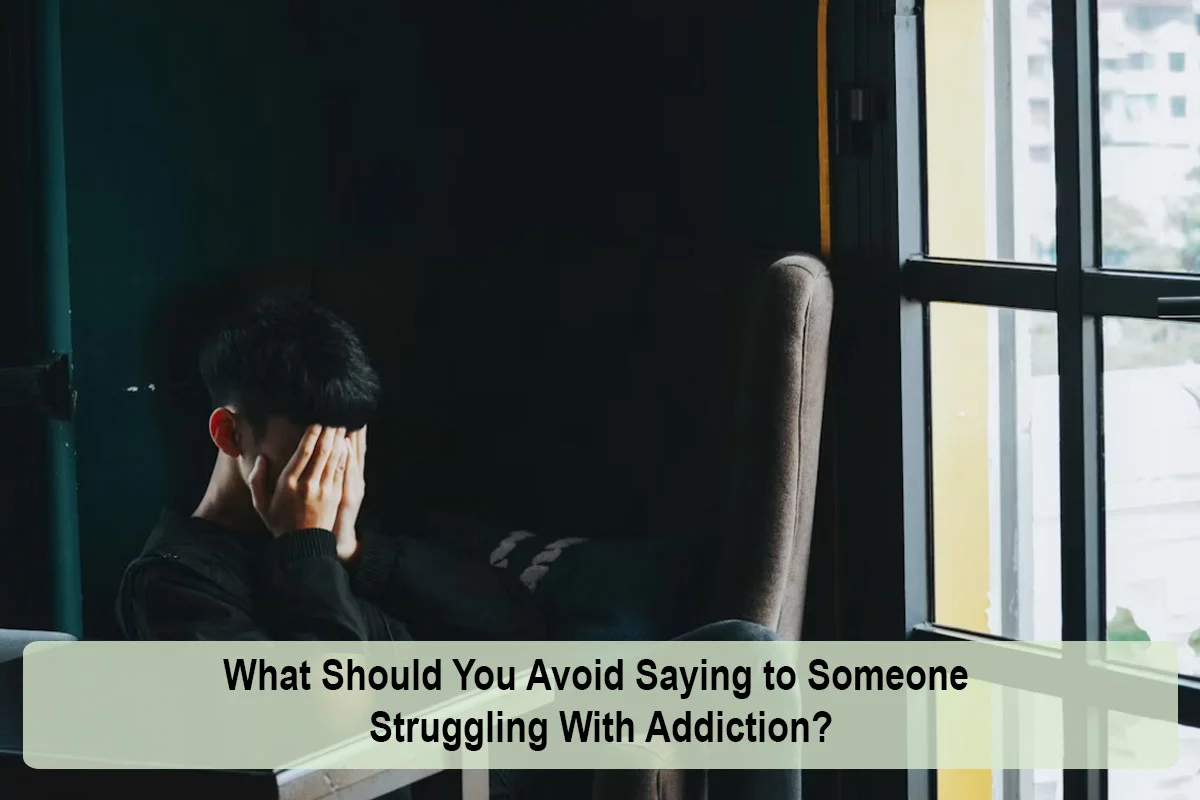
Our guide to talking to someone about going to rehab covers how to structure the specific, high-stakes conversation about entering treatment. This piece is about something broader and more everyday: the words and phrases that come up in ordinary conversation with someone struggling with addiction, and why specific word choices have been shown, in controlled research, to change how that person is treated and how likely they are to seek help at all.
This is not a matter of politeness for its own sake. In a controlled study, researchers John Kelly and Cara Westerhoff presented clinicians with an identical case description of a person, varying only whether that person was labeled a "substance abuser" or described as "having a substance use disorder." Clinicians who read the "substance abuser" version rated the person as more deserving of punishment, more of a social threat, and more personally responsible for their condition than clinicians who read the identical case described with person-first language. The only variable that changed was two words. Follow-up research using implicit association testing found the same pattern extends beyond clinicians to general attitudes, with "substance abuser" carrying measurably stronger negative associations than "person with a substance use disorder."
This matters beyond an academic curiosity because of what stigma does downstream. According to research cited by the National Institute on Drug Abuse, people delay seeking treatment for substance use disorders by an average of five to six years after the disorder begins, and stigma, including the stigma reinforced by the language used around them, is a documented contributor to that delay. The words a family member, friend, or even a stranger uses are not neutral; they measurably shape whether someone feels safe enough to ask for help.
What makes this research particularly striking is that the clinicians in the Kelly and Westerhoff study were trained professionals, not laypeople unfamiliar with addiction. If two words can measurably shift a trained clinician's judgment about how much blame and punishment a person deserves, the effect on an untrained family member or friend, absorbing language from media, casual conversation, and years of cultural messaging about addiction, is reasonably assumed to be at least as significant, if less formally measured.
| Instead of Saying | Consider | Why It Matters |
|---|---|---|
| "Addict" or "alcoholic" | "Person with a substance use disorder" or "person with an alcohol use disorder" | Defines the person by their condition rather than recognizing them as a whole person who happens to have a diagnosis |
| "Substance abuser" | "Person who uses substances" or "person with a substance use disorder" | Research shows this specific term increases perceived blame and support for punitive rather than treatment-oriented responses |
| "Clean" or "dirty" (referring to a drug test or a person) | "Testing positive" or "testing negative," "in recovery" or "not currently using" | Applying "dirty" to a person carries a moral judgment that has nothing to do with a medical condition |
| "Why can't you just stop" | Asking what has made stopping difficult, or simply listening without a rhetorical question | Implies addiction is a simple choice rather than a chronic condition involving real neurological change |
| "You're throwing your life away" | Expressing specific concern without catastrophizing or moralizing | Global, identity-level judgments tend to increase shame and defensiveness rather than opening a conversation |
This phrase deserves specific attention because it is so common and so rarely questioned. It reflects a genuine, understandable confusion, but the framing itself does real harm. Addiction involves documented changes to brain circuitry governing reward, stress, and self-control, changes that make "just stopping" categorically different from a simple decision, in the same way "why can't you just lower your blood sugar" misunderstands how diabetes works. Saying this, even gently, communicates that you see the person's struggle as a failure of willpower rather than a medical condition, which is precisely the belief research shows increases shame and reduces the likelihood someone will disclose their struggle or seek help.
It is worth acknowledging that this question often comes from a place of genuine bewilderment rather than cruelty, particularly from people who have never personally experienced substance dependence and cannot intuitively grasp why willpower alone is not sufficient. That confusion is understandable. The point is not that anyone asking this question is a bad person; it is that the question itself, however sincerely meant, communicates a specific misunderstanding that tends to shut down rather than open honest conversation, and that a different framing achieves the same underlying goal, expressing love and concern, without that particular cost.
Many people in recovery use terms like "addict" or "alcoholic" to describe themselves, often within mutual-help communities where that language carries a different, reclaimed meaning. NIDA's guidance on this is specific: let people choose how they are described, rather than assuming the terms they use for themselves are automatically appropriate for others to use about them. A term someone has chosen for their own identity within a recovery community is not the same as an outsider applying that term to them, and the difference matters. If you are unsure, it is entirely reasonable to simply ask how someone prefers to be described.
This distinction, between self-identification and outside labeling, echoes a pattern seen in other areas of health and identity language, where a community reclaiming a term for internal use does not automatically extend permission for that same term to be used by others outside the community. Respecting this boundary, and simply asking rather than assuming, is a small habit that consistently signals genuine respect rather than performative correctness.
Consider a parent who says to their adult child, "I don't understand why you can't just stop drinking, you're smarter than this." The intention is love and concern. The effect, based on what the research shows, is to frame the struggle as a character or intelligence failure rather than a medical condition, which tends to increase shame and defensiveness rather than opening space for honesty. Compare that to: "I've noticed the drinking has been getting heavier, and I'm worried. I know this isn't something you can just decide to stop, and I want to understand what's going on." The second version acknowledges the same underlying concern without embedding a judgment that research consistently shows backfires.
Beyond specific stigmatizing terms, certain conversational patterns tend to be counterproductive regardless of the exact vocabulary used. Comparing someone's struggle to another person's ("your cousin got sober no problem, why can't you") tends to increase shame without providing useful information, since addiction's course varies enormously between individuals for reasons that have little to do with willpower or character. Blanket ultimatums delivered in anger ("get help or I'm done with you") can occasionally motivate action, but more often produce defensiveness or, in the worst cases, isolation at exactly the moment connection matters most. This does not mean boundaries are never appropriate; it means boundaries communicated calmly and consistently tend to land very differently than the same boundary delivered as a threat in the heat of frustration.
Another pattern worth naming is what researchers sometimes call minimization dressed up as reassurance: statements like "it's not that bad" or "at least you're not as bad as so-and-so." These are usually intended kindly, meant to relieve guilt, but they can inadvertently undercut someone's own recognition that a problem exists, particularly if that person is already in a fragile, ambivalent state about whether to seek help. A more effective alternative acknowledges the person's own assessment of their situation without either amplifying shame or minimizing a concern they have already voiced themselves.
If you are preparing for the specific, structured conversation about entering treatment, our guide to talking to someone about going to rehab covers the FRAMES and OARS frameworks clinicians use for that particular conversation. And if you are trying to determine whether what you are seeing rises to the level of a diagnosable disorder in the first place, our guide to recognizing when a loved one needs treatment is a useful companion resource.
This article was reviewed by the RehabsNearMe Editorial Team for accuracy, clarity, and relevance. Information may be sourced from publicly available treatment resources, government agencies, and healthcare references where applicable.
Last reviewed: September 2026
Resources
 Resources
 Resources
 Resources