
 Resources
Scromiting: Meaning, Symptoms, Causes, and Treatment
Published On 17-11-2026
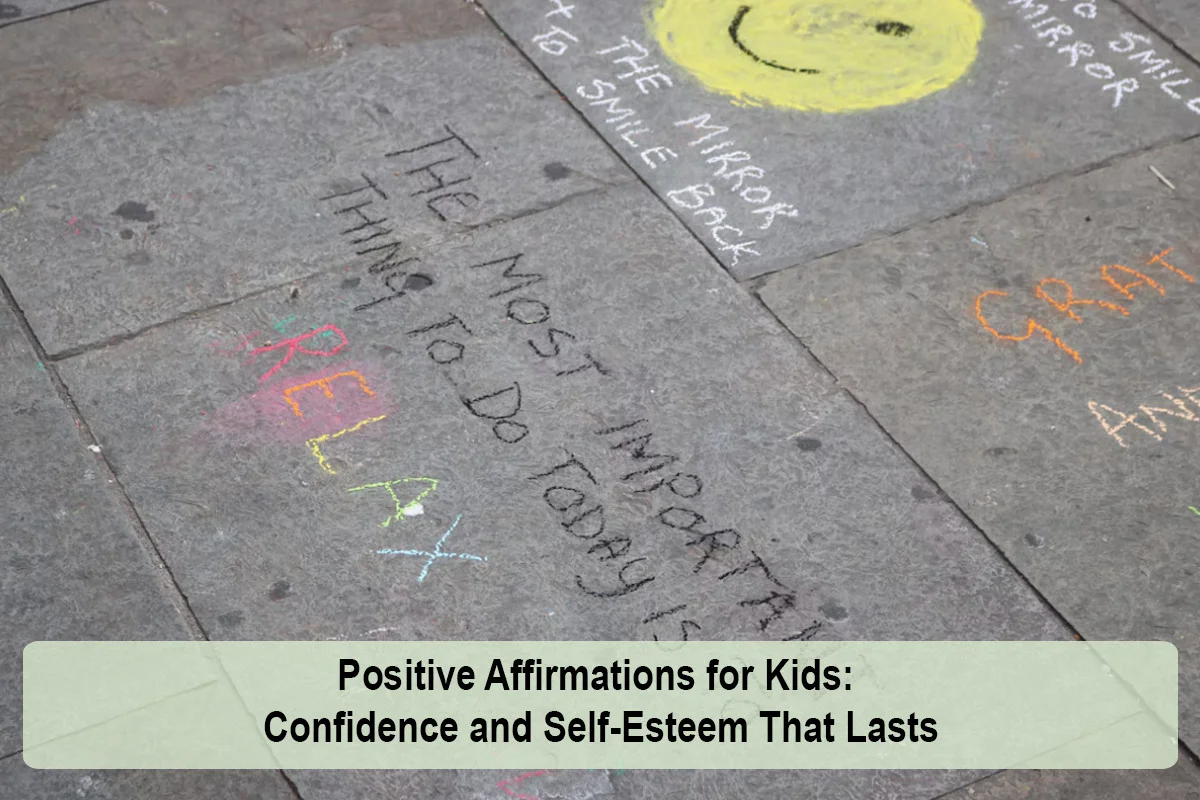
Most lists of positive affirmations for kids look the same: "I am amazing. I am the best. I can do anything." They are well meant, but research suggests that big, sweeping statements can fall flat, especially for the children who need encouragement most. A child who already feels "not good enough" may hear "I am the best" and think, "No, I'm not." The affirmations that actually build confidence are believable, specific and tied to effort and values.
This guide explains what the research shows, gives you four rules for affirmations that work, and offers age-by-age examples, affirmations for specific situations and simple ways to make them part of family life.
In a 2009 study published in Psychological Science, researchers asked adults to repeat the statement "I'm a lovable person." Among participants with low self-esteem, those who repeated it felt worse than those who did not, while people with high self-esteem felt slightly better. The authors concluded that repeating positive self-statements may benefit some people but backfire for the very people who "need" them most. The study involved adults, but the lesson applies to children too: statements that feel untrue can trigger an inner argument.
Another type of affirmation has stronger results. In research published in Science and summarized by the American Association for the Advancement of Science, seventh graders wrote brief assignments about values that mattered to them, such as family, friendship or music, at several points across middle school. Among African American students, those who wrote about their important values raised their grade point averages by about 0.24 points over two years compared with students who wrote about neutral topics. Reflecting on what matters, rather than claiming to be perfect, seems to protect children from stress and self-doubt.
Young children learn through repetition, movement and play. Say these together with gestures.
| Affirmation | Builds |
|---|---|
| "I can try new things." | Courage |
| "I am loved." | Security |
| "I can take a big breath when I'm upset." | Calming |
| "I am a good helper." | Contribution |
| "I can use my words." | Communication |
| Affirmation | Builds |
|---|---|
| "Mistakes help me learn." | Resilience |
| "I can do hard things, one step at a time." | Persistence |
| "I am a kind friend." | Social confidence |
| "It's okay to ask for help." | Help-seeking |
| "My feelings are important." | Emotional awareness |
| Affirmation | Builds |
|---|---|
| "I can't do this yet, but I'm improving." | Growth mindset |
| "I don't have to be perfect to be good enough." | Self-acceptance |
| "I care about being honest." | Values |
| "I can handle being nervous." | Coping with anxiety |
| "My body is strong and capable." | Body confidence |
| "I choose friends who treat me well." | Healthy relationships |
Teens are especially quick to reject anything that sounds fake. Invite them to write their own using the four rules. Examples: "I'm figuring things out, and that's normal," "One bad day doesn't define me," "I can set boundaries with people." Our self-esteem worksheets include a values exercise teens can use.
| Situation | Affirmation |
|---|---|
| Before a test | "I prepared, and I'll do my best." |
| After a mistake | "I can fix it or learn from it." |
| First day somewhere new | "New things feel strange at first. I can get used to this." |
| Friendship trouble | "I deserve friends who are kind to me." |
| Bedtime worries | "I am safe. My worries can wait until morning." |
| Sports or performance | "I can focus on the next play." |
| Feeling left out | "I matter, even when I feel alone." |
| Big feelings | "My feelings are okay. I can calm my body." |
| Instead of | Try |
|---|---|
| "You're so smart." | "You worked out a tricky problem. How did you figure it out?" |
| "You're the best player." | "You kept hustling even when you were tired." |
| "Perfect!" | "I can see how carefully you did that." |
| "Don't be sad." | "It's okay to feel sad. Want to talk about it?" |
| "You're so pretty." | "I love how kind you were to your sister today." |
Teachers can open the day with a class affirmation, use values-writing prompts before tests, and post student-written affirmations on the wall. Values-based writing, like the exercise used in the middle school study above, takes only a few minutes and can be repeated across the year. Keep the focus on effort, kindness and growth, and avoid comparing students.
This takes less than five minutes and turns affirmations into a shared habit rather than a lecture. Over time, let children write new cards for the jar so the words become their own.
Children often take on the voice of the adults around them as their own inner voice. The way you talk to your child, and about yourself, shapes their self-talk more than any list of phrases. Notice effort ("You stuck with that puzzle"), name values in action ("That was honest"), and model kind self-talk when you make mistakes ("I forgot, but I can fix it").
Children believe words they choose more than words handed to them. Try these sentence starters with kids 7 and older: "I am getting better at...", "Something I care about is...", "When things are hard, I can...", "A kind thing I did was...", and "I'm proud that I...". Write the finished sentences on cards and add them to the affirmation jar.
Affirmations help everyday confidence, but they do not treat anxiety, depression or the effects of bullying or trauma. Anxiety is common in young people; NIMH estimates that 31.9% of adolescents have had an anxiety disorder. Talk to your child's doctor or a mental health professional if your child often says they are stupid or hate themselves, avoids school or friends, has frequent stomachaches or meltdowns, or seems persistently sad. Helpful approaches include play therapy for younger children, cognitive behavioral therapy and family therapy. You can compare programs for children and programs for adolescents, or call the SAMHSA National Helpline at 1-800-662-4357. For older kids who are hard on themselves, see teen self-hate talk.
Remember, too, that confidence grows from experience. Give your child chances to succeed at real tasks, such as cooking a simple meal or solving a problem with a friend, and then help them name what they did well.
Positive affirmations for kids work best when they are believable, focused on effort and connected to what your child values. Skip the "I am the best" lists, choose a few phrases that fit your child's age and situation, practice them in playful daily moments and back them up with your own encouraging words. Over time, those small phrases become the voice your child hears inside when things get hard.
This article was reviewed by the RehabsNearMe Editorial Team for accuracy, clarity, and relevance. Information may be sourced from publicly available treatment resources, government agencies, and healthcare references where applicable.
Last reviewed: November 2026
Resources
 Resources
 Resources
 Resources