
 Resources
Scromiting: Meaning, Symptoms, Causes, and Treatment
Published On 17-11-2026
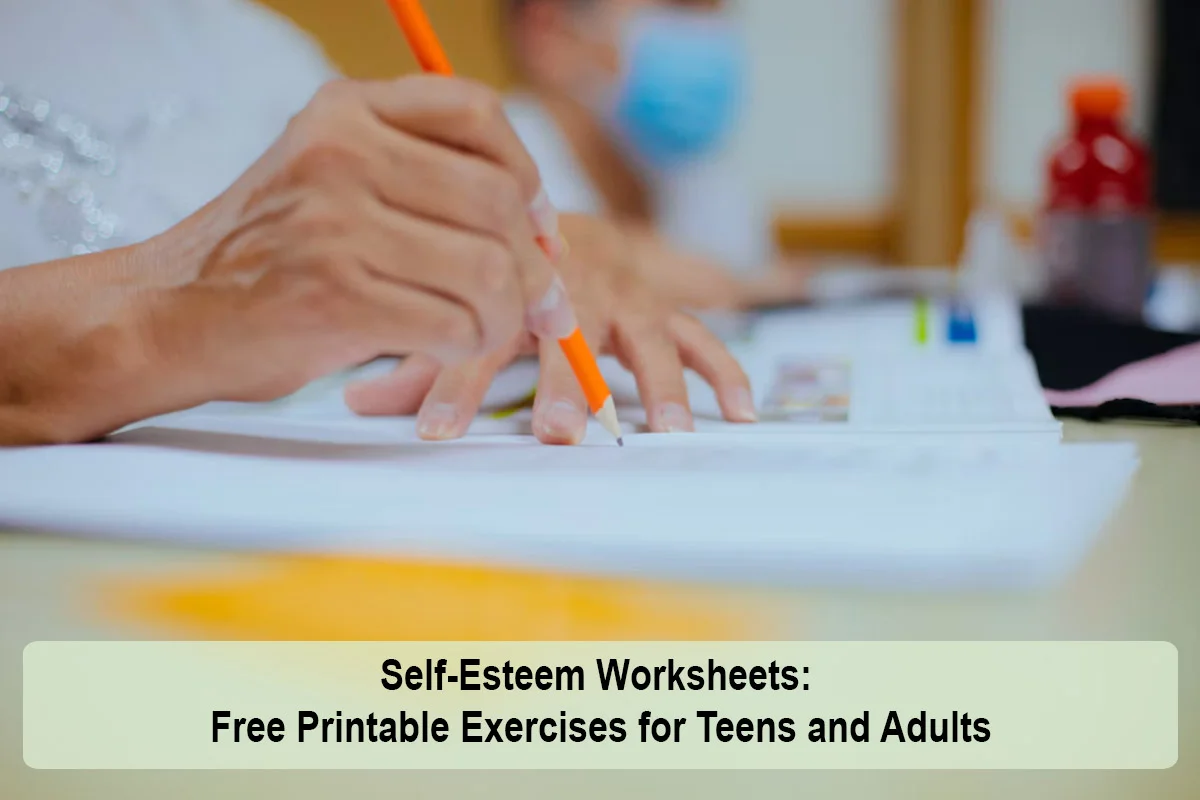
These free self-esteem worksheets are designed to be printed and filled in by hand. Each one takes 10 to 20 minutes and is based on techniques therapists use, especially from cognitive behavioral therapy (CBT) and self-compassion research. They work for teens and adults. Print this page, pick one worksheet a day or one a week, and keep your finished pages together so you can look back on your progress.
Worksheets can build awareness and confidence, but they are not a substitute for professional help. If low self-worth comes with hopelessness, self-harm or thoughts of suicide, call or text the 988 Suicide and Crisis Lifeline.
Purpose: Low self-esteem tends to filter out evidence of what you do well. This worksheet collects that evidence.
Instructions: List five strengths. They can be skills (drawing, math), qualities (loyal, funny) or values in action (honesty). For each, write a specific time you showed it.
| Strength | A time I showed it | How it helped me or someone else |
|---|---|---|
Stuck? Ask a friend or family member what they appreciate about you, and write down their answer.
Purpose: A core CBT skill. The National Institute of Mental Health describes cognitive behavioral therapy as helping people change negative patterns of thinking and behavior. This worksheet practices that skill.
Instructions: When you notice a harsh thought about yourself, write the situation and the thought. Then look for evidence on both sides and write a more balanced thought.
| Situation | Automatic thought | Evidence for | Evidence against | Balanced thought |
|---|---|---|---|---|
Example: Situation: got a C on a test. Automatic thought: "I'm stupid." Evidence against: "I got a B on the last one and I didn't study this time." Balanced thought: "I didn't prepare enough. I can study differently next time."
Purpose: Most people speak to themselves far more harshly than they would ever speak to a friend.
Instructions: In the left column, write three things your inner critic says. In the right column, write what a kind, honest friend would say instead.
| What my inner critic says | What a kind friend would say |
|---|---|
For teens who struggle with this, see our guide to teen self-hate talk.
Purpose: Train your attention to notice what goes right, including small things.
Instructions: Each day for a week, write one thing you did well, one thing you are grateful for and one kind thing you did for someone.
| Day | Something I did well | Something I'm grateful for | A kind thing I did |
|---|---|---|---|
| Monday | |||
| Tuesday | |||
| Wednesday | |||
| Thursday | |||
| Friday | |||
| Saturday | |||
| Sunday |
Purpose: Self-compassion means treating yourself with the same warmth you would offer a friend who is struggling. Research by psychologist Kristin Neff, described by the University of Texas at Austin, links self-compassion with greater emotional resilience and more accurate self-concepts compared with self-esteem that depends on comparison and approval.
Instructions: Write a short letter to yourself about something you feel bad about. Use these prompts:
Purpose: Self-worth that rests on your values is steadier than self-worth that rests on grades, looks or likes.
Instructions: Choose five values that matter to you (for example, honesty, family, creativity, kindness, courage, learning). Rate how much you lived each one this week from 1 to 10, and note one action that would raise the score.
| Value | This week (1 to 10) | One action to live it more |
|---|---|---|
Purpose: People with low self-esteem often brush off compliments and remember criticism. This worksheet keeps the positive feedback.
Instructions: For the next two weeks, write down every compliment or thank-you you receive. Practice responding with "Thank you" instead of arguing with it.
| Date | Who said it | What they said | How I responded |
|---|---|---|---|
Purpose: Shift focus from how your body looks to what it does. This helps when appearance is driving low self-esteem. The US Surgeon General reports that 46% of adolescents ages 13 to 17 said social media makes them feel worse about their body image.
Instructions: Finish each sentence:
Learn more about body image therapy and our guide to teen self-image and self-worth.
Purpose: Notice which accounts lift you up and which leave you feeling worse.
Instructions: List accounts you see often. After viewing each, note how you feel. Decide whether to keep, mute or unfollow.
| Account or app | How I feel after (better, same, worse) | Keep, mute or unfollow |
|---|---|---|
Purpose: Healthy self-esteem includes believing your needs matter. Saying no is a skill that improves with practice.
Instructions: Write situations where you said yes but wanted to say no. Draft a respectful way to say no next time.
| Situation | What I wanted | What I could say next time |
|---|---|---|
Example: "Thanks for asking, but I can't this weekend. Maybe next time."
Purpose: Confidence grows from doing things, not just thinking about them.
Instructions: Write one goal at the top. Break it into five small steps, from easiest to hardest, and check each off as you finish.
| Step | What I'll do | Done? |
|---|---|---|
| Goal | ||
| Step 5 (hardest) | ||
| Step 4 | ||
| Step 3 | ||
| Step 2 | ||
| Step 1 (easiest) |
Purpose: End the day by noticing effort, not just results.
Instructions: Before bed, answer three questions in a sentence each:
| In teens, it may look like | In adults, it may look like |
|---|---|
| Calling themselves stupid, ugly or worthless | Harsh self-criticism after small mistakes |
| Avoiding new activities for fear of failing | Turning down opportunities or promotions |
| Needing constant reassurance or likes | People-pleasing and difficulty saying no |
| Brushing off compliments | Downplaying achievements |
| Giving up quickly on hard tasks | Staying in unhealthy relationships |
| If you struggle with | Start with |
|---|---|
| Harsh self-talk | Worksheets 2 and 3 |
| Not seeing your good qualities | Worksheets 1 and 7 |
| Body image | Worksheets 8 and 9 |
| Feeling stuck or unmotivated | Worksheets 4 and 11 |
| People-pleasing | Worksheets 6 and 10 |
| Guilt and shame after mistakes | Worksheet 5 |
Self-esteem changes slowly, through repetition. Pick a regular time, such as after school, during lunch or before bed, and keep the worksheets somewhere visible. Pair the habit with something you already do, like making tea. Review your pages at the end of each month and notice patterns: which thoughts showed up most, which strengths kept appearing, which steps you completed.
Low self-esteem often travels with depression, anxiety, eating disorders, trauma or substance use. Consider professional support if negative feelings about yourself last for weeks, affect school, work or relationships, or come with hopelessness or self-harm. Therapies that help include cognitive behavioral therapy, acceptance and commitment therapy, narrative therapy and strengths-based approaches. Teens who dwell on mistakes may also find our guide to teen obsession with failures helpful. You can search FindTreatment.gov or call the SAMHSA National Helpline at 1-800-662-4357.
Self-esteem is built through repeated small actions: catching harsh thoughts, noticing strengths, treating yourself kindly and doing things that matter to you. These self-esteem worksheets give you a structure for that practice. Keep your completed pages in one folder, revisit them on hard days and notice how your answers change over time. That record is evidence, written in your own hand, that you are growing.
This article was reviewed by the RehabsNearMe Editorial Team for accuracy, clarity, and relevance. Information may be sourced from publicly available treatment resources, government agencies, and healthcare references where applicable.
Last reviewed: November 2026
Resources
 Resources
 Resources
 Resources