
 Resources
Scromiting: Meaning, Symptoms, Causes, and Treatment
Published On 17-11-2026
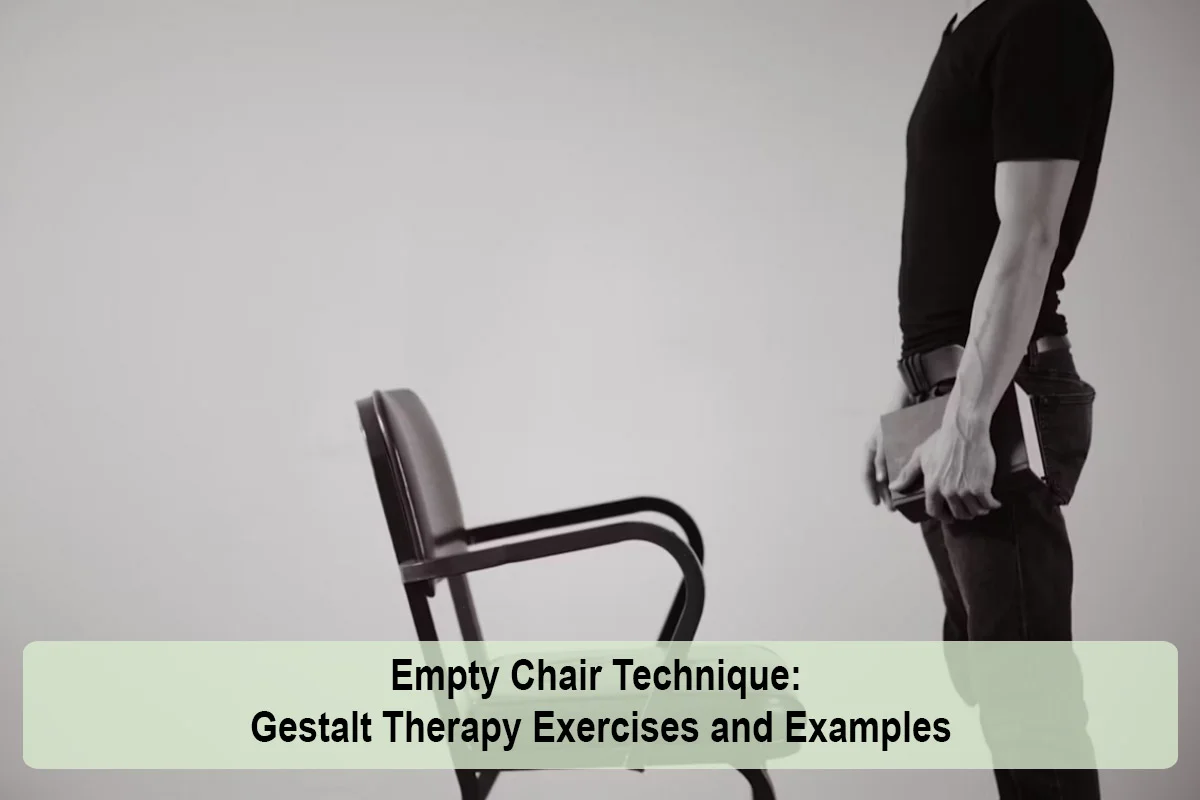
The empty chair technique is a Gestalt therapy exercise in which you speak to an empty chair as if a specific person, or a part of yourself, were sitting in it. You might say what you never got to say to a parent who hurt you, a loved one who died or a former partner. Sometimes you then switch seats and answer as that person. The goal is not to role-play for its own sake, but to bring old feelings into the present moment so they can be felt, expressed and resolved.
This guide explains how the technique works, what research shows, what a session actually looks like step by step, example dialogues, variations, safer ways to try it on your own and who should use it only with a therapist. If you are in crisis, call or text the 988 Suicide and Crisis Lifeline.
The empty chair is most closely associated with Fritz Perls and Gestalt therapy, which developed in the mid-20th century. Gestalt therapy focuses on present-moment awareness and the idea that "unfinished business," feelings left unexpressed from past relationships, keeps pulling people back. Psychodrama, developed by Jacob Moreno, used related role-play methods. Later, Leslie Greenberg and colleagues built the technique into emotion-focused therapy and studied it scientifically.
Talking about a painful relationship keeps feelings at a distance. Talking to the person, even an imagined one, makes the experience immediate. That shift helps in several ways:
The empty chair is one of the better-studied experiential techniques. In a randomized controlled trial by Paivio and Greenberg published in 1995 in the Journal of Consulting and Clinical Psychology, 34 clients with unresolved feelings toward a significant other received either experiential therapy using empty-chair dialogue or a psychoeducational group about unfinished business. The empty-chair group showed clinically meaningful gains and significantly greater improvement on all outcome measures, including symptoms, interpersonal distress and resolution of unfinished business, with gains maintained at follow-up.
A related technique, the two-chair dialogue for self-criticism, was tested in a small 2012 pilot study in Clinical Psychology & Psychotherapy. Among nine self-critical clients, self-criticism, depression and anxiety decreased significantly while self-compassion increased, with gains maintained at six months. The authors described these findings as preliminary.
Client: "Dad, I never got to say goodbye. I was so angry that you didn't tell us how sick you were."
Therapist: "Tell him what you needed from him."
Client: "I needed you to let me be there. I needed to tell you I loved you."
Later, many people describe feeling both grief and a sense of connection. See our page on grief and loss treatment.
Client: "Mom, nothing I did was ever good enough for you."
Therapist: "Say what that was like for you as a kid."
Client: "I felt invisible. I needed you to be proud of me."
For more on these relationships, see how to deal with a toxic mother.
Critic chair: "You're lazy. You'll never finish anything."
Experiencing chair: "When you talk to me like that, I feel crushed and want to give up."
Therapist: "What do you need from the critic?"
Experiencing chair: "I need you to back off and let me try."
Over time, the critic often softens into a voice that is worried rather than cruel.
| Variation | How it works | Often used for |
|---|---|---|
| Empty chair | Speak to an imagined person in the chair | Grief, unfinished business, anger, forgiveness |
| Two-chair dialogue | Two parts of yourself talk to each other | Self-criticism, indecision, inner conflict |
| Future self chair | Speak with an imagined older, wiser you | Hope, decisions, recovery goals |
| Younger self chair | Speak with yourself as a child | Self-compassion, childhood hurt |
| Letter variation | Write to the person, then read aloud to the chair | People who freeze when speaking spontaneously |
| Addiction dialogue | Speak to your substance or addiction as if it were a person | Ambivalence about quitting, relapse prevention |
The addiction variation is used in some recovery programs to make cravings and ambivalence concrete. Related experiential approaches include psychodrama, experiential therapy and internal family systems therapy.
In some recovery programs, clients place their substance in the empty chair and speak to it directly:
Client: "You were there for me when I felt alone. You made the pain go away."
Therapist: "And what has it cost you?"
Client: "My job. My kids' trust. My health. You promised relief and you took everything."
Therapist: "What do you want to tell it now?"
Client: "I'm done letting you decide for me."
Speaking to the substance makes ambivalence concrete and can strengthen motivation. It works best alongside relapse prevention counseling and other evidence-based care.
| Reaction | What it may mean | How a therapist may respond |
|---|---|---|
| "This feels silly." | Self-consciousness or protective distance | Normalize it and start with something small |
| Going blank | Strong emotion close to the surface, or shutdown | Slow down, ground, and try writing first |
| Sudden tears or anger | Held-back feelings emerging | Make space for the emotion and help name the need underneath |
| Feeling the other person's view | Perspective shift when switching chairs | Explore what this reveals about the relationship |
| Relief or calm | Emotional completion | Help integrate the change and plan next steps |
The technique is most powerful, and safest, with a trained therapist. If you want to try a gentle version at home for mild unfinished business, such as a friendship that ended or a lighter regret, use these guardrails:
The empty chair can stir up intense emotion. Work with a clinician, rather than alone, if you:
A therapist can pace the work, keep you grounded and help you integrate what comes up. Our guide on trauma therapy for teens explains how trauma-informed clinicians pace emotional work.
People often report feeling drained, lighter, tearful or unexpectedly calm. Some notice new insights over the following days. Plan for gentle self-care after a session: rest, a walk, time with a supportive person. If distress lasts or worsens, talk to your therapist.
Look for clinicians trained in Gestalt therapy, emotion-focused therapy or psychodrama. The National Institute of Mental Health notes that psychotherapy comes in many forms and that finding a good fit with a therapist matters. Ask potential therapists how they use chair work, how they keep sessions safe and how they handle strong emotions. You can compare programs offering Gestalt therapy, search FindTreatment.gov or call the SAMHSA National Helpline at 1-800-662-4357.
The empty chair technique sounds simple: speak to someone who is not there. Its power comes from making old feelings present so they can finally move. Research supports its use for unfinished business and self-criticism, and its variations can help with grief, inner conflict and even addiction. Try a gentle version on your own for lighter topics, and use a trained therapist for anything involving trauma or crisis. Sometimes the most important conversation is the one you have with an empty chair.
This article was reviewed by the RehabsNearMe Editorial Team for accuracy, clarity, and relevance. Information may be sourced from publicly available treatment resources, government agencies, and healthcare references where applicable.
Last reviewed: November 2026
Resources
 Resources
 Resources
 Resources