
 Resources
Positive Coping Skills for Teens: 44 Healthy Ways to Manage Stress
Published On 25-10-2026
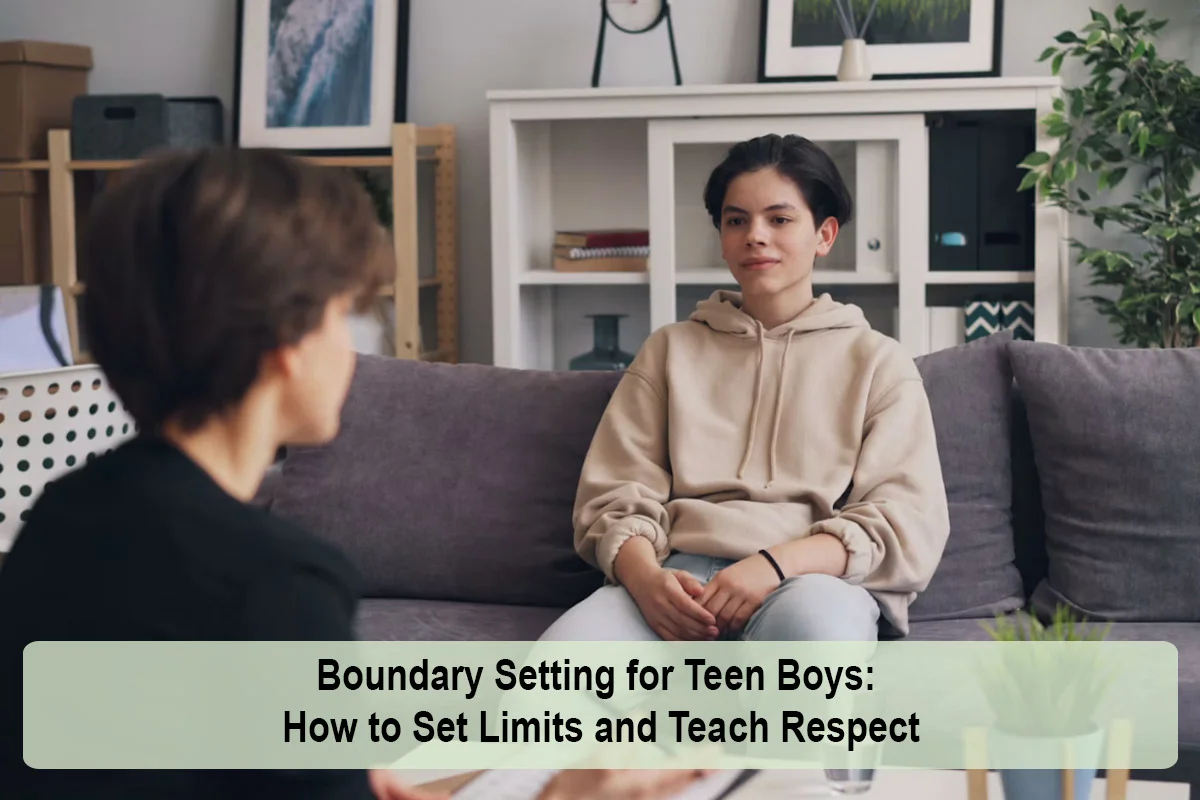
Teen boys need limits, but many push back hard when parents try to set them. Rules about curfew, screens, chores, friends, and respect can quickly turn into arguments, slammed doors, or silent defiance. At the same time, boys also need to learn how to set their own boundaries, saying no to peer pressure, protecting their time and energy, and respecting other people's limits. Boundary setting for teen boys is about both: parents setting clear, fair limits, and teaching boys to recognize and respect boundaries in their own lives. This guide explains why boundaries matter for teen boys, how to set them effectively, how to handle pushback, how to teach boys to set their own boundaries and respect others', and when ongoing conflict may need professional help.
"Be home by 10 p.m. on weeknights and 11 p.m. on weekends" works better than "Don't stay out too late."
Boys are more likely to respect rules they understand. Connect boundaries to safety, health, respect, or responsibility.
Ask for his input on curfew, screen time, and chores. Teens are more likely to follow rules they helped create.
Choose a short list of firm rules, such as no drinking and driving, respectful language, and honesty about where he is, and be flexible on smaller issues.
Explain what will happen if a boundary is broken before it happens. Consequences should be related, proportionate, and time-limited.
Inconsistent enforcement teaches boys that boundaries are negotiable. Both parents should be on the same page.
Enforce limits in a steady, matter-of-fact tone rather than with yelling or lectures.
Give more independence as he shows responsibility. This gives him a clear reason to follow the rules.
Notice when he follows rules, comes home on time, or handles a situation maturely.
| Area | Example Boundary | Possible Consequence if Broken |
|---|---|---|
| Curfew | Home by an agreed time, with a text if running late | Earlier curfew the next weekend |
| Screens | Devices charged outside the bedroom at night | Loss of device time the next day |
| Driving | No phone use while driving; seat belts always | Temporary loss of car privileges |
| Respect | No swearing at or insulting family members | Loss of a privilege and a sincere apology |
| Schoolwork | Homework done before gaming | No gaming until work is complete |
| Substances | No alcohol, vaping, or drugs | Loss of independence and possible counseling |
| Location | Parents know where he is and with whom | More check-ins or reduced time out |
For more on handling stubbornness and defiance, see our guides on how to deal with a stubborn teen and why teenage boys are so rude.
Boundaries are not just rules from parents. Boys also need to learn how to protect themselves and say no.
Our guide on teen boys after a breakup discusses respectful behavior after relationships end.
| Situation | What Your Son Can Say |
|---|---|
| Friends pressure him to vape or drink | "Nah, I'm good. I've got practice tomorrow." |
| Someone wants him to share a private photo | "That's not cool. I'm not sending that." |
| A friend keeps borrowing money | "I can't lend money right now." |
| A partner checks his phone constantly | "I need some privacy. Let's talk about trust." |
| Teammates mock someone | "Come on, that's enough." |
Screens are often the biggest boundary battleground with teen boys. Agree in advance on gaming and phone limits, keep devices out of the bedroom at night, and explain why sleep and focus matter. Our guide on gaming aggression in teen boys offers a family gaming agreement template.
Boys often look to fathers, coaches, uncles, and other men to learn what respect and self-control look like. Male role models who set and respect boundaries, handle frustration calmly, and talk openly about feelings can have a powerful influence. See our guide on father and teen son conflict.
Healthy boundaries go both ways. Respect your son's privacy in age-appropriate ways, knock before entering his room, avoid reading his messages without a safety reason, and give him space when he needs it. When parents model respect for boundaries, teens are more likely to return that respect. Being clear about your own limits, such as not tolerating disrespect, also shows him what healthy boundaries look like in practice.
If your son repeatedly breaks the same boundaries, step back and ask why. Are the rules realistic? Are consequences consistent? Is something deeper, such as depression, substance use, or peer problems, driving the behavior? Adjusting the approach or getting outside help may be more effective than escalating punishments.
Consistency matters more than strictness. A few fair rules enforced calmly every time work better than many rules enforced occasionally.
Consider professional support if your son consistently ignores boundaries, becomes aggressive when limits are set, uses substances, sneaks out, or shows signs of depression or anxiety. Family therapy can help families set and maintain healthy boundaries, while cognitive behavioral therapy helps boys manage impulses and emotions. Browse programs for boys and adolescents, including Nexus Teen Academy in Scottsdale and MK Boys Academy. If your son is in crisis, call or text 988.
Revisit boundaries regularly as your son grows, adjusting them to fit his age and maturity.
Boundary setting for teen boys means setting clear, fair limits at home and teaching boys to set and respect boundaries in their own lives. Keep rules specific, explain the why, involve your son, focus on a few non-negotiables, set consequences in advance, and follow through consistently while expanding freedom as trust grows. Teach him to say no to peer pressure, protect his time and body, and respect others' boundaries, including consent. When boundary struggles lead to aggression, substance use, or ongoing conflict, professional help can make a difference.
This article was reviewed by the RehabsNearMe Editorial Team for accuracy, clarity, and relevance. Information may be sourced from publicly available treatment resources, government agencies, and healthcare references where applicable.
Last reviewed: October 2026
Resources
 Resources
 Resources
 Resources