
 Resources
Scromiting: Meaning, Symptoms, Causes, and Treatment
Published On 17-11-2026
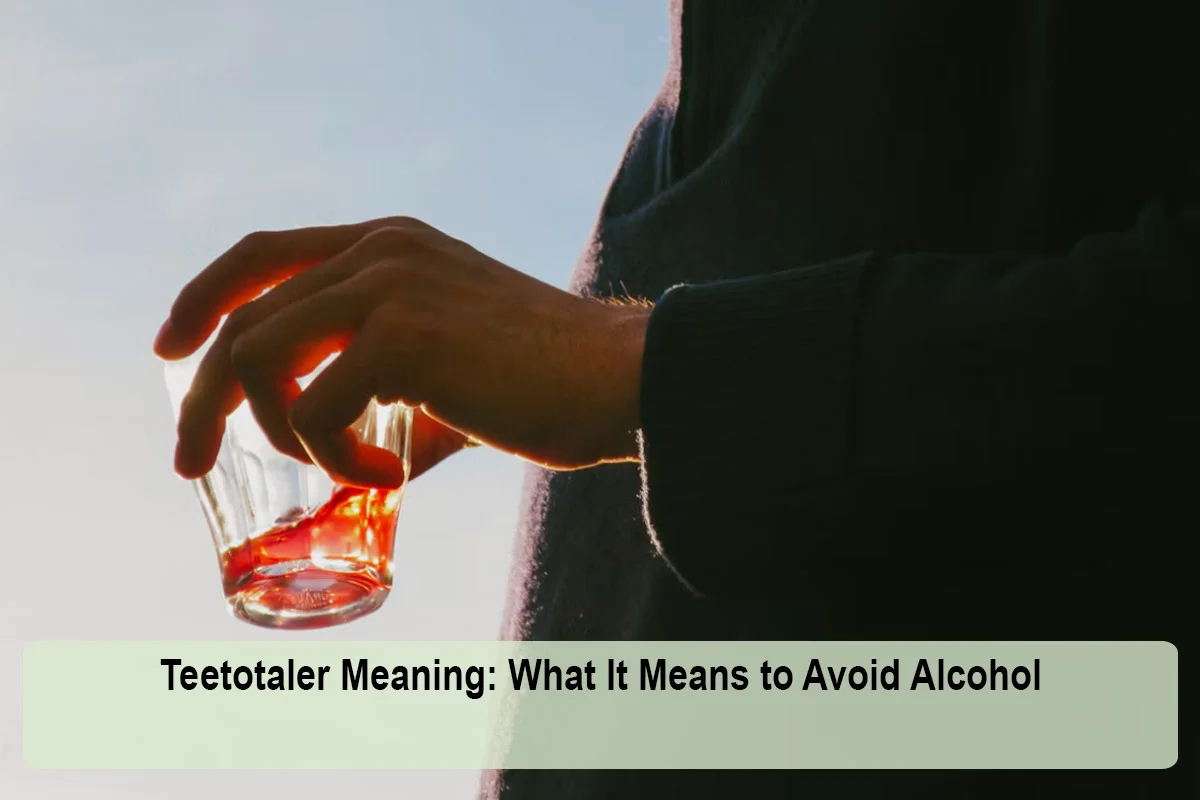
teetotaler (noun) tee-TOH-tl-er: a person who never drinks alcohol. Also spelled teetotaller in British English. The related adjective is teetotal, and the practice is called teetotalism.
The teetotaler meaning is simple: someone who avoids alcohol completely, not just most of the time. The history behind the word is more interesting than most dictionary entries suggest. It has nothing to do with tea, it was not coined by a man with a stutter, and it started as a pledge in a working-class English town in 1833. This guide covers where the word came from, how it differs from related terms such as "sober" and "sober curious," and how its meaning has shifted as record numbers of people choose not to drink.
A teetotaler is a person who abstains entirely from alcoholic drinks, whether for health, religious, personal, recovery or practical reasons. The word describes the behavior (not drinking), not the reason behind it.
The word grew out of the temperance movement in Preston, Lancashire, in northwest England. Early temperance groups often asked members to give up only spirits such as gin and whisky, while still allowing beer and wine. A stricter group wanted total abstinence from every kind of alcohol.
According to a detailed account at Word Histories, a non-academic etymology site that quotes original 19th-century sources, the word was first used in that sense around September 1833 by Richard "Dicky" Turner, a plasterer's laborer. Speaking in favor of total abstinence, he used the phrase "tee-total." Joseph Livesey, one of the founders of the Preston total abstinence movement, reportedly said the word would be the name of their new pledge.
The "tee" is an intensifier, a way of saying "totally, totally." The same source shows "tee-totally" in print before 1833, meaning completely, including a newspaper from 1810 where a speaker "differed tee-totally" with someone. Turner applied an existing emphatic phrase to a new idea. In effect, a teetotaler was someone who quit drinking with a capital T.
| Myth | What the evidence shows |
|---|---|
| It means people who drink tea instead of alcohol | No. The spelling "tea-totaler" is a later pun. Tea was a popular temperance drink, which helped the joke stick. |
| It came from a man with a stutter saying "t-t-total" | This story appears in some older dictionaries, but contemporary accounts attribute it to Lancashire dialect, not a speech impediment. |
| It started with a "T" mark on American pledge cards | A version credits a New York minister in 1827, but no contemporary evidence supports it. The American movement adopted the term from England. |
Several words overlap with teetotaler, but they carry different shades of meaning. Picking the right one matters, especially when talking about someone in addiction recovery.
| Term | What it usually means | Key difference |
|---|---|---|
| Teetotaler | Never drinks alcohol | Neutral about the reason |
| Abstainer | Does not drink (often used in research and surveys) | More clinical; can refer to any time period |
| Sober | Not intoxicated, or not drinking or using drugs over time | Often linked to recovery from alcohol use disorder |
| In recovery | Working to overcome a substance use disorder | Describes a process, not just a habit |
| Sober curious | Questioning one's drinking and cutting back or pausing | May still drink sometimes |
| Dry | Not drinking for a set period, as in Dry January | Usually temporary |
| Straight edge | A subculture that rejects alcohol, tobacco and drugs | Includes other substances and an identity |
| Temperance | Historically, moderation or abstinence promoted as a social cause | A movement, not a person |
One practical note: many people in recovery prefer "sober" or "in recovery" to "teetotaler," because those words acknowledge the effort involved. When in doubt, use the word the person uses about themselves.
In the 1800s, being teetotal was a public commitment. People signed pledges, wore badges and joined societies. The cause was tied to poverty, family breakdown and worker welfare, and the movement shaped laws in both Britain and the United States, eventually feeding into US Prohibition from 1920 to 1933.
After Prohibition ended, drinking became deeply woven into social life. "Teetotaler" picked up a slightly old-fashioned or even prudish tone in everyday speech, often used jokingly.
Today the word is losing that stuffy edge. Gallup's 2025 survey, reported by Axios, found that only 54% of US adults say they drink, a record low after years of 60% or more. Among adults under 35, the share who drink dropped from 59% in 2023 to 50% in 2025. For the first time, a majority of Americans said even moderate drinking is bad for health. In other words, nearly half of US adults now describe themselves as non-drinkers, and choosing to be teetotal is no longer unusual.
The reasons vary, and many people have more than one.
The last example shows a common misuse. If someone drinks occasionally, "light drinker" or "mostly sober" is more accurate. Teetotal means none.
Not quite. A teetotaler may never have had a problem with alcohol. Sobriety in recovery usually follows a period of harmful drinking and often involves treatment, peer support or both. The behavior is the same, but the experience can be very different. People who stop after heavy, daily drinking may also face withdrawal, which can be dangerous. Our explainer on why alcohol withdrawal can require medical supervision covers the warning signs, and a medically supervised detox is the safest starting point when withdrawal is likely.
Because the word is sometimes used loosely, it helps to know what does and does not count.
| Counts as teetotal | Does not count as teetotal |
|---|---|
| Never drinks alcohol, at any event | Drinks only on weekends or special occasions |
| Skips the champagne toast and raises a soft drink | Takes "just a sip" for toasts |
| Avoids alcohol for a long-term reason, such as health, faith or recovery | Pauses for a month, such as Dry January, then resumes |
| Chooses alcohol-free versions of beer or wine | Cuts back to one drink a day |
A note on alcohol-free drinks: products labeled "non-alcoholic" in the US can contain trace amounts of alcohol, typically under 0.5% by volume. Most teetotalers are comfortable with these, but some people in recovery avoid them because the taste and ritual can trigger cravings. Products labeled "alcohol-free" or "0.0%" are a closer match for strict abstainers.
For light or occasional drinkers, going teetotal is mostly a social adjustment. For people who drink heavily or daily, it can be much harder, both physically and emotionally. Cravings, routines built around drinking and friends who drink can all pull people back. That is not a personal failing; it reflects how alcohol affects the brain's reward system. Structured support, such as outpatient counseling, peer groups or sober living during early recovery, makes lasting abstinence far more achievable. Our guide to signs of alcohol dependence can help you judge which camp you are in.
The word is used most in the UK, Ireland, Australia and other Commonwealth countries, where "teetotal" also works as an everyday adjective ("I'm teetotal"). Americans more often say "I don't drink" and use "teetotaler" in writing or with a light, humorous tone. In both places, alcohol-free beer, wine and spirits are now widely sold, making it easier to be teetotal without standing out.
"Teetotaler" began as a working man's emphatic pledge in 1833 and spent much of the 20th century sounding old-fashioned. Today it simply describes a growing group of people who choose not to drink at all. If you are thinking about joining them, it helps to know what changes in your body when you stop, which our article on what happens after 30 days without alcohol covers. If stopping feels harder than it should, that is useful information too, and support is available through alcohol treatment programs listed on our directory.
This article was reviewed by the RehabsNearMe Editorial Team for accuracy, clarity, and relevance. Information may be sourced from publicly available treatment resources, government agencies, and healthcare references where applicable.
Last reviewed: November 2026
Resources
 Resources
 Resources
 Resources