
 Resources
Teen Gives Up on School? Why It Happens and How to Help
Published On 25-10-2026
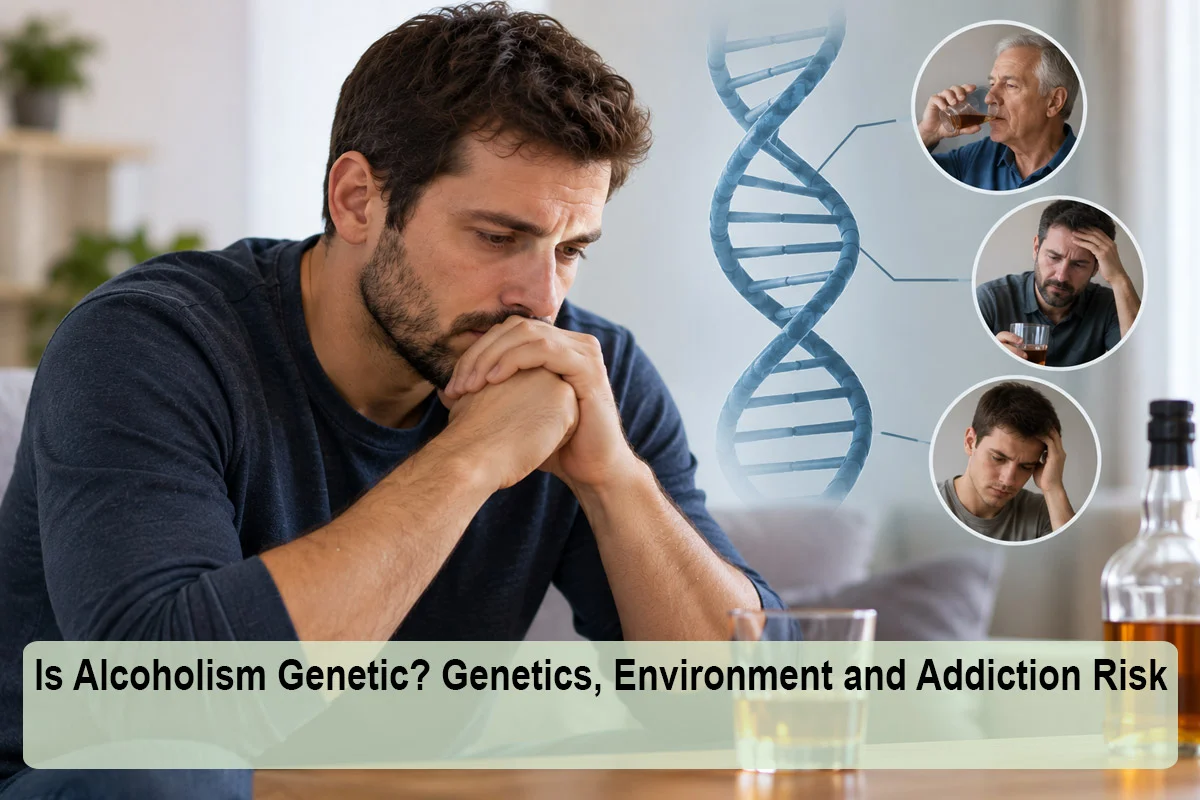
If alcoholism runs in your family, you have probably wondered whether you are destined to follow the same path. The short answer is that alcoholism, now called alcohol use disorder (AUD), is strongly influenced by genetics, but genes are not destiny. Roughly half of the risk comes from inherited factors, and the other half comes from environment, experiences, and choices. This guide explains what the research shows about the genetics of alcoholism, which genes matter, how environment interacts with inherited risk, and what people with a family history can do to protect themselves.
The most reliable evidence about inherited risk comes from twin and adoption studies, which help separate the effects of genes from the effects of a shared home environment.
A widely cited 2015 meta-analysis by Verhulst, Neale, and Kendler, published in Psychological Medicine, combined data from 12 twin studies and 5 adoption studies of alcohol use disorder. It estimated that AUD is about 49 percent heritable, with a 95 percent confidence interval of 43 to 53 percent. Shared family environment accounted for only about 10 percent of the variation, and the remainder was attributed to individual, non-shared experiences. The results were consistent across men and women and across different study designs.
In practical terms, this means that about half of the differences in risk between people can be explained by genetic factors. It does not mean that a person with a family history has a 50 percent chance of developing AUD. Heritability describes populations, not individual destiny.
Alcoholism is hereditary in the sense that risk runs in families and is passed down partly through genes. Children of parents with alcohol use disorder are at higher risk of developing it themselves than people without that family history. The more close relatives affected, and the more severe their drinking, the higher the inherited risk tends to be.
But many children of parents with AUD never develop a drinking problem, and many people with AUD have no family history at all. Family history raises the odds. It does not decide the outcome.
No single gene causes alcoholism. Alcohol use disorder is polygenic, meaning it is influenced by many genetic variants, each contributing a small amount of risk.
The largest study to date, published in Nature Medicine in 2023, analyzed genetic data from more than one million people across five ancestral groups, including about 166,000 people with problematic alcohol use. Researchers identified 110 genetic variants significantly associated with risk. The study also found a shared genetic architecture across ancestry groups and highlighted potential targets for future treatments.
Even so, individually identified variants explain only a modest share of total heritability. The rest likely comes from thousands of variants with tiny effects, along with gene-environment interactions that are still being mapped.
The most consistently replicated genetic findings involve the enzymes that break down alcohol:
These variants are protective. Because drinking feels unpleasant, people who carry them tend to drink less and have a lower risk of AUD. However, people with the ALDH2 variant who drink heavily anyway face a higher risk of certain cancers, because acetaldehyde is a carcinogen.
Other genes influence how the brain responds to alcohol, including systems involving dopamine, GABA, glutamate, and opioid signaling. These affect how rewarding alcohol feels, how quickly tolerance develops, and how strongly the brain reacts to stress and cues.
One of the best-studied inherited traits is a low level of response to alcohol. Research led by Marc Schuckit found that people who needed more alcohol to feel its effects in early adulthood were at higher risk of developing alcohol problems later. Children of parents with AUD are more likely to have this trait. A person who "can hold their liquor" may actually be at higher risk, not lower, because they tend to drink more to feel an effect.
Many genetic factors that influence alcohol use disorder also influence other conditions, including other substance use disorders, depression, anxiety, ADHD, and impulsivity-related traits. This helps explain why AUD so often occurs alongside other mental health conditions, and why treating both together leads to better outcomes.
Genes load the gun, as the saying goes, but environment often pulls the trigger. Several environmental factors strongly shape whether inherited risk turns into a disorder.
Starting to drink at a young age is one of the strongest predictors of later problems. A frequently cited study by Grant and Dawson, using national survey data, found that people who began drinking before age 15 were about four times more likely to develop alcohol dependence than those who began at 21 or older. The adolescent brain is still developing, making it more vulnerable to alcohol's effects.
Abuse, neglect, household dysfunction, and other adverse childhood experiences are linked to higher rates of alcohol problems later in life. Trauma at any age can increase risk, particularly when alcohol becomes a way to cope.
Chronic stress, depression, and anxiety can drive drinking. People with genetic vulnerability may be especially likely to develop problems when stress is high and healthy coping options are limited.
Peer drinking, family attitudes toward alcohol, availability, workplace culture, and marketing all influence how much and how often people drink.
Experiences and alcohol use itself can change how genes are expressed without changing the DNA sequence. This area, called epigenetics, helps explain how environment and genes interact over a lifetime.
Myth: If my parent was an alcoholic, I will be one too. Inherited risk raises the odds but does not guarantee anything. Most people with a family history do not develop severe alcohol problems, especially when they are aware of their risk.
Myth: If no one in my family drinks heavily, I am safe. About half of the risk comes from non-genetic factors. People without any family history can and do develop alcohol use disorder, particularly with early drinking, trauma, or chronic stress.
Myth: Being able to drink a lot without feeling it means I am fine. High tolerance, especially early in life, is linked to higher risk, not lower.
Myth: Genetics means treatment will not work. Genetic influence does not make alcohol use disorder untreatable. Many conditions with strong genetic components, such as high blood pressure and diabetes, respond well to treatment, and so does AUD.
Myth: Only men inherit alcoholism. The 2015 meta-analysis found no significant difference in heritability between men and women. Both can inherit increased risk.
Not in any useful way for individuals right now. Consumer genetic tests may report some alcohol metabolism variants, but they cannot reliably predict whether a person will develop alcohol use disorder. Polygenic risk scores are being studied in research settings, but they capture only part of the risk and do not account for environment. Family history remains one of the most practical indicators of inherited risk.
A family history is information, not a sentence. Some practical steps help protect people with inherited risk:
If you have struggled with alcohol, you may worry about passing that risk to your children. You cannot change their genes, but you can strongly influence their environment. Open, age-appropriate conversations about family history, clear expectations about underage drinking, a stable and supportive home, and modeling healthy coping all make a difference. Getting treatment for your own drinking is one of the most protective things you can do for your family.
Understanding the genetic side of alcohol use disorder can reduce shame. It reinforces that AUD is a medical condition with biological roots, not a moral failure. Research into genetics may eventually help match people to the treatments most likely to work for them. For now, effective treatment already exists, including therapy, peer support, and medications such as naltrexone and acamprosate. Our guide to what alcohol rehab actually treats covers these options. If you are worried about someone in your family, our article on recognizing when a loved one needs treatment can help.
Is alcoholism genetic? Partly. Research consistently estimates that about half of the risk for alcohol use disorder is inherited, and a 2023 study of over a million people identified 110 genetic variants linked to problematic drinking. There is no single alcoholism gene, and genes alone do not determine who develops the disorder. Age of first drink, trauma, stress, mental health, and social environment all play major roles. A family history is a reason for awareness and prevention, not fear, and help is available at every stage.
This article was reviewed by the RehabsNearMe Editorial Team for accuracy, clarity, and relevance. Information may be sourced from publicly available treatment resources, government agencies, and healthcare references where applicable.
Last reviewed: October 2026
Resources
 Resources
 Resources
 Resources