
 Resources
Positive Coping Skills for Teens: 44 Healthy Ways to Manage Stress
Published On 25-10-2026
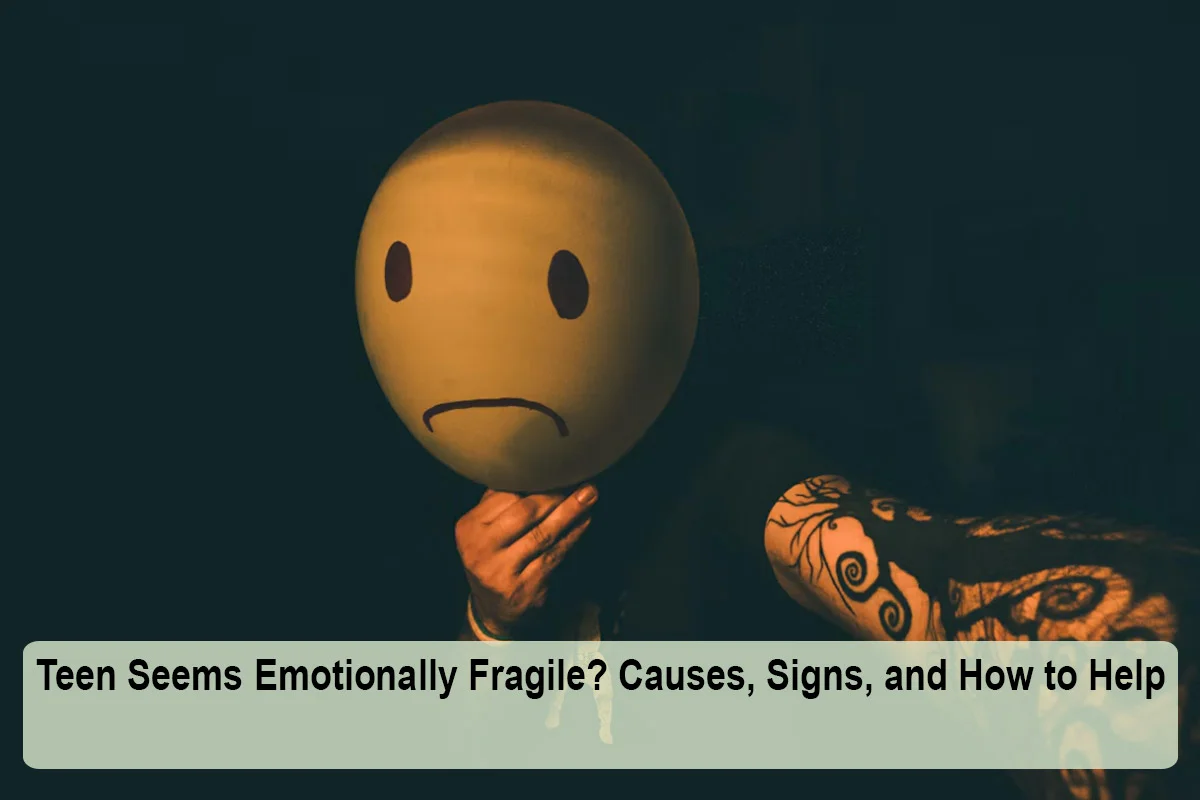
Your teen cries over small setbacks, falls apart after a minor criticism, seems crushed by a friend's comment, or needs constant reassurance that everything is okay. You may find yourself tiptoeing around them, unsure what will set off the next wave of tears or panic. If your teen seems emotionally fragile, you are not alone, and you are right to pay attention. Some teens are naturally sensitive, and heightened emotions are a normal part of adolescence. But emotional fragility can also signal anxiety, depression, trauma, or a lack of coping skills that a teen needs help building. This guide explains what emotional fragility looks like in teens, common causes, how to tell normal sensitivity from a concern, how to respond in the moment, how to build emotional resilience, and when to seek professional help.
Emotional fragility means a teen gets overwhelmed by feelings easily and struggles to recover. Signs include:
Adolescence is a period of major brain development. The National Institute of Mental Health explains in The Teen Brain: 7 Things to Know that the brain continues to mature into the mid-to-late 20s, and that the prefrontal cortex, which helps with planning and controlling impulses, is one of the last areas to develop. At the same time, emotional and reward systems are very active. This combination means many teens feel things more strongly and have fewer tools to manage those feelings than adults do.
Anxious teens often react strongly to uncertainty, criticism, and social situations. The National Institute of Mental Health estimates that 31.9% of adolescents ages 13 to 18 have had an anxiety disorder. Learn more about anxiety treatment.
Depression lowers a teen's emotional resources, so everyday stress feels overwhelming. The CDC's 2023 Youth Risk Behavior Survey found that 39.7% of high school students felt persistently sad or hopeless in the past year, including 52.6% of girls. See our page on depression treatment.
Teens who have experienced abuse, loss, bullying, or other trauma may have a nervous system that stays on high alert, making them quick to feel threatened, hurt, or overwhelmed. Learn more about trauma treatment.
Some teens are simply wired to feel deeply. Sensitivity is not a disorder, and it often comes with empathy, creativity, and insight. These teens benefit from learning to manage strong feelings rather than suppress them.
Teens who believe they must be perfect may experience every mistake as a disaster.
Being excluded, teased, or harassed online can wear down a teen's emotional reserves.
Sleep deprivation makes emotions harder to regulate. Many teens get far less sleep than they need because of early school start times, homework, and late-night screen use.
Teens who have rarely had to manage frustration, disappointment, or discomfort on their own may not yet have the skills to cope when challenges arise.
Divorce, moving, a death in the family, or changing schools can leave teens feeling raw and unsettled.
| Normal Teen Sensitivity | Possible Sign of a Deeper Problem |
|---|---|
| Gets upset by hard situations but recovers | Stays upset for hours or days |
| Cries occasionally | Cries daily or over very small things |
| Cares about others' opinions | Is consumed by fear of judgment |
| Still tries new things | Avoids challenges to avoid feeling upset |
| Generally stable mood | Persistent sadness, anxiety, or hopelessness |
| Normal sleep, eating, and functioning | Changes in sleep, appetite, school, or friendships |
| No harm to self | Self-harm, talk of suicide, or substance use |
| Avoid Saying | Try Saying |
|---|---|
| "You're too sensitive." | "You feel things deeply. Let's figure out how to handle this." |
| "Stop crying." | "It's okay to cry. I'm here." |
| "Just ignore them." | "That sounds really painful. What happened?" |
| "Toughen up." | "This is hard, and I believe you can get through it." |
| "I'll fix it." | "What do you think might help? I'll back you up." |
When a teen is hurting, it is natural to want to fix everything: email the teacher, call the other parent, or let them skip the hard thing. Occasionally stepping in is necessary, especially with bullying or safety concerns. But rescuing every time can send the message that your teen cannot handle difficult feelings, which may make fragility worse. Instead, try to stand beside your teen while they face the challenge. Offer support, coaching, and encouragement, and let them take the steps they can manage.
Many therapists teach skills from dialectical behavior therapy to help teens get through intense emotions without making things worse. Examples include:
Social media can intensify emotional fragility through comparison, cyberbullying, and constant feedback in the form of likes and comments. The U.S. Surgeon General's advisory on social media and youth mental health reports that up to 95% of teens ages 13 to 17 use social media. Talk with your teen about how certain apps or accounts make them feel, encourage breaks, and keep phones out of bedrooms at night.
Supporting an emotionally fragile teen can be exhausting. You may feel anxious, frustrated, or worried that you are doing something wrong. Teens borrow calm from the adults around them, so caring for your own stress through rest, support from others, and your own therapy if needed helps your teen too.
Talk to your teen's doctor or a mental health professional if emotional fragility is getting worse, lasts more than a few weeks, interferes with school, friendships, or daily life, or comes with persistent sadness, anxiety, panic attacks, changes in sleep or eating, substance use, or self-harm. Cognitive behavioral therapy, dialectical behavior therapy, and family therapy can all help teens build emotional regulation skills. Related guides include mood swings in teens and teen emotional numbness. Browse programs on our adolescent treatment page, including Nexus Teen Academy in Scottsdale and Nexus Teen Academy in Cave Creek. If your teen talks about self-harm or suicide, call or text 988 or call 911.
An emotionally fragile teen feels things intensely and struggles to bounce back. Brain development makes strong emotions common in adolescence, but persistent fragility can also point to anxiety, depression, trauma, perfectionism, poor sleep, or limited coping skills. Respond with calm and validation, support rather than rescue, and help your teen build resilience through emotion naming, calming skills, small challenges, and strong connections. When fragility is lasting, worsening, or interfering with daily life, professional support can help your teen develop the skills to handle hard feelings.
This article was reviewed by the RehabsNearMe Editorial Team for accuracy, clarity, and relevance. Information may be sourced from publicly available treatment resources, government agencies, and healthcare references where applicable.
Last reviewed: October 2026
Resources
 Resources
 Resources
 Resources