
 Resources
Group Homes for Teens in Phoenix, AZ: Types, Licensing, and Options
Published On 25-10-2026
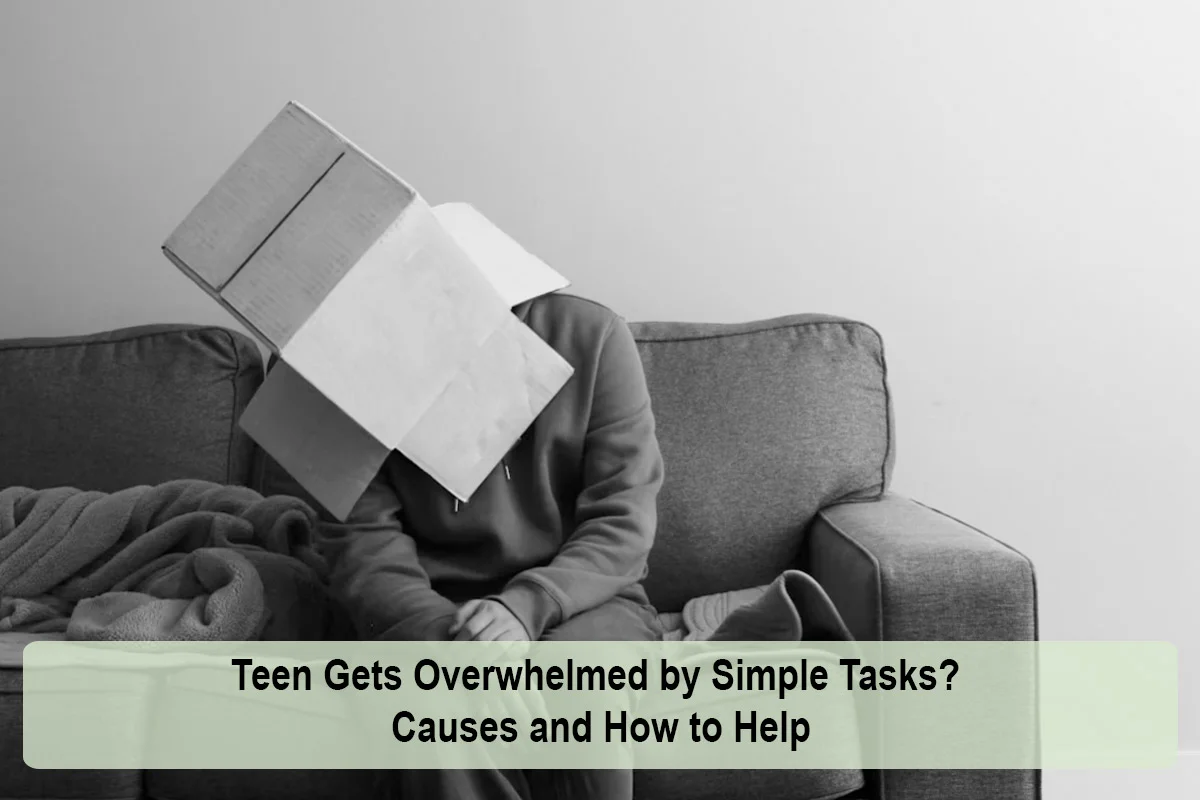
You ask your teen to clean their room, fill out a form, or reply to an email, and they freeze, procrastinate, melt down, or say "I can't." To you, the task seems simple. To your teen, it feels like climbing a mountain. When a teen gets overwhelmed by simple tasks, it is easy to assume laziness or defiance. But being overwhelmed by everyday tasks is often a sign that something else is going on, such as executive function challenges, ADHD, anxiety, depression, poor sleep, or stress overload. This guide explains why teens get overwhelmed by simple tasks, how to tell what is behind it, practical strategies that help, how to talk about it without shame, and when to seek professional support.
Executive functions are the brain's management skills: planning, organizing, starting tasks, managing time, holding information in mind, and shifting between activities. The National Institute of Mental Health explains in The Teen Brain: 7 Things to Know that the prefrontal cortex, which supports these skills, is one of the last brain regions to mature. Some teens develop these skills more slowly than peers, so a task like "clean your room" can feel like a jumble of decisions with no clear starting point.
ADHD is one of the most common reasons teens struggle with everyday tasks. The CDC reports that about 7 million U.S. children have ever been diagnosed with ADHD. Teens with ADHD often have trouble starting boring tasks, staying focused, remembering steps, and estimating time. Girls and teens with the inattentive type are sometimes missed. Learn more about ADHD treatment and our activities for teens with ADHD.
Anxious teens may freeze because they fear doing a task wrong, being judged, or facing an uncomfortable conversation. A simple phone call can feel terrifying. The National Institute of Mental Health estimates that 31.9% of adolescents have had an anxiety disorder. See our page on anxiety treatment.
Depression drains energy, motivation, and concentration, so even brushing teeth or answering a text can feel exhausting. The National Institute of Mental Health estimates that 20.1% of adolescents ages 12 to 17 had a major depressive episode in 2021. Learn more about depression treatment.
Teens who feel they must do everything perfectly may avoid starting at all, because any imperfect result feels unbearable.
Tired brains struggle with planning, focus, and emotional control. Many teens get far less sleep than the 8 to 10 hours recommended for their age.
When a teen is already juggling school pressure, friendships, activities, and family stress, even one more small task can tip them over the edge.
Autistic teens and those with learning disabilities may find unstructured tasks, transitions, or multi-step instructions especially hard. See our page on support for neurodivergent teens.
Trauma can affect concentration and leave a teen's nervous system in a constant state of alert, making ordinary demands feel threatening. Learn more about trauma treatment.
Cannabis and other substances can reduce motivation, memory, and focus. See our page on marijuana addiction.
| What You See | What May Be Going On |
|---|---|
| Can focus for hours on games but not homework | ADHD often allows intense focus on interesting tasks while boring ones feel impossible |
| Avoids calls, emails, or forms | Anxiety about doing it wrong or being judged |
| Low energy, sleeps a lot, lost interest in things | Possible depression |
| Starts tasks but gets lost midway | Working memory or executive function challenges |
| Melts down if it cannot be done perfectly | Perfectionism or anxiety |
| Recently started struggling after doing fine before | Depression, stress, trauma, sleep problems, or substance use |
True laziness is less common than parents fear. Most teens want to succeed and feel bad when they cannot manage what seems easy for others.
"Clean your room" becomes: put dirty clothes in the hamper, put trash in the bin, make the bed. Each step should feel almost too easy.
Starting is often the hardest part. Try "Just open the document" or "Set a timer for five minutes." Momentum often follows.
Checklists, whiteboards, sticky notes, and phone reminders take pressure off working memory.
Short work periods followed by breaks, such as 15 minutes of work and 5 minutes of rest, make tasks feel manageable and help teens track time.
Many teens, especially those with ADHD, find it easier to work when someone else is nearby. Sit with your teen while they start homework or do your own task alongside theirs.
Doing tasks at the same time each day reduces the number of decisions your teen has to make.
Phones in another room during homework and a clear workspace make focus easier.
When everything feels urgent, help your teen pick the one or two most important tasks for today.
"Good enough" is better than not done. Help perfectionistic teens aim for progress rather than perfection.
Pair a less enjoyable task with something pleasant afterward, like a snack, a show, or time with friends.
When teens struggle, parents often step in and do the task for them. Occasionally this is fine, but doing it every time can keep teens from building skills and confidence. Aim to scaffold: provide structure and support at first, then gradually step back as your teen gains independence. For example, you might sit with your teen while they make a phone call, then later let them call on their own while you stay nearby, and eventually let them handle it alone.
Some teens become so overwhelmed that they shut down completely, staring at a screen, crying, or refusing to engage. In these moments, pushing harder rarely works. Help your teen take a short break to calm their body, then return to just the very first step. If shutdowns happen often, it is a strong sign that your teen needs more support or an evaluation.
| Overwhelming Task | Tiny Steps |
|---|---|
| Clean your room | Clothes in hamper, trash in bin, dishes to kitchen, make bed, clear desk |
| Write an essay | Open document, write title, list three ideas, write one paragraph, take a break |
| Schedule an appointment | Find the number, write down what to say, make the call with a parent nearby |
| Study for a test | Gather notes, review one section for 15 minutes, quiz yourself, break, repeat |
If task overwhelm affects schoolwork, talk to teachers and the school counselor. Teens with ADHD, anxiety, depression, or learning disabilities may qualify for a 504 plan or an Individualized Education Program (IEP), with supports such as broken-down assignments, extended time, check-ins, and organizational help.
Seek an evaluation from your teen's doctor, a psychologist, or a psychiatrist if task overwhelm is persistent, affecting school or daily life, or comes with sadness, anxiety, sleep or appetite changes, withdrawal, or substance use. An evaluation can identify ADHD, anxiety, depression, learning differences, or other conditions. Cognitive behavioral therapy, executive function coaching, and medication when appropriate can help. Related guides include when a teen seems emotionally fragile and when you can't get your teen out of bed. Browse programs on our adolescent treatment page, including Nexus Teen Academy in Scottsdale and Nexus Teen Academy in Cave Creek. If your teen talks about self-harm or suicide, call or text 988.
When a teen gets overwhelmed by simple tasks, it is rarely just laziness. Executive function challenges, ADHD, anxiety, depression, perfectionism, poor sleep, stress, learning differences, trauma, and substance use can all make everyday tasks feel impossible. Help by breaking tasks into tiny steps, making the first step easy, using checklists and timers, working alongside your teen, and responding with curiosity rather than shame. If overwhelm is persistent or comes with other warning signs, a professional evaluation can identify what is going on and how to help.
This article was reviewed by the RehabsNearMe Editorial Team for accuracy, clarity, and relevance. Information may be sourced from publicly available treatment resources, government agencies, and healthcare references where applicable.
Last reviewed: October 2026
Resources
 Resources
 Resources
 Resources