
 Resources
Scromiting: Meaning, Symptoms, Causes, and Treatment
Published On 17-11-2026
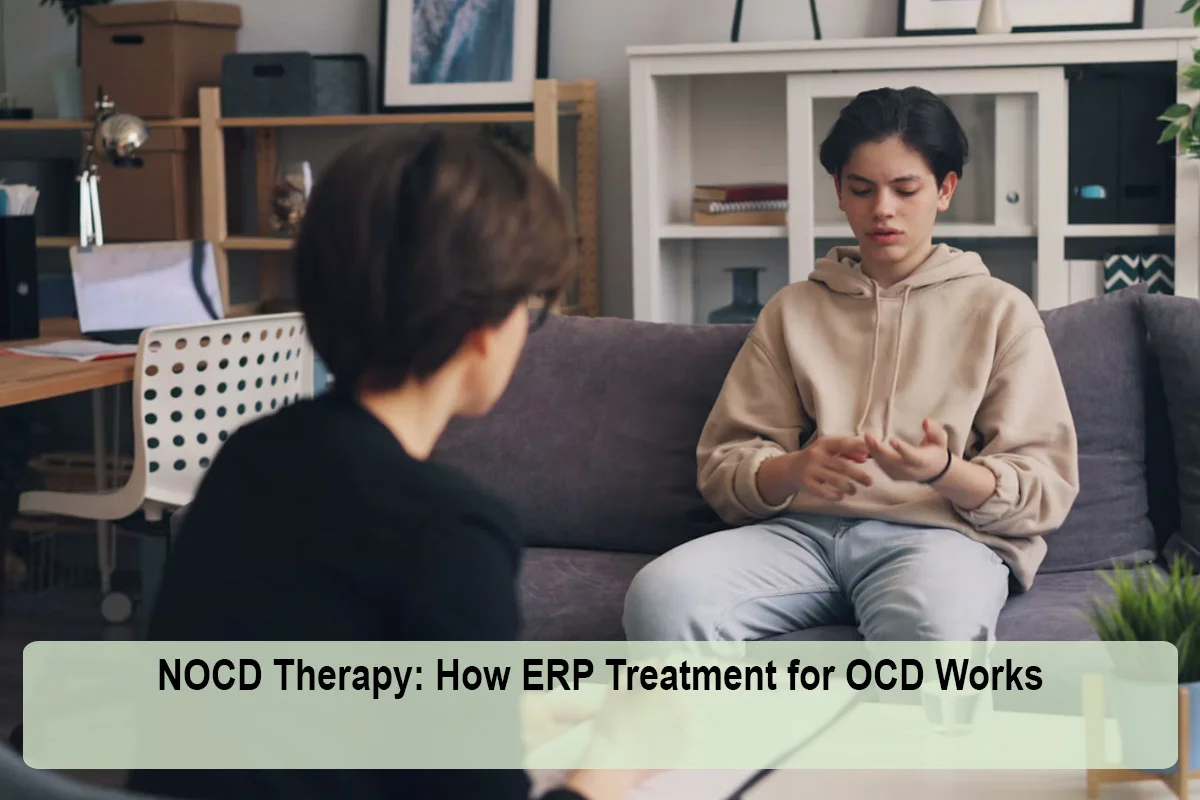
NOCD therapy is a telehealth service that delivers exposure and response prevention (ERP), the first-line psychological treatment for obsessive-compulsive disorder, through live video sessions with therapists trained in OCD. Its model front-loads treatment, with more frequent sessions at the start, and adds messaging and app support between sessions. This is an independent explainer: we are not affiliated with NOCD. It covers how ERP works, how NOCD's format compares with standard outpatient ERP, what its own published data shows (and what it cannot show), and how to decide whether NOCD or another ERP option fits you.
| Feature | What NOCD describes |
|---|---|
| Treatment | Exposure and response prevention (ERP) for OCD and related conditions |
| Format | Live, face-to-face video sessions |
| Session frequency | About two sessions a week at first, then one to two a week, then monthly after treatment |
| Between sessions | Therapist messaging, an app with exposure tools, peer communities and support groups |
| Where it operates | The US, UK, Australia and Ontario, per its website |
| Insurance | Lists partnerships with plans including UnitedHealthcare, Cigna, Humana and many Blue Cross Blue Shield plans |
These details come from NOCD's own pages on what to expect and how it differs from standard ERP. Coverage and availability change, so always confirm with your insurer and the company directly.
OCD involves obsessions (unwanted, distressing thoughts, images or urges) and compulsions (behaviors or mental acts done to reduce that distress or prevent a feared outcome). Compulsions bring brief relief, which teaches the brain to keep using them. That loop is what ERP targets.
The International OCD Foundation describes ERP as a form of cognitive behavioral therapy and a first-line psychological treatment for OCD. It has two parts:
Over repeated practice, anxiety tends to fall on its own, and you learn that you can tolerate uncertainty and that feared outcomes are unlikely. The IOCDF reports that hundreds of trials support ERP, with an average symptom reduction of about 60%, often maintained long term, and that it works from about age six into older adulthood.
| Step | Exposure | Response prevention |
|---|---|---|
| Low | Touch a doorknob at home | Wait 10 minutes before washing |
| Moderate | Touch a public door handle | Eat a snack without washing hands first |
| Higher | Sit on a public bench, then touch your face | No sanitizer for the rest of the outing |
| Top | Touch a public restroom door, then handle your phone | No cleaning the phone; no asking whether it is "safe" |
Hierarchies look very different for other OCD themes, such as harm, religious, relationship or "Pure O" presentations, where exposures are often imaginal (written scripts or recordings of feared thoughts). Our article on Pure O intrusive thoughts explains how ERP targets mental compulsions.
| Feature | Typical outpatient ERP | NOCD model |
|---|---|---|
| Setting | Office, sometimes telehealth | Video only, usually from home |
| Session length and count | IOCDF: typically 12 to 20 sessions of about an hour | Published model: twice-weekly 60-minute sessions for 3 weeks, then weekly 30-minute check-ins |
| Exposures in real settings | Possible, but often limited to the office | Can take place in the home or wherever symptoms happen |
| Contact between sessions | Varies by therapist | In-app messaging and peer support |
| Finding a specialist | Can involve long waits, especially in rural areas | Matching with an ERP-trained therapist, often within days, per the company |
Doing exposures at home is a genuine advantage for many people with OCD, because triggers such as a kitchen, a bathroom or a child's bedroom are hard to recreate in a therapist's office.
NOCD researchers published a large outcome study in the Journal of Medical Internet Research in 2022. It looked back at records from 3,552 adults with OCD who started treatment between January 2020 and June 2021. Key findings:
The results are encouraging but need context, much of which the authors acknowledge themselves:
The fairest reading: video-delivered ERP in this format appears to work for many adults with mild to severe OCD, consistent with the wider evidence for ERP, but independent controlled trials would strengthen the case.
| Likely a good fit | May need a different or higher level of care |
|---|---|
| Mild to moderately severe OCD | Extreme OCD that prevents leaving the house or basic self-care |
| Limited access to local ERP specialists | Suicidal thoughts or recent self-harm |
| Triggers tied to home routines | Active substance use, psychosis or mania |
| Comfortable with video sessions | Need for medication management alongside therapy |
| Motivated to do between-session practice | Severe family accommodation needing intensive family work |
The IOCDF notes that severe depression, poor insight, active bipolar disorder or psychosis, substance misuse and high family accommodation can limit ERP results. In those situations, a psychiatrist, an intensive outpatient program or residential treatment with OCD expertise may be safer. Medication prescribed by a psychiatrist is also a well-established treatment for OCD and is often combined with ERP.
Based on NOCD's description of its process, a typical first month runs roughly like this. Week one usually starts with a free introductory call, matching with a therapist and the first assessment session. By the second or third session, you and your therapist build your list of feared triggers and the compulsions you plan to resist, and you try your first simple exposures together on camera. In weeks two to four, sessions focus on harder exposures, and you take on daily homework, often using the app to log practice and anxiety levels. Many people find the first few weeks the most uncomfortable part, because they are deliberately facing fears they have avoided for years. That discomfort is expected and is part of how ERP works.
Our guide on verifying insurance benefits includes questions that work for any outpatient mental health service.
You can browse programs that treat obsessive-compulsive disorder on our directory. For younger people, our guide to signs of OCD in teens explains what to look for and how pediatric ERP involves parents.
If you have a confirmed or suspected OCD diagnosis, your symptoms are not an immediate safety risk, you are comfortable doing therapy by video, and NOCD accepts your insurance or fits your budget, it is a reasonable way to get specialized ERP quickly. If your symptoms are extreme, you need medication management, or you are in crisis, start with a psychiatrist or a higher level of care. Either way, the active ingredient is ERP itself. Whichever provider you choose, make sure that is what you are getting.
If you are having thoughts of suicide, call or text 988 now.
This article was reviewed by the RehabsNearMe Editorial Team for accuracy, clarity, and relevance. Information may be sourced from publicly available treatment resources, government agencies, and healthcare references where applicable.
Last reviewed: November 2026
Resources
 Resources
 Resources
 Resources