
 Resources
Scromiting: Meaning, Symptoms, Causes, and Treatment
Published On 17-11-2026
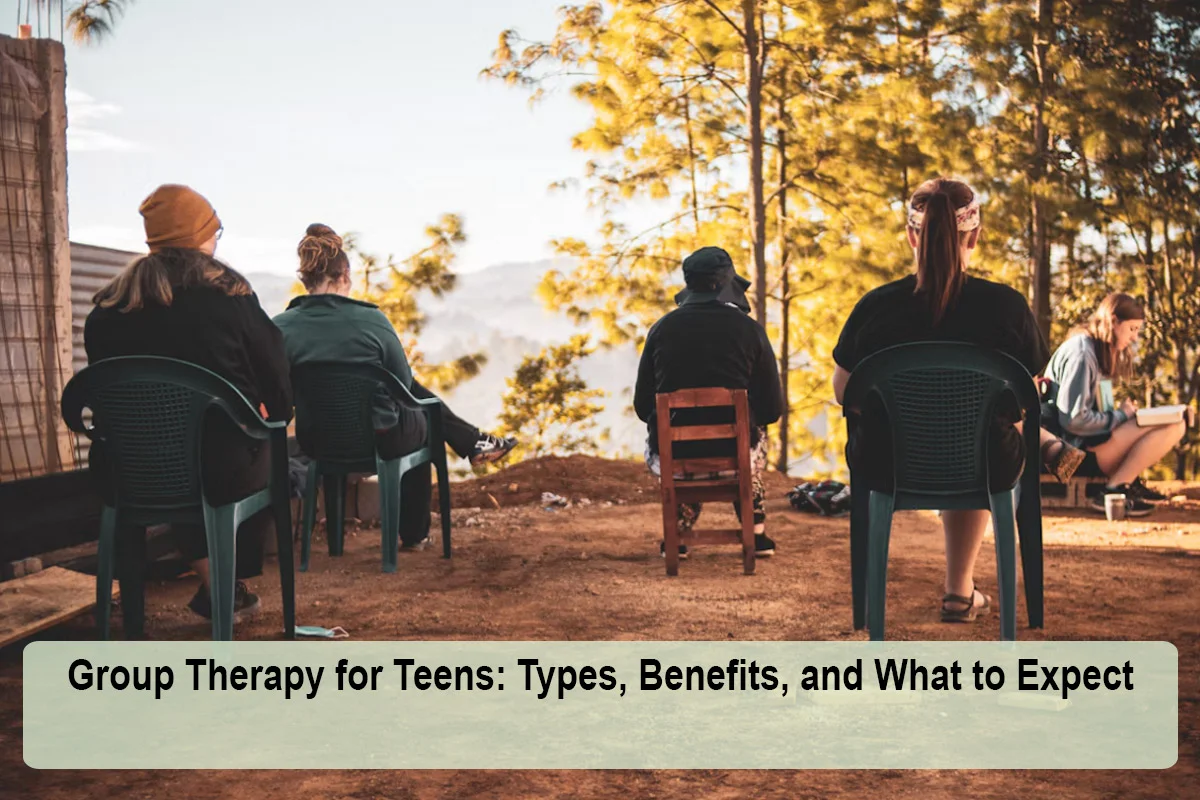
Short answer: Group therapy for teens is counseling in which a small group of adolescents meets regularly with a trained therapist to learn skills, share experiences and support each other. Groups usually have a clear focus, such as anxiety, depression, coping skills, substance use, grief or social skills. Teens often benefit because they learn from peers who understand, feel less alone and practice new skills in a safe social setting. Group therapy usually works alongside individual and family therapy, not instead of them.
This guide explains what teen group therapy is, what happens in a session, the main types of groups, the benefits and limits, how to tell whether a group is a good fit and how to find a quality adolescent program. For adult and rehab settings, see our guide to group therapy in rehab.
Group therapy for teens is a structured form of psychotherapy in which several adolescents meet together with one or two trained facilitators. The National Institute of Mental Health notes that psychotherapy can take place in individual, family, couple or group settings. In teen groups, the therapist guides discussion, teaches skills and keeps the group safe, while members learn from each other.
Groups are offered in outpatient clinics, schools, intensive outpatient programs, partial hospitalization programs and residential treatment. In intensive programs, teens often attend several groups a day.
Most sessions follow a predictable structure:
Ground rules usually include confidentiality, respect, one person speaking at a time, no pressure to share and clear limits on contact outside the group.
| Type of group | Focus | Often helpful for |
|---|---|---|
| Skills groups (CBT or DBT) | Coping, emotion regulation, distress tolerance, problem-solving | Anxiety, depression, self-harm, anger |
| Process groups | Sharing experiences and giving feedback | Relationship problems, low self-esteem, recovery |
| Psychoeducation groups | Learning about a condition and treatment | New diagnoses, substance use, families |
| Substance use groups | Relapse prevention, triggers, motivation | Teens using alcohol, cannabis, vaping or other drugs |
| Social skills groups | Conversation, friendships, reading social cues | Social anxiety, ADHD, autism |
| Grief and trauma groups | Processing loss and trauma reactions safely | Bereaved teens, trauma survivors |
| Multifamily groups | Teens and parents learning skills together | Family conflict, DBT programs |
| Expressive groups | Art, music, movement or drama | Teens who struggle to talk |
Related approaches include dialectical behavior therapy, cognitive behavioral therapy, psychoeducation, art therapy and psychodrama.
Group formats are a core part of several evidence-based treatments for teens. In an NIMH-funded study of youth ages 12 to 18 at high risk for suicide, dialectical behavior therapy, which combines individual therapy, multifamily group skills training and phone coaching, made self-harm about one-third as likely at six months compared with a comparison therapy. Teens in DBT also attended more sessions and were more likely to complete treatment. Group therapy is not a single treatment, though; how well it works depends on the type of group, the facilitator's skill and whether it fits the teen's needs.
Many struggling teens believe no one else feels the way they do. Hearing peers describe similar thoughts can be a huge relief.
Groups create connections with peers working on similar goals, which can be especially valuable for teens who feel left out at school.
Teens can rehearse assertiveness, conflict resolution and emotional expression with real people in a protected setting.
Teens often accept feedback from peers more readily than from adults. Seeing someone a few steps ahead in recovery can build hope.
Others' reactions help teens notice their own patterns, such as interrupting, withdrawing or people-pleasing.
Regular structured interaction builds listening, empathy and communication skills that carry over to school and family life.
Group sessions can be more affordable than individual therapy and are widely available in intensive programs.
| Feature | Group therapy | Individual therapy |
|---|---|---|
| Focus | Shared skills and peer learning | Personal history and specific goals |
| Privacy | Shared with peers | Private with the therapist |
| Social practice | Built in | Limited |
| Cost | Often lower per session | Often higher |
| Best for | Skills, connection, feedback | Trauma processing, complex issues, safety planning |
Most teen programs combine both, plus family therapy.
Group therapy may be a good fit if your teen:
Individual therapy may need to come first if your teen is in crisis, actively suicidal, severely anxious in groups or processing very recent trauma. A clinician should screen your teen before placing them in a group.
| Try saying | Avoid saying |
|---|---|
| "There are other teens dealing with similar things. It might help to hear from them." | "You're going because you need fixing." |
| "You don't have to share anything until you're ready." | "You have to tell them everything." |
| "Try three sessions, then we'll talk about how it's going." | "You'll go for as long as I say." |
Browse programs offering group therapy, didactic group therapy and family involvement, or compare programs for adolescents. You can also search FindTreatment.gov or call the SAMHSA National Helpline at 1-800-662-4357. If your teen is in crisis, call or text the 988 Suicide and Crisis Lifeline.
Jayden, 15, had social anxiety and depression and barely spoke in individual therapy. His therapist suggested a weekly DBT skills group for teens. For the first three sessions, Jayden only listened. In the fourth, another boy described freezing when asked a question in class, and Jayden said, "That happens to me too." The group practiced a breathing skill and a script for asking teachers for help. Over two months, Jayden began sharing more, practiced the script at school and made a friend from the group who also liked music. His parents noticed he was less withdrawn at dinner. Group gave him something individual therapy alone had not: proof that he was not the only one.
Teens need to trust that what they say in group stays in the room. Most groups ask members not to share others' stories outside the group. Therapists typically explain to parents that they will share general progress and any safety concerns, but not every detail. Asking your teen "What did the others say?" can damage trust, so focus on what your teen chooses to share about their own experience.
Ask what skills the group is working on and encourage practice at home without quizzing your teen about what others said. Respect group confidentiality. Notice and praise small changes, and stay in touch with the program about progress. Practices from positive coping skills for teens can reinforce what your teen learns.
Group therapy for teens offers something individual sessions cannot: peers who understand and a safe place to practice real-life skills. It is a core part of evidence-based programs such as adolescent DBT and works best when combined with individual and family therapy. Look for licensed adolescent specialists, clear structure and careful screening, give your teen time to settle in, and keep supporting their progress at home.
This article was reviewed by the RehabsNearMe Editorial Team for accuracy, clarity, and relevance. Information may be sourced from publicly available treatment resources, government agencies, and healthcare references where applicable.
Last reviewed: November 2026
Resources
 Resources
 Resources
 Resources