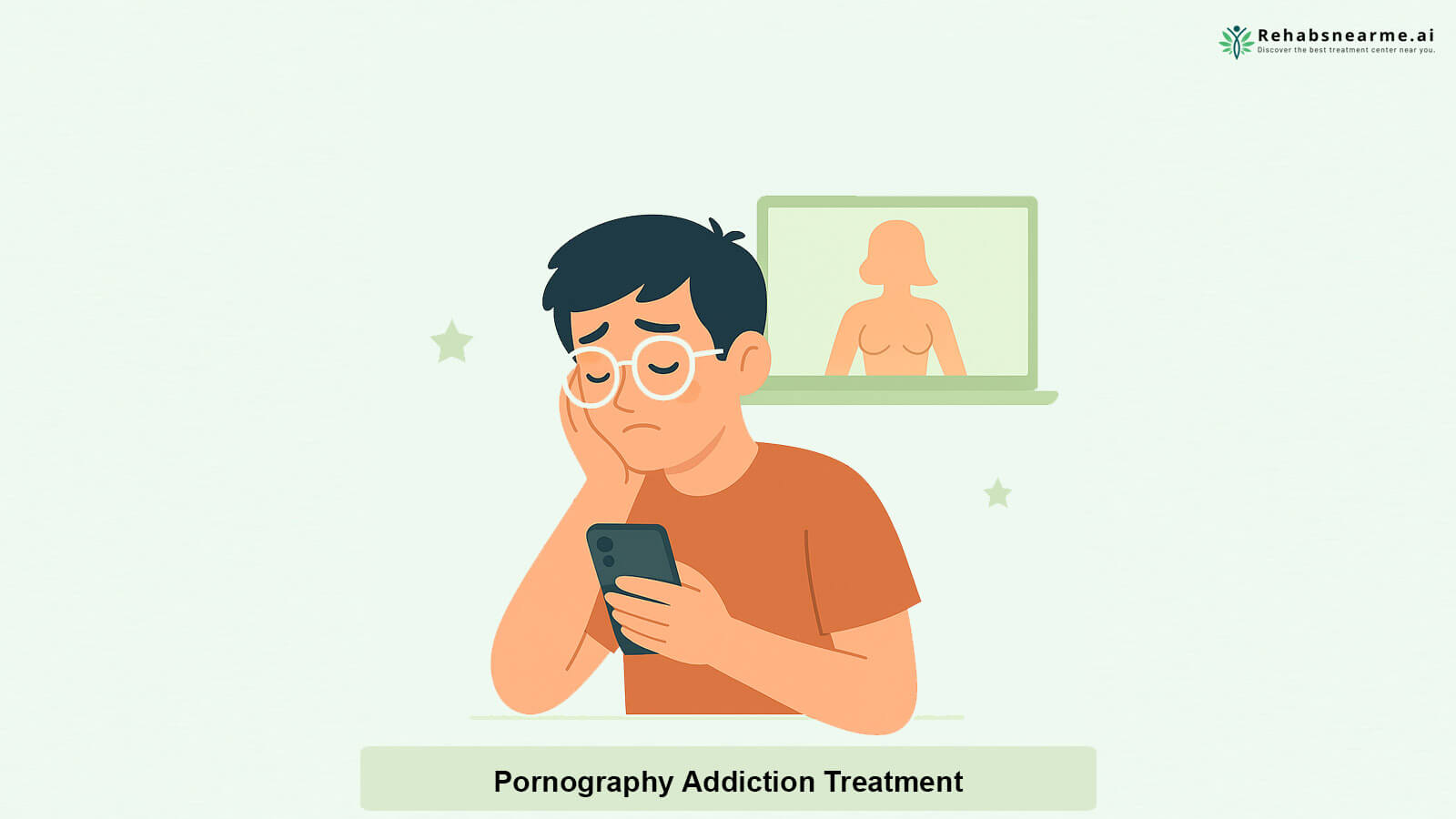
Porn addiction, also known as compulsive pornography use or problematic sexual behavior, is a behavioral addiction in which a person feels an uncontrollable urge to view pornographic content despite negative consequences. The compulsive cycle can interfere with daily functioning, mental health, relationships, and sexual well-being.
Like other addictions, pornography addiction activates the brain’s reward system, increasing dopamine levels and reinforcing the cycle of craving and escape. Over time, this can lead to desensitization, shame, guilt, anxiety, and emotional or physical withdrawal when trying to stop.
Symptoms of Porn Addiction
Common porn addiction symptoms include:
- Needing increasingly explicit content to feel the same level of stimulation
- Being unable to stop watching porn despite trying
- Spending excessive time viewing porn or thinking about pornography
- Watching porn for longer than intended or at risky times
- Experiencing anxiety, irritability, or emotional discomfort when trying to abstain
Even though pornography is common for both men and women, compulsive viewing habits can negatively impact mental health, intimacy, and daily functioning.
Signs You May Have a Porn Addiction
You may be struggling with porn addiction if:
- Your urge to watch porn interferes with work, school, or responsibilities
- You feel ashamed, anxious, or guilty after watching porn
- You hide or lie about your porn use
- Porn use creates sexual problems in your relationship
- You engage in risky sexual behavior
- Previous attempts to quit have been unsuccessful
If pornography is affecting your relationships, self-esteem, or mental health, seeking professional help can be life-changing.
Risks & Negative Effects of Pornography Addiction
Although pornography can be used for healthy sexual exploration, problematic porn use can create significant emotional, psychological, and relational challenges.
Relationship Problems
Porn addiction can lead to:
- Less intimacy with a partner
- Dissatisfaction with real-life sexual experiences
- Decreased sexual desire or performance issues
- Emotional disconnection or lack of presence during intimacy
- Damage to your partner’s self-esteem
Emotional & Mental Health Effects
Compulsive pornography use is often tied to:
- Anxiety
- Depression
- Loneliness
- Shame and guilt
- Low self-worth
- Avoidance of real-life relationships
Brain Changes
Like other behavioral addictions, porn alters dopamine pathways, which can:
- Reduce sensitivity to normal sexual stimulation
- Heighten cravings
- Increase compulsive patterns
- Reinforce escape-based behavior
Risky Coping Mechanisms
Many people use pornography to escape:
- Stress
- Trauma
- Low self-esteem
- Relationship conflicts
- Depression
- Boredom
Over time, the cycle becomes harder to break without support.
Children, Teens & Early Exposure to Porn
With easy access to smartphones, tablets, social media, and streaming apps, children are exposed to adult content more frequently than ever.
Early exposure can increase risks of:
- Distorted views of sex and consent
- Shame, confusion, or anxiety
- Online predatory grooming
- Exposure to violent or extreme sexual content
- Early development of compulsive behavior
Parents can reduce risk by:
- Using parental controls, filters, and monitoring software
- Creating open, age-appropriate conversations about sex
- Teaching boundaries, consent, respect, and healthy relationships
Treatment for Porn Addiction
Porn addiction often co-occurs with:
Licensed therapists use evidence-based approaches to address the psychological and behavioral patterns behind compulsive porn use, including:
Evidence-Based Therapies
- Cognitive Behavioral Therapy (CBT): Restructures obsessive thoughts and teaches impulse control
- Dialectical Behavior Therapy (DBT): Improves emotional regulation and distress tolerance
- Psychodynamic Therapy: Uncovers trauma or emotional wounds driving the addiction
- Mindfulness Therapy: Helps reduce urges and compulsive behavior
- Sex Addiction Treatment: Addresses sexual compulsivity and intimacy issues
Rehab & Higher Levels of Care
A porn addiction rehab program may include:
- Inpatient residential rehab — 24/7 structured support
- Partial Hospitalization (PHP) — 5–7 full days per week
- Intensive Outpatient Program (IOP) — 3–5 days per week
- Outpatient counseling — weekly individual or group sessions
- Wellness retreats — supportive recovery environments
These settings address psychological, emotional, sexual, and behavioral factors contributing to the addiction.
Finding Support for Porn Addiction
There are many ways to find help:
Books, Journals & Self-Help Resources
Guided workbooks and educational books can support recovery between therapy sessions.
12-Step Programs
Groups like:
- Sex Addicts Anonymous (SAA)
- Sex and Love Addicts Anonymous (SLAA)
- Porn Addicts Anonymous (PAA)
Provide long-term accountability and community support.
Peer & Family Support
Talking with trusted friends or loved ones can reduce shame and increase motivation.
Faith-Based or Spiritual Support
Some individuals benefit from pastoral counseling or spiritual mentorship.
Recovery from porn addiction takes time—but healing is absolutely possible with the right support, tools, and guidance.
Questions to Ask Your Provider
If you suspect you may be struggling with pornography addiction, consider asking your therapist or doctor:
- What are the symptoms of porn addiction?
- What triggers or mental health conditions may be contributing to my compulsive use?
- What treatment options are available for porn addiction?
- What goals should I expect during treatment?
- How should I manage cravings, urges, or slip-ups?
- Do I have any co-occurring conditions that need treatment?