
 Resources
Positive Coping Skills for Teens: 44 Healthy Ways to Manage Stress
Published On 25-10-2026
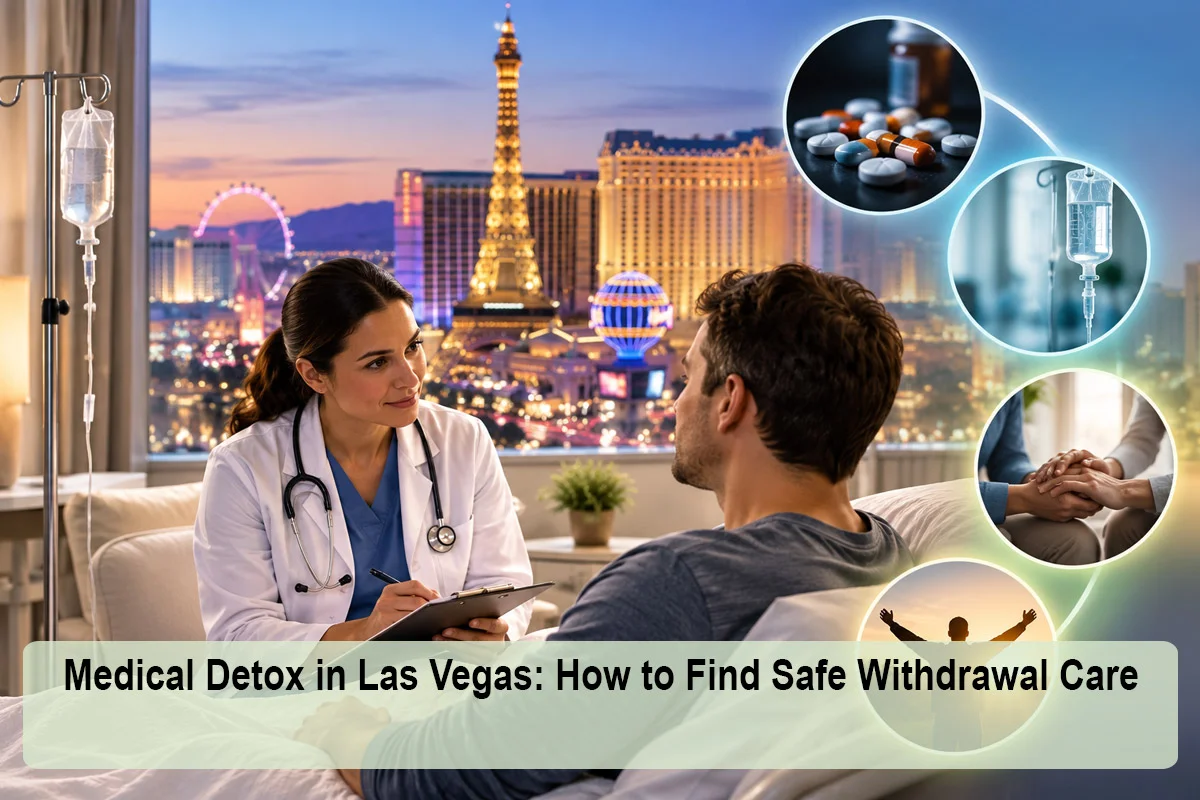
Not every place that calls itself a detox in Las Vegas provides medical detox. Nevada law recognizes several different kinds of withdrawal services, from civil protective custody for someone found intoxicated in public, to programs staffed by certified detoxification technicians, to fully medical units with physicians and around-the-clock nursing. These are not interchangeable. For someone withdrawing from alcohol, benzodiazepines, or high doses of fentanyl, choosing the wrong level of care can be dangerous. This guide explains what medical detox actually means, how to tell the difference in Las Vegas, and what Southern Nevada's drug supply means for the withdrawal process.
Detox, more accurately called withdrawal management, is the process of safely getting through the physical symptoms that occur when someone stops using a substance their body has adapted to. Withdrawal management exists along a spectrum of intensity, and the American Society of Addiction Medicine (ASAM) criteria have long described several levels:
| Type of Withdrawal Management | Setting | Who It Fits |
|---|---|---|
| Ambulatory (outpatient) | Clinic or office visits, person sleeps at home | Mild to moderate withdrawal with good home support |
| Clinically managed residential | Residential setting with trained non-medical staff and medical backup | Moderate withdrawal without serious medical risk |
| Medically monitored residential | 24-hour nursing with physician oversight | Significant withdrawal risk needing medication and monitoring |
| Medically managed inpatient | Hospital setting with daily physician care | Severe withdrawal, medical complications, or high seizure or delirium risk |
When people say "medical detox," they generally mean the last two levels: settings where licensed medical staff can prescribe and adjust medication, monitor vital signs around the clock, and respond quickly if complications develop.
Under Nevada Revised Statutes 458.270, a person found in a public place under the influence of alcohol and unable to care for their own safety must be placed in civil protective custody by a peace officer. If a licensed facility certified for civil protective custody exists in the community, the person is taken there for observation and care. Nevada law specifies that civil protective custody carries no criminal implication. This is a public safety and sobering function. It is not the same as a planned medical detox admission, and it is not designed to manage complex withdrawal.
Nevada certifies detoxification technicians, who are trained to screen people for safe withdrawal from alcohol and other drugs. Some withdrawal programs rely heavily on these technicians, with medical staff available for consultation rather than present around the clock. These programs can be appropriate for people with mild to moderate withdrawal. They are generally not appropriate for people at risk of seizures, delirium tremens, or serious medical complications. Our page on non-medical detox explains how these settings work.
Medical detox units, whether freestanding or attached to a hospital or residential treatment center, have physicians or advanced practice providers overseeing care, nurses available 24 hours a day, and the ability to administer and adjust medications quickly. This is the appropriate setting for most people withdrawing from heavy alcohol use, benzodiazepines, or high-dose opioids, and for anyone with significant medical or psychiatric conditions.
If the answers are vague, or if the program cannot describe how it handles a seizure at 3 a.m., keep looking.
Fentanyl is the leading driver of overdose deaths in Clark County. According to the Southern Nevada Health District, the age-adjusted rate of fentanyl-involved deaths rose from 2.4 per 100,000 people in 2018 to 17.1 per 100,000 in 2025. Fentanyl withdrawal can differ from the heroin withdrawal that older detox protocols were designed around. Because fentanyl is stored in fat tissue, starting buprenorphine can trigger precipitated withdrawal if timed poorly. Experienced medical teams use adjusted approaches, such as waiting for clearer withdrawal signs, using low-dose initiation strategies, or starting methadone. Our article on what happens during opioid detox covers the process in more detail.
In preliminary Health District research presented in 2026, 95 percent of people who reported using fentanyl also reported using methamphetamine. This combination complicates detox. Opioid withdrawal is physically intense, while methamphetamine withdrawal tends to bring exhaustion, heavy sleep, intense hunger, depression, and sometimes agitation or paranoia. There are no FDA-approved medications specifically for methamphetamine withdrawal, so care is supportive. A medical detox team should monitor mood closely, since depression and suicidal thoughts can emerge during the stimulant crash.
Alcohol withdrawal remains one of the most dangerous withdrawal syndromes. It can progress to seizures and delirium tremens, which can be fatal without treatment. People with a history of previous withdrawal seizures, heavy daily drinking, or prior delirium tremens are at higher risk, and each withdrawal episode can make the next one worse. In a city where alcohol is always available, many people drink heavily for years before seeking help. Medical supervision is strongly recommended for anyone with significant daily drinking. Our guide on why alcohol withdrawal can require medical supervision explains the monitoring protocols used.
Las Vegas summers regularly bring extreme heat. Withdrawal often involves sweating, vomiting, and diarrhea, all of which cause fluid loss. Combined with desert heat, this raises the risk of dehydration and electrolyte imbalances, which can worsen heart rhythm problems and confusion. This is another reason home detox carries more risk here, and why medical teams pay close attention to fluids and electrolytes.
Knowing what to expect can make the decision to enter detox less frightening. Most medical detox stays follow a similar pattern, though the length depends on the substance and the person's health.
Admission. A nurse and provider take a medical history, check vital signs, review current medications, and often run blood work and a urine drug screen. They will ask when you last used each substance, because timing shapes the medication plan.
The first few days. This is when withdrawal is usually most intense. Staff check symptoms on a regular schedule using standardized scales and adjust medications based on the scores. For alcohol, that often means medications that prevent seizures and calm the nervous system. For opioids, it usually means starting buprenorphine or methadone, plus medications for nausea, diarrhea, and muscle aches.
Stabilization. As symptoms ease, the focus shifts to rest, nutrition, hydration, and beginning conversations with counselors about the next step. Many programs introduce brief therapy sessions or groups once people are physically able to participate.
Discharge. Typical stays run about three to seven days for opioids and three to ten days for alcohol, with longer stays for benzodiazepines or complicated cases. A strong program will not discharge someone without a confirmed plan for ongoing treatment.
Some people try to detox at home to avoid cost, stigma, or time away from work. For mild withdrawal from some substances, supervised outpatient detox can be appropriate. But unsupervised home detox from alcohol or benzodiazepines can be life-threatening, and stopping opioids without medication leads to high relapse rates and a dangerous loss of tolerance that increases overdose risk. Our comparison of detox at home and medical detox lays out the risks in detail.
Medical detox manages withdrawal. It does not treat addiction. Studies consistently show that people who complete detox without moving into ongoing treatment have high rates of returning to use, and for people with opioid use disorder, the period immediately after detox carries a sharply elevated risk of fatal overdose because tolerance drops quickly.
A good Las Vegas detox program begins discharge planning on the first day. That plan should include a confirmed next step, such as residential treatment, intensive outpatient care, or continued medication for opioid use disorder, ideally with an appointment scheduled before the person leaves. For opioid use disorder, continuing buprenorphine or methadone after detox is one of the most protective steps a person can take. Our guide to drug and alcohol rehab in Las Vegas covers the treatment options that follow detox, including programs that address gambling alongside substance use.
Most commercial insurance plans cover medically necessary withdrawal management, and detox is often authorized more quickly than residential treatment because it is considered medically urgent. Nevada Medicaid also covers withdrawal management through enrolled providers. Many hospitality and casino workers have coverage through union plans such as the Culinary Health Fund, which should be contacted directly about in-network detox options. If you are uninsured, ask programs about state-funded beds, and call the SAMHSA National Helpline at 1-800-662-4357 for referrals.
Some situations require a hospital immediately. Call 911 or go to the nearest emergency department if someone:
Emergency departments can stabilize withdrawal and, in many cases, start buprenorphine for opioid use disorder before connecting the person with ongoing care. For a mental health crisis, call or text 988.
In Las Vegas, the word "detox" covers everything from civil protective custody to programs run mainly by certified technicians to fully staffed medical units. For alcohol, benzodiazepines, high-dose fentanyl, combined fentanyl and methamphetamine use, or any significant medical condition, insist on true medical detox with physician oversight and 24-hour nursing. Ask direct questions, plan for the desert heat, and make sure there is a confirmed next step before discharge. Detox is the doorway, not the destination.
This article was reviewed by the RehabsNearMe Editorial Team for accuracy, clarity, and relevance. Information may be sourced from publicly available treatment resources, government agencies, and healthcare references where applicable.
Last reviewed: October 2026
Resources
 Resources
 Resources
 Resources