
 Resources
Teen Gives Up on School? Why It Happens and How to Help
Published On 25-10-2026
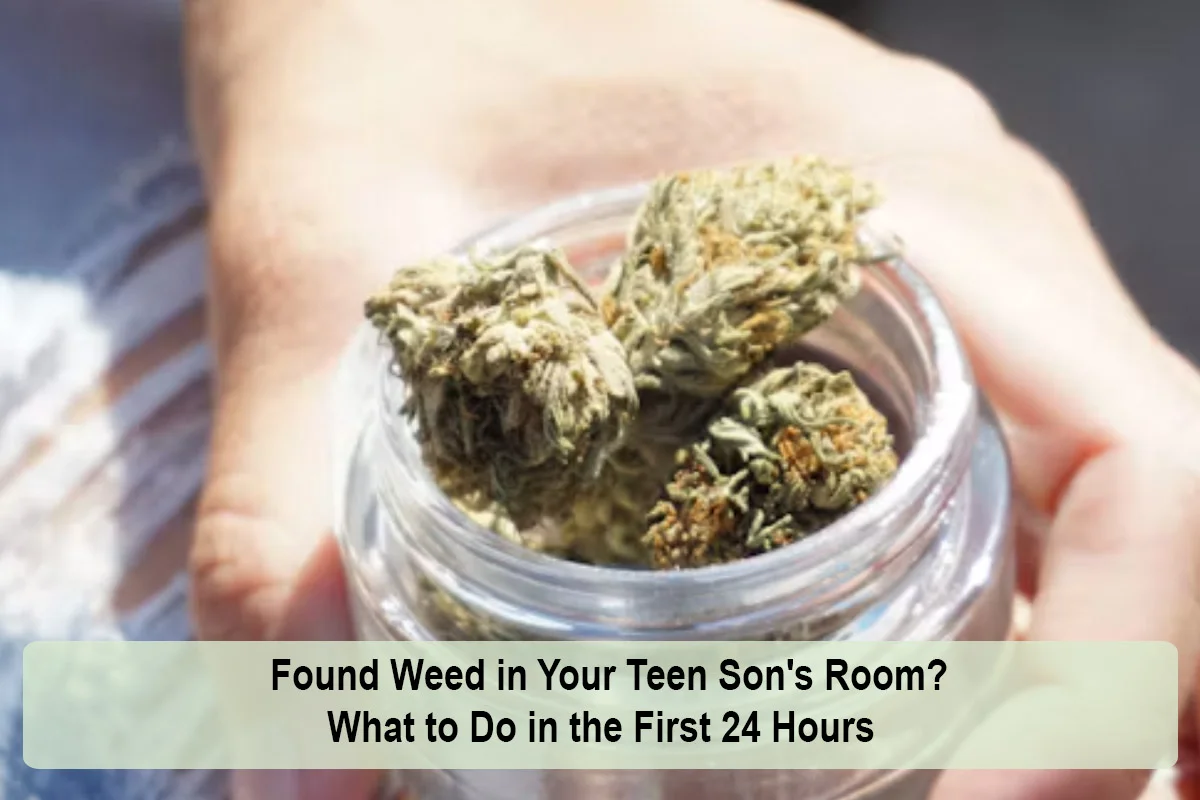
You were putting away laundry, looking for a charger, or noticed a strange smell, and there it was: a baggie of weed, a vape cartridge, a pack of gummies, or a pipe hidden in your teen's room. Finding weed in your teen son's room can leave you shocked, scared, and unsure what to do first. Should you confront him right away, call the police, search the rest of his room, or wait? This guide walks you through the first 24 hours after finding marijuana in your teen's room: how to identify what you found, what to do with it, whether to search further, how to plan the conversation, what the law says, and when it is time to get help.
For guidance on longer-term patterns of use, see our companion guide on what to do when your teen son is smoking weed.
Your first reaction will shape everything that follows. Teens respond more to emotional tone than words, and a confrontation fueled by panic or anger usually leads to denial, lies, and a shut door. Take time to calm down, talk to your partner or co-parent, and plan what you want to say. Unless there is an immediate safety concern, a few hours or even a day to prepare is fine.
Cannabis comes in many forms today, and some are much stronger than others. Knowing what you found helps you understand the risks.
| What You Found | What It Likely Is | Why It Matters |
|---|---|---|
| Dried green or brown plant material in a bag or jar | Marijuana flower ("bud") | Most common form; usually smoked in joints, pipes, or bongs |
| Small cartridges, pen-shaped devices, or disposable vapes | THC vape cartridges or pens | Often high potency, easy to hide, and can come from unregulated sources |
| Gummies, chocolates, or candy in unusual packaging | Cannabis edibles | Effects are delayed and can be strong; dangerous if siblings or pets find them |
| Wax, shatter, or sticky oil with small torches or "rigs" | THC concentrates for dabbing | Extremely high THC content and greater risk of adverse effects |
| Pipes, bongs, rolling papers, grinders, or small scales | Paraphernalia | Scales or many small bags may suggest selling, which carries higher legal risk |
| Products labeled "hemp," "delta-8," or "THCA" | Hemp-derived intoxicating cannabis products | Can still cause a high and are often sold with little regulation |
This is a personal decision. Parents have the right to keep their home safe, especially when there are younger children, signs of dangerous drug use, or evidence of selling. At the same time, secret searches can seriously damage trust if your teen discovers them. A balanced approach is to tell your teen you found something, explain that you will be checking for safety going forward, and set clear expectations. If you see signs of other drugs, pills, weapons, or dealing, safety comes first.
A single discovery does not necessarily mean your son is addicted. NIDA's 2025 Monitoring the Future survey found that about 16% of 10th graders and 26% of 12th graders used marijuana in the past year. Many teens try it out of curiosity or social pressure. Watch for signs that use is more than experimentation:
Talk when he is sober and you are both calm. A private setting, such as a car ride or a walk, often feels less confrontational than a face-to-face sit-down.
Try: "I found this in your room, and I want to understand what is going on. I am not here to yell. I am worried and I want to hear from you."
Teens often open up during pauses. Resist filling every silence with a lecture.
Share facts calmly. The CDC warns that cannabis use in adolescence may harm the developing brain, affecting attention, memory, and learning, and that about 3 in 10 people who use cannabis have cannabis use disorder, with higher risk for those who start young.
Explain your rule, the reasons for it, and what happens if it is broken. Pair limits with warmth so your son knows the rule comes from care.
SAMHSA's Talk. They Hear You. campaign offers free tips and tools to help parents talk with their kids about substance use.
Denial is common. Avoid getting stuck in an argument about whether it is his. Calmly state what you found, what your expectations are, and what happens next. "Whether or not it is yours, it was in your room, and it cannot be in our home. Here is what we are going to do."
For a one-time discovery of a small amount, calling the police rarely helps and can create lasting consequences, including a juvenile record or school discipline. Consider involving law enforcement if there is evidence of dealing, weapons, violence, or an immediate safety threat. Even in states where marijuana is legal for adults, it remains illegal for anyone under 21, and penalties for minors vary by state. A family law attorney can explain your local laws.
If the weed was found at home, you are generally not required to tell the school. A school counselor can be a helpful ally, though, especially if your teen is getting it from classmates. If your son is using with specific friends, a calm conversation with their parents can help, but focus on sharing concern rather than blame.
Avoid removing healthy outlets like sports, jobs, or positive friendships, which help protect against continued use.
High-THC products can cause severe anxiety, panic, paranoia, rapid heart rate, vomiting, or confusion, especially with edibles or concentrates. If your teen seems very unwell, call Poison Help at 1-800-222-1222 for guidance or seek emergency care. Be honest with medical staff about what he took so they can help.
Seek help if your son uses regularly, cannot stop, uses high-potency products, uses to cope with emotions, or shows signs of depression or anxiety. Treatment often includes cognitive behavioral therapy, motivational interviewing, and family therapy. Learn more about marijuana addiction treatment and cannabis use disorder. Browse programs on our adolescent treatment page, including Nexus Teen Academy in Scottsdale. For free, confidential referrals, call the SAMHSA National Helpline at 1-800-662-4357.
If you found weed in your teen son's room, pause before confronting him, identify what you found, secure edibles and vapes away from younger children and pets, and dispose of it safely. Plan a calm conversation when he is sober, ask open questions, share your concerns, and set clear expectations. A single discovery is not always a sign of addiction, but large amounts, high-potency products, signs of selling, or emotional struggles call for professional help.
This article was reviewed by the RehabsNearMe Editorial Team for accuracy, clarity, and relevance. Information may be sourced from publicly available treatment resources, government agencies, and healthcare references where applicable.
Last reviewed: October 2026
Resources
 Resources
 Resources
 Resources