
 Resources
Teen Gives Up on School? Why It Happens and How to Help
Published On 25-10-2026
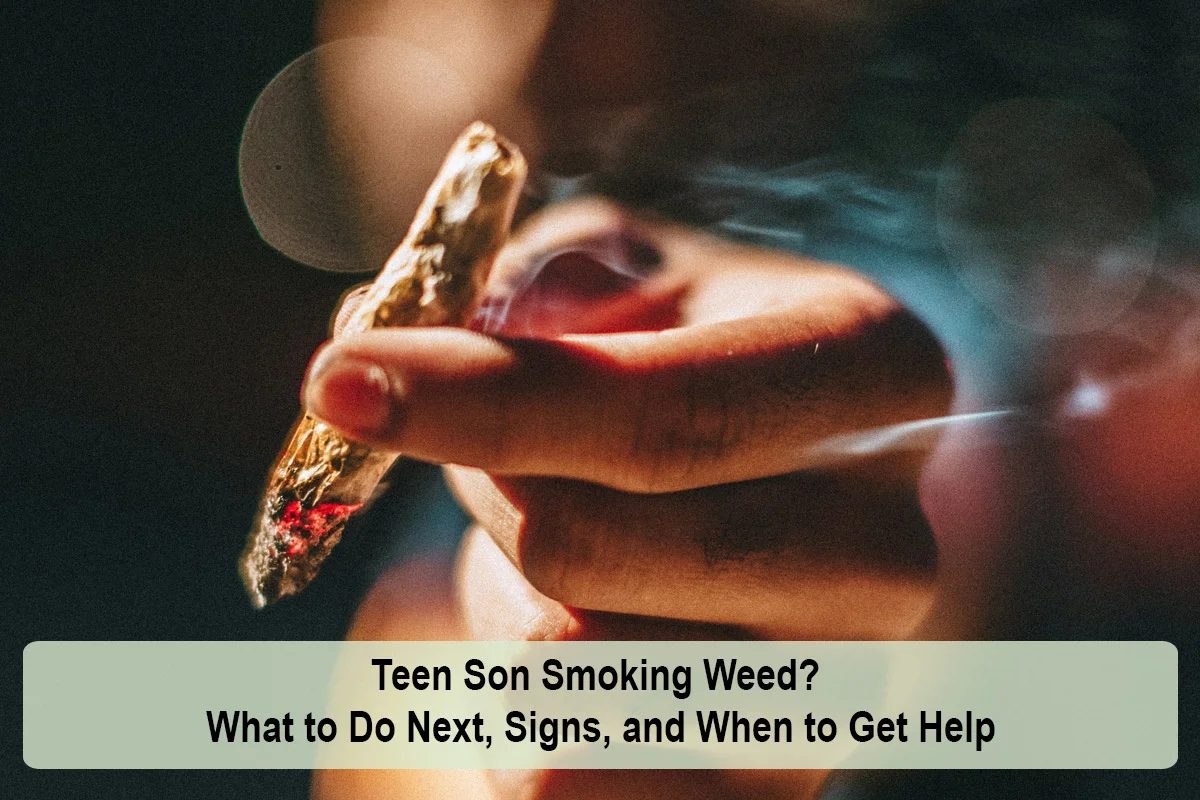
Finding out your teen son is smoking weed can bring up fear, anger, and a long list of questions. Is it just experimenting? Is he addicted? Should you drug test him, take his phone, or call a counselor? With marijuana now legal for adults in many states and widely available as joints, vapes, and edibles, many parents are unsure how worried to be. This guide explains what to do if you catch your son smoking weed, how marijuana affects the teenage brain, the signs your teen is using regularly, how to talk to him without starting a war, when drug testing makes sense, and when it is time to get professional help.
Teen marijuana use has declined in recent years, which means most teens are not using. According to NIDA's 2025 Monitoring the Future survey, about 8% of 8th graders, 16% of 10th graders, and 26% of 12th graders reported using marijuana in the past year. That makes it one of the most commonly used substances among teens, but it also means roughly three out of four high school seniors did not use it in the past year. Sharing that with your son can counter the belief that "everyone smokes."
The brain keeps developing until about age 25, and the CDC warns that cannabis use during adolescence may harm the developing brain. According to the CDC, teen marijuana use is linked to:
Yes. The CDC estimates that about 3 in 10 people who use cannabis have cannabis use disorder, and the risk is higher for people who start in adolescence and use frequently. Today's products are also much stronger than in past decades. High-THC concentrates, dab pens, and vapes can deliver large doses quickly. Learn more in our guide to cannabis use disorder.
| Instead of Saying | Try Saying |
|---|---|
| "You are ruining your life." | "I care about your future, and I want to understand what is going on." |
| "Who gave this to you?" | "How often are you using, and what do you like about it?" |
| "Weed is for losers." | "I know a lot of people think weed is harmless. Here is what worries me about it for teens." |
| "You are grounded until college." | "There will be consequences, and we are going to make a plan together." |
| "I cannot trust you anymore." | "Being honest with me now is how we rebuild trust." |
Teens use marijuana for many reasons: curiosity, fitting in, boredom, sleep problems, stress, or to quiet anxiety, depression, or ADHD symptoms. If your son says weed helps him relax, sleep, or "not feel so bad," that is an important clue that an underlying mental health issue may need attention.
Silence or denial is common. Stay calm, state your concern and your expectations, and let him know you will come back to the conversation. Pushing harder in the moment usually backfires. Consistent, calm follow-up works better than one big confrontation.
Teens need clear rules, but harsh punishment alone often pushes marijuana use underground. Effective boundaries are simple, consistent, and connected to the behavior:
Avoid taking away healthy outlets like sports, music, jobs, or positive friendships, which help protect against continued use.
Yes. Even in states where recreational marijuana is legal, it is legal only for adults 21 and older. Teens caught with marijuana can face school discipline and, depending on the state, legal consequences. Driving while impaired by cannabis is dangerous and illegal everywhere.
| Possible Experimentation | Signs of a Bigger Problem |
|---|---|
| Used once or a few times with friends | Uses weekly or daily, often alone |
| Grades, sports, and friendships are stable | School, activities, or relationships are slipping |
| Can easily agree to stop | Tries to stop but cannot, or gets irritable without it |
| Uses for curiosity or social reasons | Uses to cope with stress, sleep, sadness, or anxiety |
| Only marijuana | Also uses alcohol, vapes, pills, or other drugs |
Drug testing is a personal decision with pros and cons. It can provide accountability, especially when agreed on as part of a plan with a counselor. But surprise or punitive testing can damage trust and lead teens to hide use or switch to substances that are harder to detect. If you choose testing, discuss it openly first, explain why, and use it as one part of a broader plan that includes conversation and support. A pediatrician or addiction counselor can help you decide. Keep in mind that THC from regular use can be detectable in urine for days to weeks.
Consider reaching out to your son's pediatrician, a school counselor, or an adolescent addiction specialist if:
Effective treatment for teens often includes cognitive behavioral therapy, motivational interviewing, and family therapy. Outpatient counseling works for many teens, while intensive outpatient or residential care may be appropriate when use is heavy or mixed with serious mental health concerns. Learn more on our marijuana addiction treatment page and browse programs on our adolescent treatment page, including Nexus Teen Academy in Scottsdale and Nexus Teen Academy in Cave Creek. For free, confidential referrals, call the SAMHSA National Helpline at 1-800-662-4357.
It is common for parents to react differently. One may see marijuana as a phase, while the other sees it as a crisis. Mixed messages make it easier for teens to play parents against each other or dismiss the rules. Before talking to your son, agree on the core message, the house rules, and the consequences, even if you compromise on details. If you cannot agree, a family therapist or parent coach can help you find common ground. Divorced or separated parents benefit from aligning rules across both homes as much as possible.
Many parents used marijuana themselves, and teens may ask. You do not have to share every detail. An honest, brief answer such as "Yes, I did, and here is what I learned" can build credibility. Emphasize that today's products are much stronger and that the teen brain is still developing, which is why the rules are different for him now.
If your teen son is smoking weed, stay calm, check for safety, and talk when you are both sober and calm. Lead with concern, ask why he uses, set clear rules with fair consequences, and watch for signs of regular use. NIDA data shows about a quarter of 12th graders used marijuana in the past year, and the CDC warns teen use may harm the developing brain and raises the risk of cannabis use disorder. If he cannot stop, uses to cope with emotions, or shows mental health changes, get professional help early.
This article was reviewed by the RehabsNearMe Editorial Team for accuracy, clarity, and relevance. Information may be sourced from publicly available treatment resources, government agencies, and healthcare references where applicable.
Last reviewed: October 2026
Resources
 Resources
 Resources
 Resources