
 Resources
Positive Coping Skills for Teens: 44 Healthy Ways to Manage Stress
Published On 25-10-2026
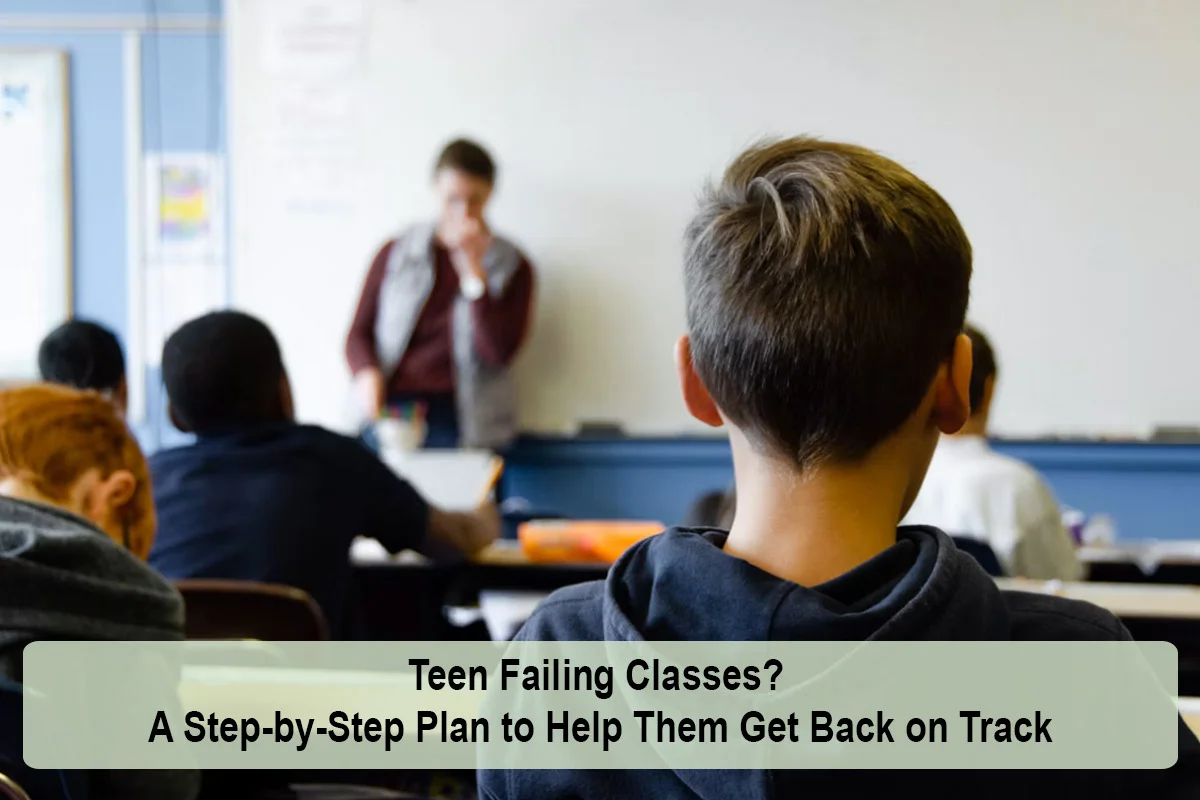
A report card full of D's and F's, a notice from the school, or an online grade portal showing missing assignments can send any parent into panic. When your teen is failing classes, it is natural to worry about graduation, college, and their future. But failing grades are a symptom, not the whole story. They can stem from missing work, learning differences, ADHD, mental health struggles, substance use, or a teen who has simply fallen too far behind. This guide focuses on a practical plan for helping a teen who is failing classes: how to find out what is really going on, how to work with teachers and the school, academic recovery options like credit recovery and summer school, special education and 504 plans, and when emotional or behavioral support is needed.
If your teen seems to have stopped caring about school entirely, see our related guide on when a teen gives up on school.
Before reacting, find out exactly what is happening. Log in to the school's grade portal, review recent assignments and test scores, and look for patterns:
Patterns can point to the cause. Failing one class may suggest difficulty with a subject or teacher, while failing everything often points to something broader, such as depression, ADHD, or attendance problems.
| Possible Cause | What It May Look Like | What Can Help |
|---|---|---|
| Missing assignments | Low grades despite decent test scores | Planner, check-ins, organizational support |
| ADHD or executive function problems | Forgetting work, losing papers, poor time management | Evaluation, 504 plan, structure, treatment |
| Learning disability | Struggling despite effort, especially in reading, writing, or math | Evaluation, IEP, specialized instruction |
| Depression or anxiety | Low energy, avoidance, falling grades in many classes | Mental health treatment, school support |
| Attendance problems | Missed classes, tardies, school refusal | Attendance plan, address underlying cause |
| Falling behind | Overwhelmed by the amount of missing work | Prioritized catch-up plan with teachers |
| Substance use | Low motivation, secrecy, new friends | Assessment and treatment |
| Screens and sleep loss | Exhaustion, late nights, inattentive in class | Sleep routines, device limits |
| Bullying or social problems | Avoiding school, stomachaches, withdrawal | School intervention and counseling |
Reach out early, ideally by email first, then request a meeting if needed. Ask teachers:
The school counselor can help coordinate across classes, arrange tutoring, adjust schedules, and connect your teen with support.
If you suspect ADHD, a learning disability, or a mental health condition is affecting school, you can request an evaluation from the school in writing. Students who qualify may receive special education services through an Individualized Education Program (IEP) under the Individuals with Disabilities Education Act (IDEA), or accommodations through a 504 plan. These services are common: the National Center for Education Statistics reports that about 7.5 million students, or 15% of public school students, were served under IDEA in 2022 to 2023.
| IEP | 504 Plan |
|---|---|
| Provides specialized instruction and services | Provides accommodations to access learning |
| For students with a qualifying disability that affects learning | For students with a disability that limits a major life activity |
| Examples: reading intervention, resource room support | Examples: extra test time, preferential seating, breaks |
Many teens who fail classes are struggling with more than academics. Depression and anxiety are common. The National Institute of Mental Health estimates that 20.1% of adolescents ages 12 to 17 had a major depressive episode in 2021. Watch for sadness, irritability, withdrawal, sleep changes, and loss of interest. If your teen has ADHD, treatment that combines behavior strategies and, when appropriate, medication can improve school performance. If substance use is involved, address it directly; see our guide on what to do if your teen is smoking weed.
Failing one or two classes does not mean a teen cannot graduate. Ask the school counselor to review your teen's transcript and graduation requirements, and to map out a plan using credit recovery, summer school, or schedule changes. Acting early in the semester gives the most options.
Consequences work best when they are reasonable, consistent, and connected to schoolwork, such as screen time after homework is done, rather than broad punishments. Positive reinforcement, like extra privileges for steady progress, often motivates teens more than threats. Help your teen connect school to their own goals, such as getting a driver's license, playing a sport, or pursuing a career.
Worrying about your teen's grades can create tension at home. Try to keep school from becoming the only topic you discuss. Spending positive time together, outside of homework and grades, keeps your relationship strong and makes your teen more receptive to your support.
Track progress weekly with your teen and the school, adjusting the plan as needed. Small, steady improvements are a sign the plan is working.
Keep teachers informed of progress and setbacks.
Seek help from your teen's doctor or a mental health professional if failing grades come with sadness, anxiety, withdrawal, school refusal, sleep problems, substance use, or talk of hopelessness or self-harm. Cognitive behavioral therapy can help with motivation, anxiety, and depression, and family therapy can reduce conflict over school. When struggles are more serious, many residential programs include accredited schooling alongside treatment. Browse programs on our adolescent treatment page, including Nexus Teen Academy in Scottsdale. If your teen is in crisis, call or text 988.
Remind your teen that one bad semester does not define their future. With a clear plan and support, they can recover.
If your teen is failing classes, stay calm, gather information, and talk with them to understand what is really going on. Work with teachers and the school counselor, build a step-by-step catch-up plan, and explore tutoring, credit recovery, and summer school. Request an evaluation for an IEP or 504 plan if a learning difference, ADHD, or mental health condition may be involved, and address emotional or substance use concerns directly. With the right support, most teens can recover academically and get back on track.
This article was reviewed by the RehabsNearMe Editorial Team for accuracy, clarity, and relevance. Information may be sourced from publicly available treatment resources, government agencies, and healthcare references where applicable.
Last reviewed: October 2026
Resources
 Resources
 Resources
 Resources