
 Resources
Teen Destroying Property at Home: Is It a Mental Health Crisis?
Published On 18-10-2026
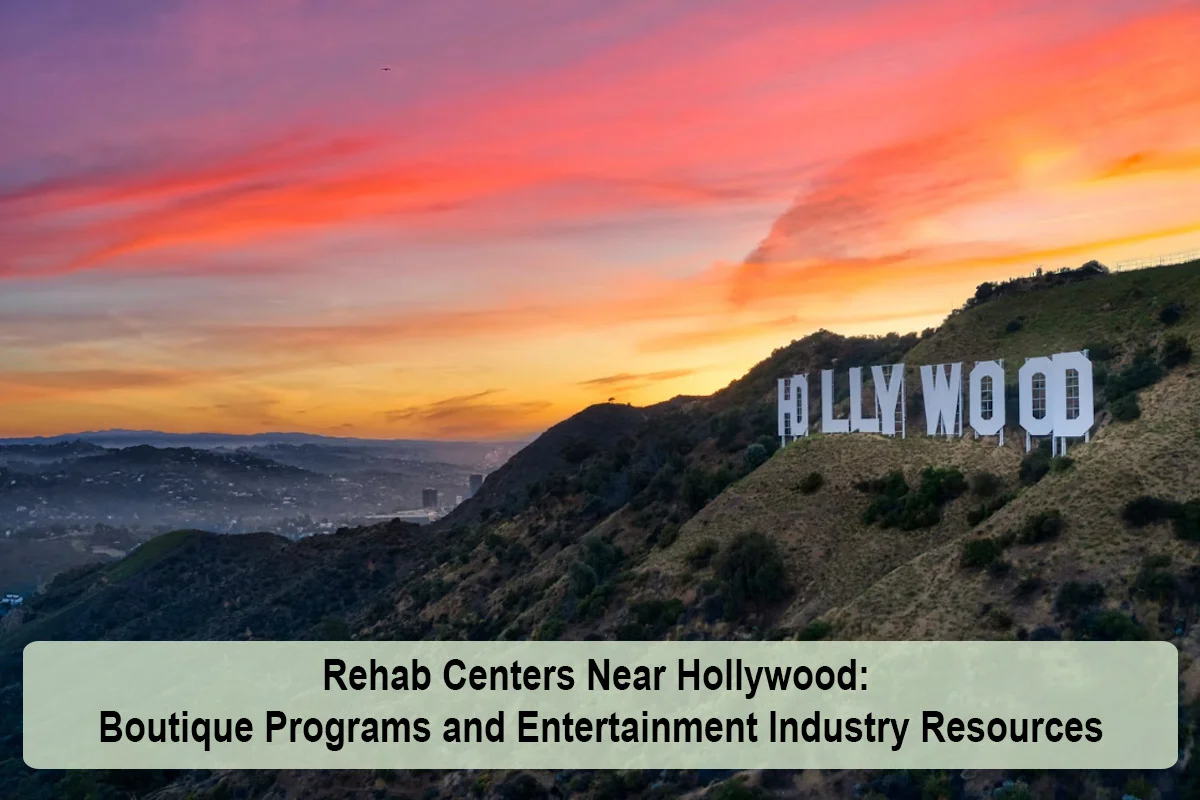
The hills above Hollywood hold one of the densest clusters of private residential addiction treatment in California. Within a few miles of the Hollywood sign, small licensed programs operate out of converted homes on winding streets like Castilian Drive, Creston Drive, and Holly Mont Drive. Most house fewer than 15 people at a time. This guide maps that cluster, explains what sets these boutique programs apart from larger facilities, and covers the specific resources available to people who work in film, television, and music, an industry where substance use is common and asking for help can feel professionally risky.
The following programs are listed on RehabsNearMe.ai and sit in or near the Hollywood Hills. Most are within about 10 minutes of each other.
| Program | Location | Area |
|---|---|---|
| Hollywood Hills Recovery | Holly Mont Drive (90068) | Hollywood Hills, near Beachwood Canyon |
| Ritz Recovery | Vine Street (90068) | Hollywood Hills, north of Franklin Avenue |
| Legacy Healing Center Castilian | Castilian Drive (90068) | Hollywood Hills |
| Bliss Recovery Los Angeles and Bliss Recovery Spanish Villa | Creston Drive (90068) | Hollywood Hills, near Lake Hollywood |
| Bliss Recovery City Lights | Pacific View Drive (90068) | Hollywood Hills |
| Peak Path Health | Solar Drive (90046) | Laurel Canyon area |
| Carrara Treatment Los Angeles | Marcheeta Place (90069) | West Hollywood Hills, above Sunset |
| Luxe Recovery | Prestwick Drive (90027) | Los Feliz |
For a closer look at one example, Hollywood Hills Recovery lists Joint Commission accreditation, licensing by the California Department of Health Care Services, and ASAM Level 3.7 certification. It was founded in 2021, has 6 to 15 beds, offers detox, residential, and outpatient care, and lists an approximate cost of $30,000 or more per month. Its listing shows participation with plans including Aetna, Anthem, Blue Cross Blue Shield, Cigna, Optum, UnitedHealthcare, and TRICARE.
If you are flying in, Hollywood Burbank Airport is the closest commercial airport, and our guide to rehab centers near Hollywood Burbank Airport covers arrival logistics.
The small, home-based model common in the Hollywood Hills is not just a style choice. It reflects how California licenses residential treatment. Programs serving six or fewer residents are treated as residential uses under state law, which makes it easier for them to operate in residential neighborhoods. Many Hollywood programs are therefore small houses rather than large campuses, sometimes with several homes operated by the same company.
Because so many Hollywood Hills programs look similar from the outside, with attractive homes, views, chef-prepared meals, and small groups, it can be hard to tell them apart. The differences that matter are clinical and operational rather than aesthetic.
Start with accreditation and licensing. Joint Commission or CARF accreditation indicates outside review of clinical and safety standards, and state DHCS licensing is required. Then compare medical capacity. A program certified at ASAM Level 3.7 offers medically monitored residential care, which is appropriate for people with more complex withdrawal or medical needs, while lower residential levels rely more on clinical rather than medical staff.
Next, look at the length of stay and what comes after. Some programs focus on 30-day stays, while others plan for 60 to 90 days with step-down care built in. Ask whether the same organization offers partial hospitalization, intensive outpatient, or sober living, and whether you can move between levels without changing clinical teams. Continuity often matters more than any single amenity.
Finally, ask about specialization. Some programs have deeper experience with trauma, co-occurring mental health conditions, young adults, or professionals. A short phone call with the clinical director, not just the admissions team, can tell you a great deal about whether a program is the right fit.
Working in entertainment carries particular risks. Irregular hours, long shoots, frequent travel, financial instability between projects, intense public scrutiny, and social environments where alcohol and drugs are common all contribute. For many people, use starts as a way to cope with performance pressure or to stay alert during brutal schedules, and becomes something harder to control.
The industry also creates unique barriers to treatment. People worry that a gap in their schedule will be noticed, that word will spread, or that insurers and production companies will treat them differently. Freelancers and union members who move between projects often have complicated health coverage. These concerns are real, but there are resources specifically designed to address them.
MusiCares, the charitable arm of the Recording Academy, provides financial assistance for addiction recovery support, including inpatient treatment, outpatient treatment, sober living, aftercare resources, and individual therapy, for eligible music professionals. It also runs weekly addiction recovery support groups led by licensed behavioral health practitioners. At major music events such as award shows, festivals, and conferences, MusiCares operates Safe Harbor Rooms, substance-free spaces staffed by chemical dependency specialists for music professionals in recovery.
The Entertainment Community Fund, formerly known as The Actors Fund, offers addiction and recovery services for entertainment industry professionals, including individualized recovery planning, support, and referrals. Its Western Region office is in Los Angeles on Wilshire Boulevard. Financial assistance is available but requires an application, documentation of professional earnings, and an interview.
Many film and television workers have health coverage through union-affiliated plans. The Motion Picture Industry Pension and Health Plans (MPIPHP), which covers many crew members, lists alcohol and substance use among the concerns members can contact it about. Performers covered through the SAG-AFTRA Health Plan and other union plans should contact their plan directly to learn about behavioral health benefits and in-network programs. Union plans can have different networks and authorization rules than standard commercial insurance, so verify carefully.
Confidentiality is often the first concern for people in public-facing careers. Several layers of protection apply.
Going back to a set, a studio, or a tour after treatment requires planning. Many people in entertainment find it helpful to:
If you need to keep working while in treatment, intensive outpatient programs with evening sessions or virtual options can make that possible. Our guide on working while attending rehab explains which levels of care fit around demanding schedules.
West Hollywood, next door to the Hollywood Hills cluster, is one of the most visible LGBTQ+ communities in the country. Research consistently shows higher rates of substance use disorders among LGBTQ+ people, often connected to minority stress. Some Hollywood programs list LGBTQ+ clients among the populations they serve, but it is worth asking specifically about affirming practices, staff training, and how housing is assigned. Our guide to LGBTQ+ affirming rehab covers what to look for.
Hollywood Hills programs generally sit at the upper end of the private market, with residential costs often reaching $30,000 or more per month before insurance. Many accept commercial insurance, which can reduce out-of-pocket costs substantially if the program is in network. If the program is out of network, balance billing can leave you responsible for a large share of the bill. Verify benefits before admission and ask for a written estimate.
If cost is a barrier, consider whether industry assistance funds can help, whether a less expensive program elsewhere in Los Angeles would meet your clinical needs, or whether intensive outpatient care is appropriate. For Medi-Cal members, Los Angeles County's public treatment system is covered in our guide to rehab centers near downtown Los Angeles.
Hollywood offers a concentrated cluster of small, private residential programs in the hills just above the city, most within minutes of one another. Their boutique model offers privacy and personal attention, but it is worth asking detailed questions about medical staffing, psychiatric care, and licensing for each specific house. For people working in entertainment, resources like MusiCares, the Entertainment Community Fund, and union health plans can help with both cost and long-term support. Treatment does not have to end a career. For many people in this industry, it is what allows a career to continue.
This article was reviewed by the RehabsNearMe Editorial Team for accuracy, clarity, and relevance. Information may be sourced from publicly available treatment resources, government agencies, and healthcare references where applicable.
Last reviewed: October 2026
Resources
 Resources
 Resources
 Resources