
 Resources
Teen Destroying Property at Home: Is It a Mental Health Crisis?
Published On 18-10-2026
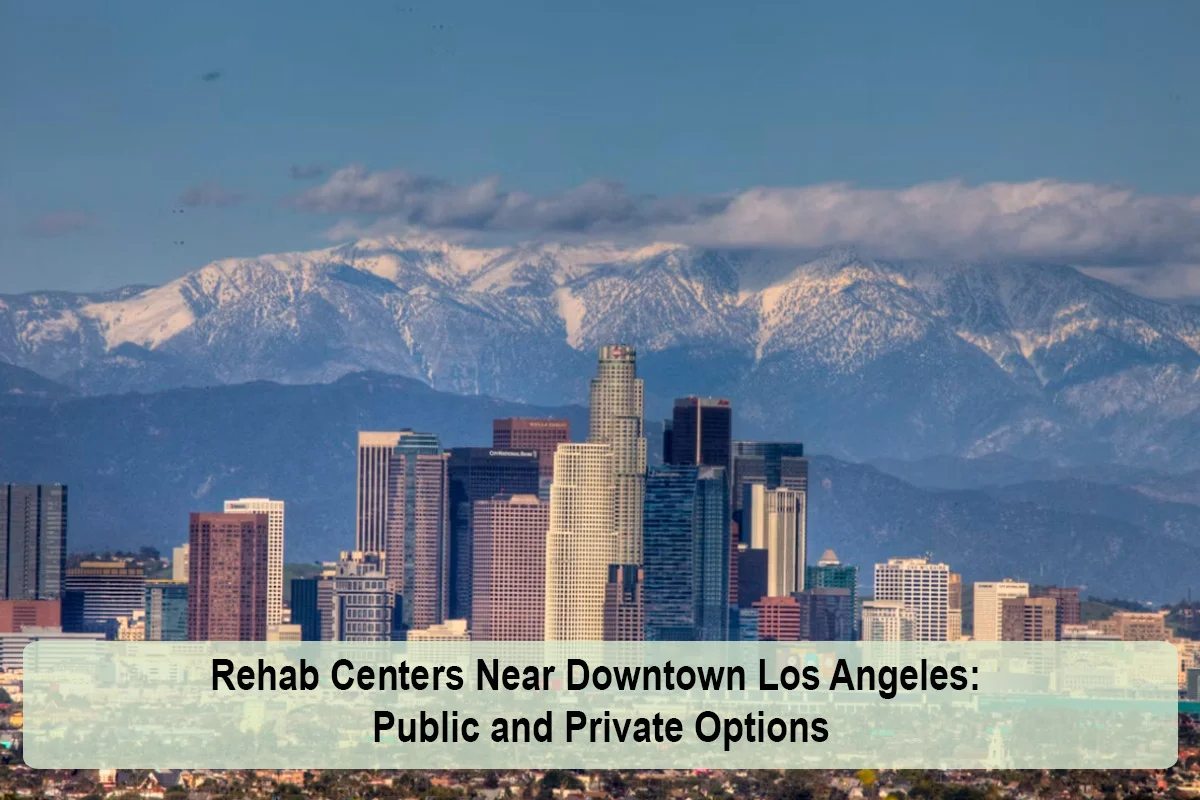
Downtown Los Angeles is the administrative heart of the largest county health system in the United States, and it sits a few miles from some of the most expensive private rehab programs in the world. That contrast defines what "rehab near downtown LA" really means. For some people, the right path runs through a free county helpline and a Medi-Cal-funded program. For others, it runs through a boutique residential home in the hills above Hollywood. This guide explains both routes, how to use the tools Los Angeles County has built for finding open treatment slots, and which private programs listed on RehabsNearMe.ai are closest to the downtown core.
Addiction treatment in Los Angeles runs on two largely separate tracks.
The public system is managed by the Los Angeles County Department of Public Health's Substance Abuse Prevention and Control bureau, commonly called SAPC. It serves people with Medi-Cal, people without insurance who qualify for county-funded care, and others who meet eligibility rules. Services are delivered through a network of contracted community providers across the county.
The private system includes residential programs, detox centers, and outpatient practices that bill commercial insurance or accept private payment. Many of these are clustered in the Hollywood Hills, the San Fernando Valley, Malibu, and the Westside.
Knowing which track fits your situation saves time. If you have Medi-Cal or no insurance, the county system is usually the right starting point. If you have employer-sponsored or marketplace insurance, private programs that accept your plan are typically more accessible. Some people use both, for example entering a county-funded detox and stepping down to a private outpatient program, or the reverse.
In July 2017, Los Angeles County began operating under the Drug Medi-Cal Organized Delivery System (DMC-ODS), a California waiver program that expanded the range of substance use treatment covered for Medi-Cal members. Under this model, Medi-Cal members can access a full continuum of care, including outpatient and intensive outpatient treatment, withdrawal management, residential treatment, medication for addiction treatment, and recovery support services.
The simplest way into the county system is the Substance Abuse Service Helpline (SASH) at 1-844-804-7500. The line is toll-free, available 24 hours a day, seven days a week, and offers translation services. Staff conduct a brief screening and refer callers to appropriate providers. You do not need to know which level of care you need before calling. The screening helps determine that.
One of the most useful and least known resources in Los Angeles is the county's Service and Bed Availability Tool, often called SBAT. It is a public, filterable online directory of county-contracted substance use providers that shows which sites have open residential beds and intake appointments. Providers are expected to update their availability at least daily, and according to a county report, 93 percent of sites in the tool did so. The tool also includes a "Bed Available Now" feature.
For families trying to find a residential bed quickly, SBAT changes the process from calling dozens of programs to checking a single dashboard. It is especially valuable for Medi-Cal members, since it focuses on county-contracted providers.
The county also funds Client Engagement and Navigation Services (CENS), which place staff in community settings to help people connect with treatment. Be aware that as of July 1, 2026, due to reduced Measure A funding, CENS staff are available at a more limited number of permanent supportive housing sites. The helpline and SBAT remain fully available.
Many people hesitate to call a government helpline because they are not sure what will happen. The process is more straightforward than most expect. A screener will ask about the substances involved, how recently they were used, any history of withdrawal complications, current mental health concerns, housing status, and insurance or Medi-Cal enrollment. The screening is designed to point you toward an appropriate level of care, not to decide whether you deserve help.
Based on the screening, the helpline can refer you to an outpatient program, a withdrawal management site, or a residential provider with an opening. If you are not yet enrolled in Medi-Cal but may be eligible, ask about help with enrollment, since coverage can sometimes begin quickly. It also helps to have a few details ready before you call: a phone number where you can be reached, a list of current medications, and the name of anyone helping you, such as a family member or case manager.
If a residential bed is not open the same day, ask what interim options exist. Outpatient services, medication for opioid use disorder, and recovery bridge housing can all help bridge the gap. Our guide on getting into rehab the same day covers what to do when no bed is immediately available.
Downtown Los Angeles includes Skid Row, one of the most concentrated areas of homelessness in the country, and much of the county's street outreach, harm reduction, and shelter capacity is located nearby. For people experiencing homelessness, treatment access often begins with outreach workers, shelters, or clinics rather than a phone call. Programs that combine housing support with treatment tend to work best for this population, because entering a 30-day residential program and then returning to the street rarely produces lasting change.
If you are helping someone in this situation, ask county providers specifically about recovery bridge housing, which offers temporary housing for people in outpatient treatment, and about how residential discharge planning addresses housing. Harm reduction services, including naloxone distribution and syringe services, can also keep someone alive while they move toward treatment. Our guide to harm reduction explains how these services fit alongside treatment rather than competing with it.
RehabsNearMe.ai does not list a residential program in the downtown core itself. The nearest listed private programs are a short drive west and north. Drive times assume moderate traffic from the Civic Center area and will be longer at rush hour.
| Program | Neighborhood | Approximate Drive from Downtown |
|---|---|---|
| Conquer Recovery | Mid-City (90019) | 15 to 25 minutes |
| Luxe Recovery | Los Feliz (90027) | 15 to 25 minutes |
| Hollywood Hills cluster (Hollywood Hills Recovery, Ritz Recovery, Legacy Healing Center Castilian, Bliss Recovery locations) | Hollywood Hills (90068) | 20 to 35 minutes |
| Peak Path Health and Carrara Treatment Los Angeles | Laurel Canyon and West Hollywood Hills | 25 to 40 minutes |
| Annandale Behavioral Health | Pasadena | 20 to 30 minutes |
The Hollywood Hills area holds the densest concentration of private residential programs near downtown. We cover that cluster in detail, including resources for entertainment industry professionals, in our guide to rehab centers near Hollywood. You can also browse all city listings on our Los Angeles rehab directory.
Downtown is also home to law firms, financial institutions, government offices, and a growing residential population in neighborhoods like the Arts District and South Park. Many people who live or work downtown want treatment that does not require leaving their job.
Intensive outpatient programs with evening sessions are the most common fit. Downtown's Metro rail connections, including Union Station and the B, D, E, and A lines, also make it practical to commute to outpatient programs in Hollywood, Koreatown, or Pasadena without driving. Virtual IOP is another option for people with demanding schedules. Our article on working while attending rehab explains which levels of care fit around a full-time job, and what attorneys and other licensed professionals should know about confidential assistance programs.
If you have Medi-Cal, substance use treatment through the county network is covered under DMC-ODS. Start with the SASH helpline or SBAT. If you are enrolled in a Medi-Cal managed care plan such as L.A. Care or Health Net, your plan may also have a behavioral health line that can help coordinate care.
Most private programs near downtown accept major commercial plans such as Aetna, Anthem Blue Cross, Cigna, and UnitedHealthcare, though network status varies by program and plan. Verify benefits carefully before admission, particularly for residential care, which usually requires prior authorization. Our step-by-step guide to verifying insurance benefits for rehab walks through the exact questions to ask.
Uninsured Los Angeles residents may qualify for Medi-Cal depending on income and current state eligibility rules, which have changed in recent budget cycles. County-funded treatment may also be available for those who are not eligible. The SASH helpline can screen for eligibility.
There is a common assumption that private programs are always better. That is not necessarily true. Public programs in Los Angeles provide evidence-based care, including medications for opioid and alcohol use disorder, and some have deep experience treating people with complex needs such as homelessness, serious mental illness, or justice involvement. Private programs often offer more privacy, smaller groups, amenities, and shorter wait times.
The questions that matter most are the same in either system:
If someone is overdosing, unresponsive, or having a seizure, call 911. For a mental health crisis, call or text 988. For withdrawal that is severe or worsening, especially from alcohol or benzodiazepines, go to the nearest emergency department. Downtown and nearby hospitals can stabilize someone and start medication, after which the county helpline or a private program can arrange the next step.
Finding rehab near downtown Los Angeles starts with knowing which system you are in. Medi-Cal members and uninsured residents should begin with the county's 24/7 helpline at 1-844-804-7500 and the Service and Bed Availability Tool, which shows real-time openings. People with commercial insurance or private funds can look to the cluster of residential programs in Mid-City, Los Feliz, and the Hollywood Hills, all within about half an hour. Whichever route you choose, focus on licensing, medication access, mental health care, and a solid discharge plan.
This article was reviewed by the RehabsNearMe Editorial Team for accuracy, clarity, and relevance. Information may be sourced from publicly available treatment resources, government agencies, and healthcare references where applicable.
Last reviewed: October 2026
Resources
 Resources
 Resources
 Resources