
 Resources
Teen Destroying Property at Home: Is It a Mental Health Crisis?
Published On 18-10-2026
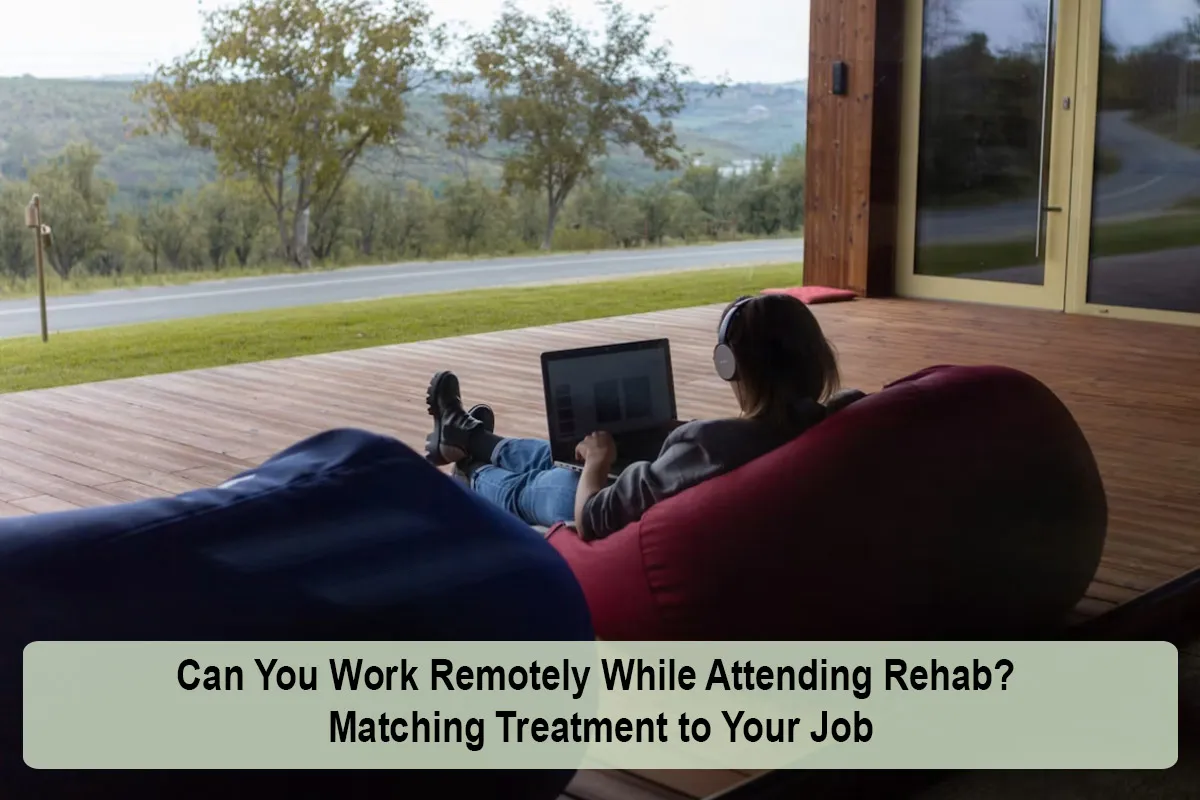
For many people, the biggest obstacle to getting help is not denial or cost. It is the job. A mortgage, a team that depends on you, a small business with no backup, or a license that took a decade to earn can make stepping away feel impossible. So the question "can I keep working during rehab?" is usually really a question about which kind of treatment fits alongside which kind of job. This guide answers it that way: by matching levels of care to realistic work schedules, and by explaining the special rules that apply if you work in a safety-sensitive or licensed profession.
If you are already heading into residential treatment and want to know about device rules, our separate guide on using a laptop while in rehab covers facility technology policies in detail. This article steps back to the earlier decision: what level of care makes sense given your work.
How much you can work depends almost entirely on how many hours treatment itself takes. The table below shows typical time commitments. Individual programs vary, but these ranges reflect how most programs structure care under the American Society of Addiction Medicine (ASAM) criteria.
| Level of Care | Typical Time in Treatment | Realistic Work Capacity |
|---|---|---|
| Medical detox | Around the clock, usually 3 to 10 days | None. Withdrawal is a medical event. |
| Residential | 24 hours a day, often 30 to 90 days | Minimal. Some executive programs allow limited, scheduled work time. |
| Partial hospitalization (PHP) | About 5 to 6 hours a day, 5 days a week | Very limited. Evenings only, and energy is often low. |
| Intensive outpatient (IOP) | At least 9 hours a week for adults, often 3 hours on 3 days | Most people can work full or part time, especially with evening tracks. |
| Standard outpatient | 1 to 2 sessions a week | Full-time work is typical. |
The practical takeaway is that intensive outpatient treatment is the level where working and treatment most often coexist. That is by design. IOP programs frequently offer morning, evening, and increasingly virtual tracks precisely so people can stay employed.
There is no universal answer, but clinicians tend to look at both sides.
Stable employment is one of the strongest forms of what researchers call recovery capital: the personal, social, and practical resources that help people sustain change. A job provides structure, income, identity, and a reason to get up in the morning. Losing a job during treatment can add financial stress and shame that make relapse more likely. For someone whose use has not significantly damaged their work performance, continuing to work while attending IOP can be a genuine strength.
Work can also be part of the problem. Some people use long hours to avoid difficult feelings, or they work in environments where drinking is part of the culture, such as sales, hospitality, finance, or entertainment. Others hold jobs with chronic stress that drove their use in the first place. And sometimes the person's use is severe enough that trying to keep working simply splits attention during the period when treatment needs it most.
A useful test is to ask: if I keep working, will I actually be present for treatment, or will I be answering emails in group? If the honest answer is the latter, a short period of leave followed by a step-down to IOP may lead to better long-term results for both your health and your career.
Many IOP programs run evening sessions, often starting around 5:30 or 6 p.m., three nights a week. Some offer weekend groups. When calling programs, ask specifically what time sessions end, how strict attendance rules are, and whether individual therapy can be scheduled outside group hours.
Telehealth has made intensive outpatient treatment more accessible for people with demanding schedules or long commutes. Virtual IOP typically uses video groups and individual sessions. It works well for many people, though it requires a private space and the discipline to fully disengage from work during sessions. Our guide to telehealth addiction treatment covers how to evaluate virtual programs and which levels of care they can safely replace.
Some residential programs designed for executives and professionals allow limited, scheduled access to devices and business center facilities. This can make a residential stay possible for someone who truly cannot disappear for a month. These arrangements should be structured by the clinical team, not negotiated as unlimited access. You can explore programs that serve this population through our professionals treatment page.
For certain jobs, the question is not just whether you can work during treatment but whether you are legally or professionally permitted to. These professions have formal return-to-work pathways, and understanding them early can protect both your career and your recovery.
Employees in safety-sensitive roles regulated by the U.S. Department of Transportation, including commercial truck and bus drivers, pilots, railroad workers, transit operators, and certain pipeline workers, fall under federal drug and alcohol testing rules in 49 CFR Part 40. After a violation, such as a positive test or a refusal, the worker must be removed from safety-sensitive duties and evaluated by a Substance Abuse Professional (SAP). The SAP recommends education or treatment, then confirms compliance before the worker can take a directly observed return-to-duty test. After returning, the employee must complete at least six unannounced follow-up tests in the first 12 months, and follow-up testing can continue for up to five years.
This means a DOT-regulated worker typically cannot continue safety-sensitive work during treatment after a violation. However, some employers can reassign workers to non-safety-sensitive duties during the process. If you seek treatment voluntarily before any violation, your employer's policy and any union agreement will shape what happens next, so review them carefully.
Commercial pilots have an additional pathway called the HIMS program, a long-standing FAA-recognized program that combines treatment, aeromedical evaluation, peer monitoring, and ongoing testing to help pilots regain medical certification after a substance use disorder. Pilots generally cannot fly while in active treatment, but the HIMS pathway is specifically designed to return them to the cockpit safely.
Most states have a Physician Health Program (PHP, not to be confused with partial hospitalization) that provides assessment, treatment referral, and long-term monitoring for doctors with substance use disorders, often as an alternative to disciplinary action. The outcomes are notable. A 2008 study in the BMJ by McLellan and colleagues followed 904 physicians across 16 state programs and found that 78 percent had no positive drug or alcohol test during five years of monitoring. Many physicians enter these programs voluntarily, which often protects their license.
Nurses, pharmacists, and dentists usually have similar state programs, often called alternative-to-discipline or peer assistance programs. Rules about working during treatment vary. In many cases, a professional will be asked to step away from clinical practice until an evaluation clears them, and then return with monitoring and practice restrictions.
Every U.S. state has a Lawyer Assistance Program that offers confidential help for attorneys with substance use or mental health concerns. These programs are generally separate from the bar's disciplinary system, and contacting them voluntarily does not by itself trigger discipline. Attorneys in IOP often continue practicing, though they need to think carefully about client obligations and court deadlines.
If you need time away, federal law may protect your position. The Family and Medical Leave Act can provide up to 12 weeks of unpaid, job-protected leave for treatment at eligible employers, and it can be taken intermittently, which is useful for IOP schedules. The Americans with Disabilities Act may require reasonable accommodations, such as schedule adjustments, for people in recovery. These protections have limits, especially for current illegal drug use. Our guide on your legal rights to time off for rehab explains eligibility and how to request leave.
Many employers also offer an Employee Assistance Program (EAP), which provides free confidential assessments and referrals. An EAP counselor can help you identify programs that fit your schedule and insurance without your manager learning the details.
Less than most people fear. If you are attending evening IOP and your performance is not affected, you may not need to disclose anything. If you need leave or schedule changes, you generally need to provide medical certification of a serious health condition, but not a detailed diagnosis. Health information is typically routed through human resources or a leave administrator rather than your direct supervisor.
The exception is regulated professions, where disclosure rules can be specific. If you hold a professional license or work in a DOT-regulated role, speak with your state's professional health program, a union representative, or an attorney familiar with your field before making disclosures.
Yes, many people work while attending rehab, most often at the intensive outpatient level and below. Residential and detox are designed to take work off the table for a reason, while evening, weekend, and virtual IOP tracks exist specifically to keep people employed. If you work in a safety-sensitive or licensed profession, formal return-to-work pathways like the DOT SAP process, HIMS, and state professional health programs will shape the timeline, and they often lead to strong outcomes. The goal is not to choose between your career and your recovery. It is to sequence them so both survive.
This article was reviewed by the RehabsNearMe Editorial Team for accuracy, clarity, and relevance. Information may be sourced from publicly available treatment resources, government agencies, and healthcare references where applicable.
Last reviewed: October 2026
Resources
 Resources
 Resources
 Resources