
 Resources
Positive Coping Skills for Teens: 44 Healthy Ways to Manage Stress
Published On 25-10-2026
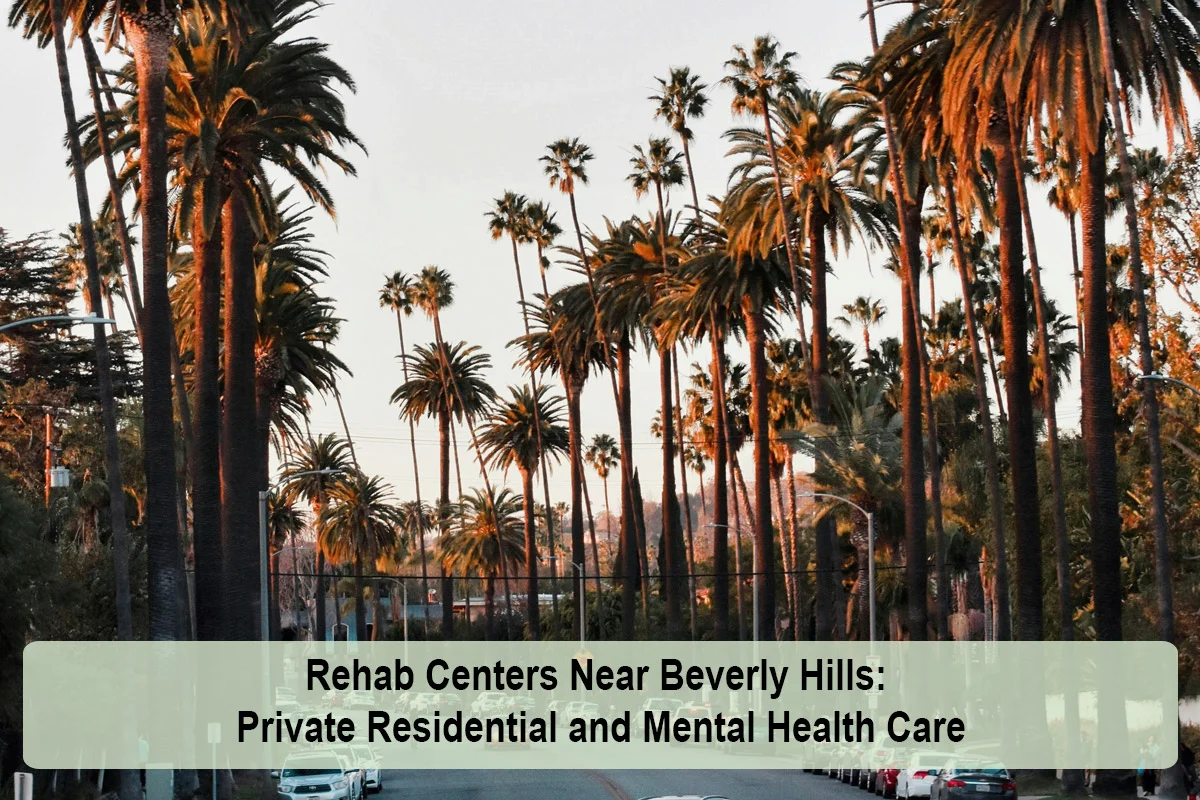
Beverly Hills is synonymous with privacy, and that is exactly what many people searching for rehab here want most. The residential programs in Beverly Hills are not large hospital-style campuses. They are small, licensed programs operating in private homes in the canyons and hillsides north of Sunset Boulevard, often serving executives, entertainment professionals, and people with complex mental health needs alongside addiction. This guide covers the programs listed in Beverly Hills, what makes mental-health-first residential care different from traditional rehab, how to evaluate a luxury program on clinical merit, and how California law shapes care in a crisis.
RehabsNearMe.ai lists three residential programs in Beverly Hills, all in the 90210 ZIP code:
| Program | Location | Primary Focus |
|---|---|---|
| Bridges to Recovery | Foothill Road | Residential mental health and co-occurring conditions |
| Safe Haven Recovery | Coldwater Canyon Drive | Residential treatment |
| 90210 Recovery | Summitridge Drive | Residential treatment |
All three list insurance acceptance. You can compare them on our Beverly Hills rehab directory.
Bridges to Recovery stands out because its primary focus is mental health. Founded in 2002, it operates two private residential homes and treats mood and anxiety disorders, trauma-related conditions, personality and psychotic disorders, and co-occurring substance use. Its listing describes a minimum of five individual therapy sessions per week, evidence-based approaches including cognitive behavioral therapy, EMDR, somatic experiencing, and family therapy, and Joint Commission accreditation. It also notes flexible technology policies for professionals and the option to bring approved pets. Typical stays run about 30 days, with 6 to 15 beds.
Safe Haven Recovery on Coldwater Canyon Drive and 90210 Recovery on Summitridge Drive both offer residential treatment in the hills above Beverly Hills. Review each listing for current levels of care, accreditation, and insurance details, and ask the programs directly about medical detox, psychiatric care, and medication for addiction treatment.
One of the most important distinctions in the Beverly Hills market is between programs that are primarily mental health treatment centers and those that are primarily addiction treatment centers. Both may treat co-occurring conditions, but their emphasis differs.
| Mental-Health-First Programs | Addiction-First Programs | |
|---|---|---|
| Primary clinical focus | Depression, anxiety, trauma, bipolar disorder, psychosis, personality disorders, burnout | Substance use disorders, withdrawal, relapse prevention |
| Typical client | Someone whose main struggle is psychiatric, with or without substance use | Someone whose main struggle is substance use, with or without mental health conditions |
| Detox capacity | Varies; some refer out for medical detox | Often offers detox on site |
| Therapy intensity | Frequently high individual therapy hours | Mix of group and individual therapy |
If substance use is driven by an underlying mental health condition such as depression, trauma, or bipolar disorder, a mental-health-first program may be the better fit. If the person needs medical detox or has a long history of substance use, an addiction-focused program with strong psychiatric care may be more appropriate. Our guide to bipolar disorder and addiction treatment discusses how co-occurring conditions shape the choice.
Beverly Hills programs often feature chef-prepared meals, pools, private rooms, and spa services. Those amenities can make treatment more comfortable, but they do not determine outcomes. When comparing programs, focus on:
Many people choose Beverly Hills programs for privacy. Federal law already provides strong protection: substance use treatment records are covered by 42 CFR Part 2 in addition to HIPAA, and programs generally cannot disclose that someone is a patient without written consent. Beyond legal protections, ask practical questions:
For people in entertainment, our guide to rehab centers near Hollywood covers industry-specific support from organizations such as MusiCares and the Entertainment Community Fund.
Some Beverly Hills programs offer flexible technology policies for clients who need limited, structured access to work. These arrangements can make residential treatment possible for someone who cannot fully disconnect. They should be clinically supervised, though, not unlimited. If work demands start to crowd out treatment, the arrangement is not serving recovery. You can explore relevant programs through our executives treatment page.
Daily life in a Beverly Hills residential program usually blends structured clinical work with wellness activities. A typical day might include a morning check-in or mindfulness session, individual therapy, a skills-based group such as cognitive behavioral or dialectical behavior therapy, a psychiatric appointment, and afternoon activities like fitness, yoga, art therapy, or an outing. Evenings often include support meetings, family calls, or free time. Small census sizes mean clients often receive more one-on-one attention than in larger facilities, which can be especially helpful for people with complex or co-occurring conditions.
Many Beverly Hills programs list a typical stay of about 30 days, though some clients stay longer depending on their needs and insurance authorization. Thirty days is often enough to stabilize symptoms and build a foundation, but rarely enough to complete recovery. The most important question is what comes next. Ask whether the program offers or partners with partial hospitalization, intensive outpatient, or sober living, and whether it coordinates with a therapist and psychiatrist where the client lives. For clients who travel from other cities or countries, a strong discharge plan with providers at home is essential. Our article on what happens after you finish rehab explains what good aftercare includes.
Families sometimes face situations where a loved one is in danger but refuses help. In California, a person can be placed on a 72-hour involuntary psychiatric hold, commonly called a 5150, if they are a danger to themselves or others or are gravely disabled because of a mental health condition. California's SB 43, signed in 2023, expanded the definition of "gravely disabled" to include people who cannot provide for their basic needs or personal safety because of a severe substance use disorder, with counties given time to implement the change. These are serious legal measures intended for emergencies, not routine admissions. Residential treatment programs are voluntary, and clients can generally leave, though programs may call for an emergency evaluation if a client appears to be in acute danger.
Our guide on what to do when someone refuses addiction treatment explains alternatives, including approaches like CRAFT that help families encourage treatment without coercion.
Before committing to any Beverly Hills program, ask the admissions team:
Clear, specific answers are a good sign. Vague responses about amenities in place of clinical details are a reason to keep looking.
Residential treatment in Beverly Hills is at the upper end of the market. All three listed programs indicate they accept insurance, which can substantially reduce costs when a plan's benefits apply, but network status and coverage vary. Verify benefits for the specific level of care, ask for prior authorization requirements, and request a written estimate. Our step-by-step guide to verifying insurance benefits for rehab explains what to ask. Veterans may want to note that Bridges to Recovery lists TriWest, which administers VA community care in some regions.
Beverly Hills is roughly 30 to 45 minutes from Los Angeles International Airport depending on traffic. Our guide to rehab centers near LAX offers arrival tips for families flying in.
Beverly Hills offers a small number of private, home-based residential programs focused on privacy and individualized care, including Bridges to Recovery, Safe Haven Recovery, and 90210 Recovery. The most important choice is often whether a person needs a mental-health-first program or an addiction-first program with strong psychiatric care. Look past the amenities to licensing, clinician credentials, medical capacity, medication access, and discharge planning, and verify insurance before admission. Privacy is protected by federal law, but practical policies matter too, so ask detailed questions before committing.
This article was reviewed by the RehabsNearMe Editorial Team for accuracy, clarity, and relevance. Information may be sourced from publicly available treatment resources, government agencies, and healthcare references where applicable.
Last reviewed: October 2026
Resources
 Resources
 Resources
 Resources