
 Resources
Teen Destroying Property at Home: Is It a Mental Health Crisis?
Published On 18-10-2026
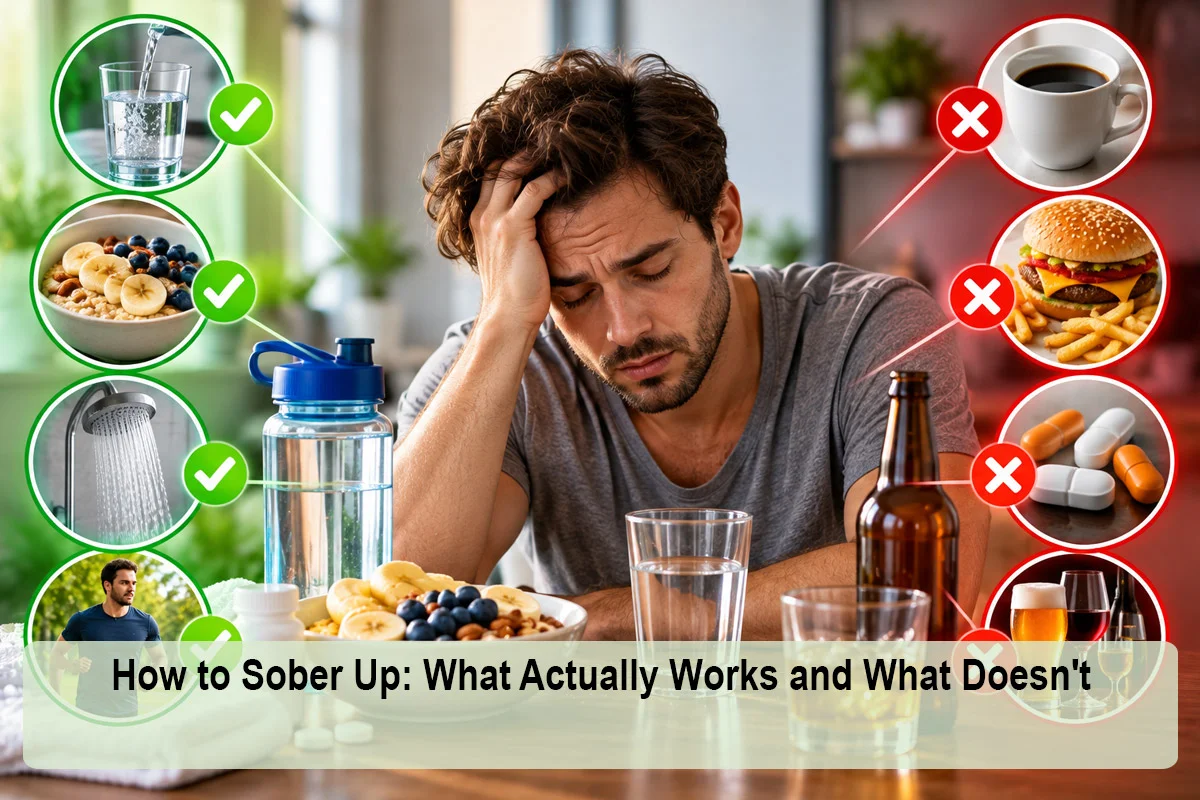
Almost everyone has heard a "sure-fire" way to sober up fast: strong coffee, a cold shower, a greasy meal, a run around the block. None of them actually lower the amount of alcohol in your blood. Only time does that. Some of these tricks can make a person feel more alert, which is arguably worse, because it can lead them to believe they are safe to drive or keep drinking when they are not. This guide separates myth from fact, explains what genuinely helps someone feel better and stay safe, and covers the warning signs that mean someone needs emergency care rather than a cup of coffee.
Once alcohol is in your bloodstream, your liver breaks it down at a fairly steady pace. On average, blood alcohol concentration (BAC) falls by about 0.015 g/dL per hour. You cannot meaningfully speed that up.
That rate is the key to everything else in this article. If someone's BAC is 0.08, the legal driving limit in most U.S. states, it will take roughly five to six hours to reach zero. At 0.15, it will take about ten hours. At 0.20, it could take thirteen hours or more. Those numbers do not change because someone drinks coffee or takes a shower.
There is also an important complication: BAC can keep rising after someone stops drinking. Alcohol that is still in the stomach and intestines continues to be absorbed, so BAC may peak 30 to 90 minutes after the last drink. Someone who seems only mildly drunk when they stop may become much more impaired over the next hour.
| Myth | What Actually Happens |
|---|---|
| Coffee sobers you up | Caffeine can make you feel more awake, but it does not lower BAC. The result is a wide-awake drunk person who may overestimate their abilities. |
| A cold shower helps | It can shock someone into feeling alert briefly, but it does not change BAC. For a very intoxicated person, cold water can also cause dangerous drops in body temperature or falls. |
| Eating will soak up the alcohol | Food before or during drinking slows absorption. Eating after drinking does little to lower BAC that is already in the blood. |
| Throwing up gets the alcohol out | Most alcohol is absorbed quickly, so vomiting removes little. Forcing vomiting is also risky, especially for someone who is very drunk. |
| Exercise sweats it out | Only a tiny amount of alcohol leaves through sweat and breath. Exercise while drunk also increases the risk of injury. |
| Sleeping it off makes you safe to drive | Sleep does not speed up the liver. After heavy drinking, BAC can still be over the legal limit the next morning. |
| Drinking lots of water flushes it out | Water helps with dehydration and how you feel later, but it does not significantly change how fast alcohol leaves your blood. |
While nothing makes you sober faster, some steps can help someone stay safe and feel less awful while time does its work.
Sometimes the question is not how to sober someone up but whether they are in danger. Alcohol poisoning happens when BAC rises high enough to suppress the brain functions that control breathing, heart rate, and temperature. It can be fatal.
According to the National Institute on Alcohol Abuse and Alcoholism, signs of alcohol poisoning include:
A person does not need to have all of these signs to be in danger. If you suspect alcohol poisoning, call 911 immediately. Do not wait to see if the person gets better.
Many states have Good Samaritan laws that provide some legal protection to people who call for help during an alcohol or drug emergency. Fear of getting in trouble should never stop someone from calling 911.
It is tempting to put a very drunk friend to bed and assume they will be fine in the morning. But because BAC can continue rising after the last drink, a person who goes to sleep heavily intoxicated can slip into dangerous territory while unconscious. They may also vomit while asleep and choke. If someone has been drinking heavily, check on them regularly, keep them on their side, and watch their breathing. If you cannot wake them, call 911.
If you are looking after someone who has had too much to drink, a few simple steps go a long way.
The next day, if it feels appropriate, a calm and caring conversation about what happened can be more helpful than judgment. If heavy drinking has become a pattern, our guide on how to talk to someone about going to rehab offers practical approaches.
People sometimes ask the same question about cannabis, especially after taking too much of an edible. As with alcohol, time is the main answer. Edibles can take one to two hours to take effect and their effects can last much longer than smoking, which is why people often take more before the first dose kicks in. Resting in a calm, safe place, staying hydrated, and having a trusted person nearby can help. Seek medical care for chest pain, severe vomiting, or extreme anxiety or confusion, and be especially careful with children or pets who may have eaten edibles by accident.
One of the most important practical points is the next morning. If you drank heavily, you may still be over the legal limit when you wake up, even if you feel mostly fine. A rough rule is to count about one hour per standard drink after your last drink before your BAC is likely to be near zero, and to add extra time if you drank a lot. A personal breathalyzer can give a rough estimate, but consumer devices are not always accurate. When in doubt, do not drive.
For people in jobs with alcohol testing, remember that tests such as EtG and PEth can detect drinking for days or weeks, long after you feel sober. Our article on how long alcohol stays in your system covers each test window.
Most people search for ways to sober up after an occasional heavy night. But if you regularly need to sober up quickly before driving, work, or family obligations, or if you often drink more than you intended, it may be a sign that drinking is becoming harder to control. Our guide to when drinking becomes alcohol use disorder explains the criteria clinicians use, and effective treatment, including medications that reduce cravings, is available.
If you drink heavily every day, do not try to stop suddenly on your own. Alcohol withdrawal can cause seizures and delirium tremens. A doctor or medical detox program can help you stop safely.
There is no fast way to sober up. The liver lowers blood alcohol at about 0.015 g/dL per hour, and coffee, cold showers, food, exercise, and sleep do not change that. They may make someone feel more alert, which can be dangerous if it leads to driving or more drinking. What helps is stopping drinking, staying hydrated, resting in a safe place, and having someone nearby. Know the signs of alcohol poisoning, call 911 if you see them, and never leave a very intoxicated person alone to sleep it off.
This article was reviewed by the RehabsNearMe Editorial Team for accuracy, clarity, and relevance. Information may be sourced from publicly available treatment resources, government agencies, and healthcare references where applicable.
Last reviewed: October 2026
Resources
 Resources
 Resources
 Resources