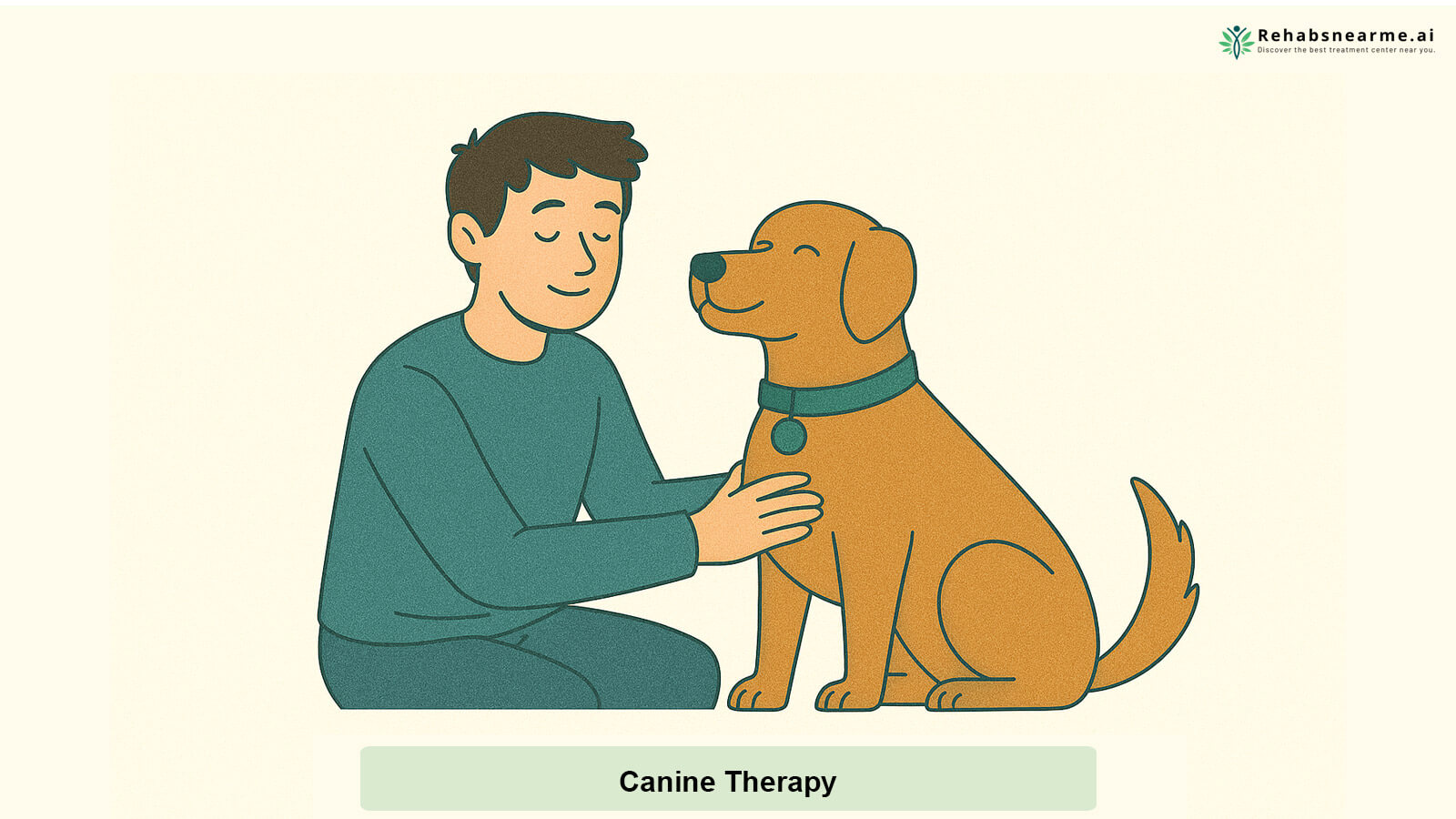
What Is Canine Therapy?
Canine therapy—also known as dog-assisted therapy—is a form of animal-assisted therapy that involves structured interaction with trained therapy dogs under the guidance of a licensed professional.
These sessions are designed to improve emotional well-being, reduce stress, and support mental health treatment. Therapy dogs are specifically trained to remain calm, responsive, and comforting in a variety of environments.
Why Dogs Are So Effective in Therapy
Dogs have a unique ability to connect with people on an emotional level. Their presence can:
- Lower stress hormones like cortisol
- Increase feel-good chemicals like oxytocin
- Create a sense of safety and trust
- Encourage emotional openness
For many people, interacting with a dog feels more natural and less intimidating than traditional therapy especially in the early stages of treatment.
What Canine Therapy Helps With
Canine therapy is used to support a wide range of mental health and behavioral challenges, including:
- Anxiety and panic disorders
- Depression and loneliness
- Trauma and PTSD
- Substance abuse and addiction recovery
- Social anxiety and communication challenges
- Emotional regulation difficulties
It is commonly included in both inpatient and outpatient treatment programs.
What Happens During a Canine Therapy Session?
Sessions are guided by a therapist and designed to feel natural and low-pressure.
You might:
- Spend time petting or sitting with a therapy dog
- Participate in simple activities like walking or playing
- Practice grounding techniques with the dog present
- Talk with a therapist while interacting with the dog
The dog acts as a bridge helping you feel more comfortable and engaged.
The Benefits Go Beyond Comfort
While canine therapy may seem simple, the impact can be significant:
- Reduced anxiety: Immediate calming effect
- Improved mood: Increased feelings of happiness and connection
- Greater emotional openness: Easier to talk and engage
- Stronger sense of safety: Especially helpful for trauma recovery
- Support during withdrawal and recovery: Helps reduce stress and cravings
These benefits make therapy more accessible especially for individuals who struggle with traditional approaches.
Canine Therapy vs General Animal Therapy
| Feature |
Canine Therapy |
Animal Therapy |
| Animals Used |
Dogs only |
Dogs, horses, and others |
| Environment |
Flexible (indoor/outdoor) |
Varies by program |
| Interaction Style |
Highly social and responsive |
Depends on animal type |
Dogs are often the most accessible and widely used therapy animals due to their adaptability and emotional responsiveness.
Who Can Benefit Most?
Canine therapy is especially helpful for:
- Individuals who feel overwhelmed in traditional therapy
- People with trauma or trust issues
- Teens and young adults who struggle to open up
- Anyone seeking a more calming, supportive environment
It meets people where they are—without pressure.
Cost of Canine Therapy
- Rehab programs: Often included in treatment plans
- Private sessions: $50–$150 per session
- Insurance: May cover therapy if part of a licensed program
Costs vary depending on the provider and setting.
How to Find Canine Therapy Near You
If you're searching for canine therapy near me, consider:
- Rehab and addiction treatment centers
- Mental health clinics offering animal-assisted therapy
- Certified therapy dog programs
- Holistic wellness centers
Make sure programs use trained therapy dogs and licensed professionals.
A Different Kind of Support
Sometimes, healing starts with something simple—like sitting next to a dog that just gets it.
No pressure. No expectations. Just connection.
Canine therapy offers that space—helping you feel safe enough to take the next step.
✔ Calming, Non-Judgmental Support
✔ Helps Reduce Anxiety & Stress
✔ Enhances Therapy Engagement
👉 Find canine therapy near you
👉 Explore treatment programs
👉 Start your recovery journey today