
Accreditation
- NAATP Member, CARF Accredited, LegitScript Approval
Hope Valley Health & Wellness is a residential addiction and mental health treatment program in Wasilla, Alaska, built specifically for Veterans and active-duty service members. Rather than operating a general-population rehab with a separate military track, Hope Valley centers its residential environment, clinical programming, and peer community around people who have served. The program provides medically supervised detox and residential treatment for substance use disorders involving alcohol, opioids, benzodiazepines, stimulants, and other drugs, while also addressing PTSD, depression, anxiety, trauma, and other co-occurring mental health concerns.
A notable feature of the program is its small residential model. Hope Valley reports a 5:1 client-to-clinician ratio, and clients live in gender-separated homes with no more than six residents per house on a private two-acre property. Many members of the clinical and leadership team are Veterans with healthcare backgrounds, giving the program a perspective shaped not only by behavioral health training but also by familiarity with military culture and the transition from service to civilian life.
Hope Valley's approach is particularly relevant for Veterans whose substance use is connected with PTSD or other effects of trauma. This matters because substance use disorders and PTSD frequently occur together among Veterans, and VA guidance recommends that the presence of one condition should not prevent a patient from receiving evidence-based treatment for the other.
Treatment plans are individualized rather than based on a single therapy. Hope Valley identifies Accelerated Resolution Therapy (ART) as a primary trauma intervention and also incorporates Seeking Safety, Contingency Management, Helping Men Recover, and Helping Women Recover. Medication-assisted treatment (MAT) is available when clinically appropriate, along with psychiatric evaluation and support for co-occurring mental health conditions.
The clinical schedule is supplemented by wellness and experiential services. Hope Valley reports offering trauma yoga, trauma-informed equine therapy led by a licensed therapist, acupuncture, massage, and gym access. These activities are used alongside, rather than as replacements for, clinical addiction and mental health treatment.
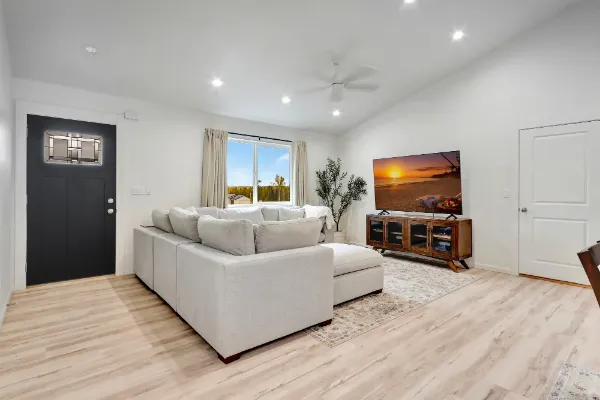
Hope Valley differs from a conventional large residential campus in the way clients live during treatment. Its Wasilla property contains small, home-like residences separated by gender, with each house accommodating a maximum of six residents. The model creates a smaller peer group in which Veterans and active-duty service members go through residential treatment alongside others with military experience.
This peer setting can be especially relevant for people who want a treatment environment centered on military experiences rather than having to explain those experiences within a general treatment population. Hope Valley's programming specifically addresses concerns associated with service, including combat-related PTSD, military sexual trauma, moral injury, chronic pain, substance use, and difficulties adjusting to civilian life.
Location can create an unusual barrier to residential treatment in Alaska, particularly for Veterans living in remote communities. Hope Valley addresses this during admission rather than leaving every transportation detail to the client.
For Veterans traveling from the continental United States, the facility says its admissions team can coordinate flights to Ted Stevens Anchorage International Airport and ground transportation from Anchorage to the Wasilla facility. The team also reports experience coordinating travel for Veterans coming from remote Alaska communities that may depend on regional or bush-aircraft service.
Hope Valley works with VA referrals and accepts TriWest and TRICARE for eligible Veterans and active-duty service members. Because authorization, network status, benefits, and out-of-pocket costs can vary, prospective clients should have the admissions team verify their individual coverage before admission.
Treatment does not end simply because a Veteran leaves the residential setting. Hope Valley offers lifetime aftercare through its alumni program, with continued peer support and workforce-development resources intended to help Veterans establish structure and purpose after treatment. The program specifically emphasizes reintegration into work, community, and civilian life as part of longer-term recovery support.
Hope Valley Health & Wellness's treatment focuses on substance use disorders, with particular emphasis on opioid and alcohol dependency alongside co-occurring mental health conditions.
Alcohol
Anger
Anxiety
Benzodiazepines
Bipolar
Co-Occurring Disorders
Cocaine
Depression
Drug Addiction
Eating Disorders
Heroin
Marijuana
Methamphetamine
Opioids
Post Traumatic Stress Disorder
Prescription Drugs
Schizophrenia
Synthetic Drugs
Trauma
Hope Valley Health & Wellness accepts adults of any gender, with therapy groups at the facility typically mixed rather than gender-separated.
Men
Women
Men and Women
Veterans
Clients at Hope Valley Health & Wellness can move between levels of care as needed starting in residential or day treatment and stepping down to IOP or outpatient without leaving the facility.
Residential
Detox
Co-Occurring Mental Health
Individual Treatment
Hope Valley Health & Wellness's clinical team combines evidence-based therapy with trauma-informed and holistic practices, tailoring treatment plans to each client's history and needs.
Gender-Specific
Evidence-Based
Medical
Recovery support at Hope Valley Health & Wellness continues after program completion through an active alumni network, including regular reunions and social get-togethers.
1-on-1 Counseling
Group Therapy
Family Therapy
Cognitive Behavioral Therapy (CBT)
Dialectical Behavior Therapy (DBT)
Acceptance and Commitment Therapy (ACT)
Acupuncture
Animal Therapy
Art Therapy
Equine Therapy
Experiential Therapy
Life Skills
Massage Therapy
Medication-Assisted Treatment
Mindfulness Therapy
Recreation Therapy
Reiki
Relapse Prevention Counseling
Seeking Safety
Tai Chi
Twelve Step Facilitation
Yoga
Recovery support at Hope Valley Health & Wellness continues after program completion through an active alumni network, including regular reunions and social get-togethers.
Mentoring and Peer support
Relapse Prevention Planning
Hope Valley Health & Wellness's campus includes indoor and outdoor spaces designed for both structure and downtime, from a fitness center and pool to walking trails and private bedroom options.
Air-Conditioned Rooms
Fitness Center
Outdoor Lounge
Private or Shared Rooms
Walk-in Closet
TV
Shared Bathroom
Transportation Assistance
Daily life at Hope Valley Health & Wellness includes a mix of peer support and physical activity, with clients regularly attending AA/NA meetings alongside yoga, fitness, and swimming.
AA/NA Meetings
Yoga
Adventure Outings
Hope Valley Health & Wellness's facility is wheelchair accessible, supporting clients with mobility needs throughout treatment.
Gender-specific groups
Healthy Meals are provided
Wheelchair Accessible
What people are saying
Find Hope Valley Health & Wellness on the map
Last reviewed: October 2026