
 Resources
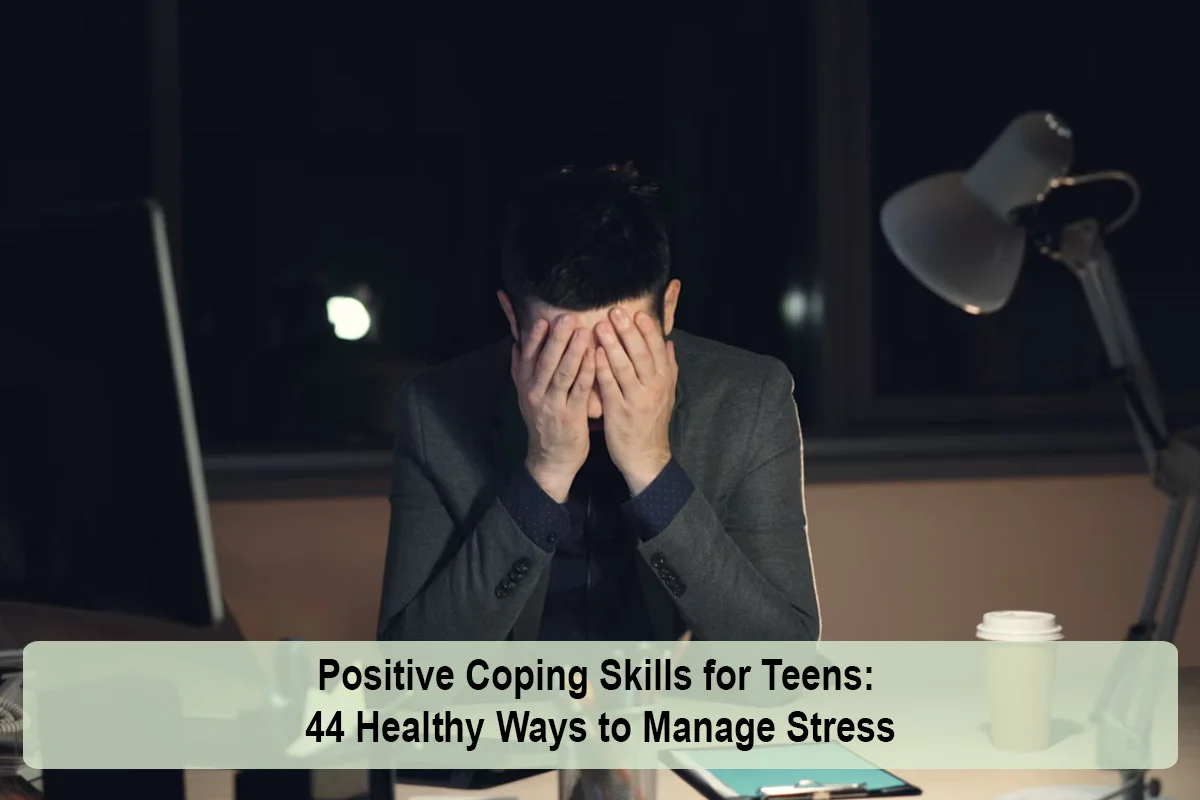
Positive Coping Skills for Teens: 44 Healthy Ways to Manage Stress
Published On 25-10-2026

When a teenager is struggling with depression, anxiety, substance use, or behavior problems, it is natural to focus on the teen alone. But teens do not live in isolation. They are part of families with patterns, roles, rules, and histories that shape how everyone thinks, feels, and behaves. Family systems theory is a way of understanding a teen's struggles in the context of the whole family. It is the foundation for many forms of family therapy used in teen counseling and treatment programs. This guide explains what family systems theory is, its key concepts, how therapists use it with teens, common family patterns it addresses, what sessions look like, and how families can benefit.
Family systems theory views the family as an emotional unit, a system in which each member affects and is affected by the others. Instead of seeing a teen's problem as belonging only to the teen, it looks at how family relationships, communication, and patterns may contribute to or maintain the problem, and how changes in the family can support healing. The approach is most closely associated with psychiatrist Murray Bowen, whose work in the mid-20th century shaped many later family therapy models.
The core idea is simple: when one part of a system changes, the whole system is affected. A teen's depression may affect parents' stress, which affects their marriage, which affects siblings, and so on. Likewise, positive changes in family communication can ripple outward and help the teen.
| Concept | What It Means | How It Can Show Up With Teens |
|---|---|---|
| Differentiation of self | The ability to stay emotionally connected to family while thinking and acting as an individual | A teen who can disagree with parents calmly vs. one who either gives in completely or explodes |
| Triangles | When tension between two people pulls in a third person | Parents in conflict who focus on a teen's behavior instead of their own relationship, or a teen caught in the middle of a divorce |
| Nuclear family emotional process | Patterns families use to manage stress, such as conflict, distance, or focusing on a child | Constant arguing, emotional withdrawal, or one parent overfunctioning |
| Family projection process | Parents passing their anxieties onto a child | A parent's own fears about failure becoming intense pressure on a teen |
| Multigenerational transmission | Patterns passed down across generations | Cycles of addiction, harsh discipline, or emotional cutoff repeating |
| Emotional cutoff | Managing unresolved conflict by distancing or cutting off contact | A teen who stops speaking to a parent, or family members who never discuss painful topics |
| Sibling position | Birth order can influence roles and behavior | An oldest child who takes on parental responsibilities |
| Societal emotional process | How broader social stress affects families | Financial pressure, discrimination, or community violence adding strain |
Therapists who use a family systems lens work to understand the patterns surrounding a teen's struggles and help the family create healthier ways of relating. Several family therapy models draw on systems ideas:
Family involvement matters in teen treatment. NIDA's guide to adolescent substance use disorder treatment lists as one of its core principles that families and the community are important aspects of treatment, and it identifies family-based approaches among evidence-based treatments for adolescents.
A genogram is a family tree that maps relationships, patterns, and significant events across at least three generations. It can reveal repeating patterns, such as addiction, mental illness, divorce, or conflict, that help families understand their current struggles.
The therapist helps the family see a problem from a new angle. For example, a teen's defiance might be reframed as a clumsy attempt to gain independence, or a parent's strictness as an expression of fear.
The therapist helps family members address conflicts directly with each other instead of pulling the teen into the middle.
Families learn to set healthy boundaries, such as parents making decisions together, siblings having their own space, and teens having age-appropriate independence.
Family members practice listening, using "I" statements, and expressing feelings without blame.
The therapist asks family members to discuss a real issue in session, observes the pattern, and coaches them to try a different approach in the moment.
Individuals, especially parents, learn to stay calm and clear in emotionally charged situations rather than reacting automatically.
Some sessions may include the whole family, while others involve just parents, just the teen, or other combinations, depending on the goals.
Ideally, key family members participate, but family systems work can still be helpful when some members are unwilling. Because a change in one person affects the whole system, even one parent learning new ways to respond can shift family patterns. Therapists can work with whoever is available.
| Individual Therapy | Family Systems Counseling |
|---|---|
| Focuses on the teen's thoughts, feelings, and behaviors | Focuses on relationships and patterns within the family |
| Teen meets with therapist alone | Family members meet together or in combinations |
| Builds individual coping skills | Changes how the family communicates and solves problems |
| Helpful for many personal struggles | Especially helpful when family conflict or patterns contribute to problems |
Many teens benefit from both, and treatment programs often combine individual therapy, such as CBT or DBT, with family therapy.
Look for licensed marriage and family therapists or other clinicians with training in family systems approaches. Many adolescent treatment programs include weekly family therapy and family programming. Browse programs with strong family involvement, our intensive family programs, and our adolescent treatment page, including Nexus Teen Academy in Scottsdale. Our article on how family therapy helps heal generational trauma explores related ideas. For free referrals, call the SAMHSA National Helpline at 1-800-662-4357.
Families often find that as patterns shift, the teen who was seen as "the problem" is not the only one who benefits. Parents, siblings, and the whole household can become calmer and more connected.
Family systems theory views a teen's struggles in the context of the whole family, recognizing that every member affects and is affected by the others. Key concepts include differentiation, triangles, emotional cutoff, family projection, and multigenerational patterns. In teen counseling, therapists use tools like genograms, reframing, boundary-making, and communication training to change family patterns that contribute to problems. NIDA identifies family involvement as an important part of adolescent treatment, and family systems counseling can help families heal together.
This article was reviewed by the RehabsNearMe Editorial Team for accuracy, clarity, and relevance. Information may be sourced from publicly available treatment resources, government agencies, and healthcare references where applicable.
Last reviewed: October 2026
Resources
 Resources
 Resources
 Resources