
 Resources
Rehab Loans and Medical Financing: What to Know Before You S...
Published On 07-09-2026
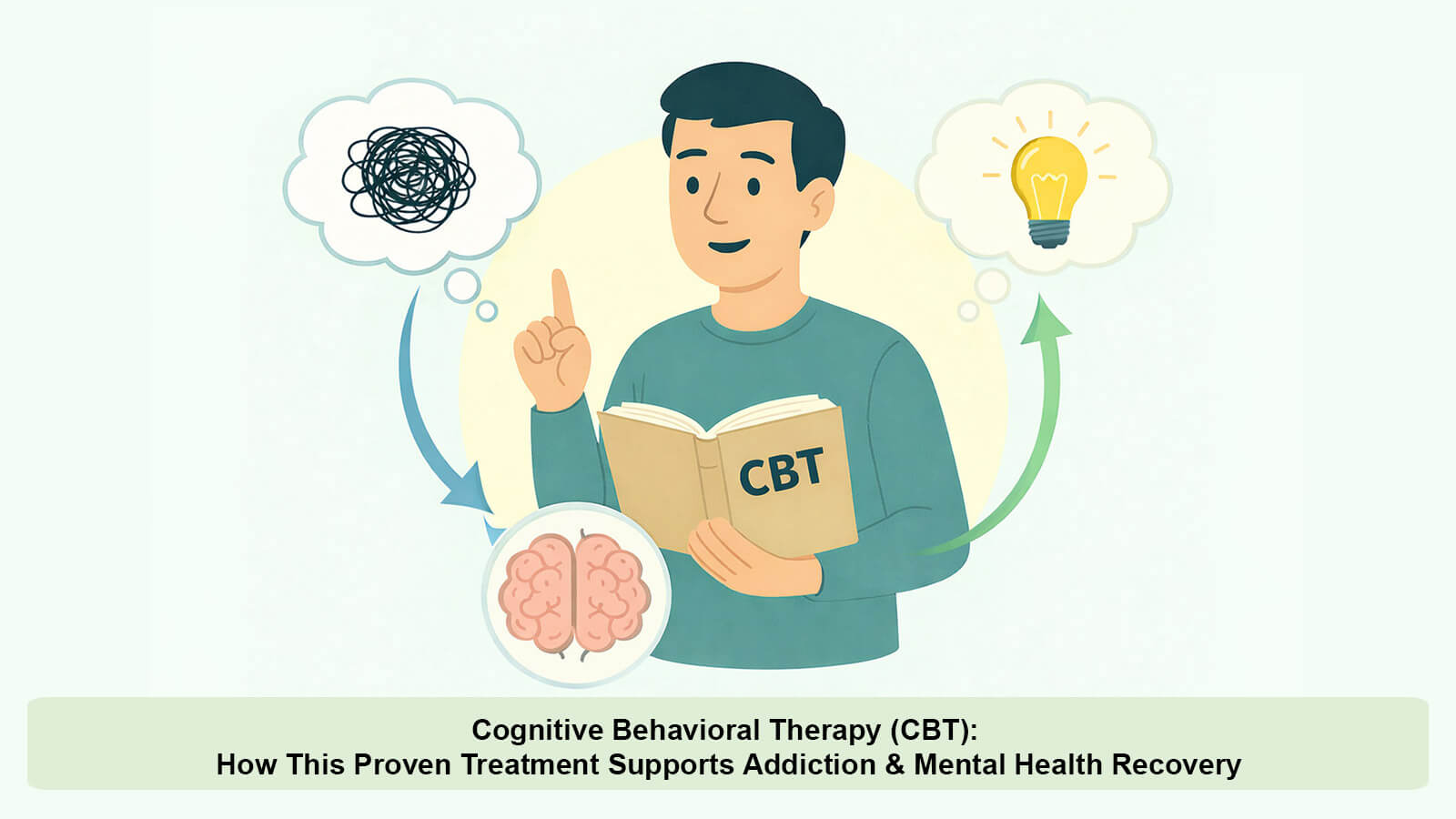
Of the dozens of therapy modalities available in addiction and mental health treatment, CBT is the one with the deepest research base behind it decades of controlled trials across nearly every condition it's used for. That track record is exactly why it's worth understanding on its own terms: what it actually involves session to session, what the evidence supports, and where it fits alongside other approaches.
CBT is built on a fairly simple premise: thoughts, emotions, and behaviors are interconnected, and changing distorted or unhelpful thought patterns can change how someone feels and acts. In practice, that means learning to notice automatic negative thoughts, examine whether they're accurate, and replace rigid or distorted thinking with something more grounded not as a one-time insight, but as a repeatable skill built through structured practice.
Unlike some therapy approaches built around open-ended exploration, CBT is deliberately structured and goal-oriented. Sessions typically have a specific focus, homework between sessions is common, and progress toward defined goals is tracked over time.
Most CBT treatment runs a defined, relatively short course commonly somewhere between 5 and 20 sessions, depending on the condition being treated and its severity, though longer courses aren't unusual for more complex or long-standing patterns.
CBT has one of the broadest applications of any therapy modality, with a substantial evidence base across:
| Category | Conditions |
|---|---|
| Substance use | Alcohol and drug use disorders, often combined with relapse-prevention planning |
| Mood and anxiety | Depression, generalized anxiety disorder, panic disorder, social anxiety, phobias |
| Trauma-related | PTSD, often through specialized CBT variants (see below) |
| Eating disorders | Bulimia nervosa and binge-eating disorder, where CBT is widely regarded as a first-line treatment |
| Other conditions | OCD, ADHD-related functioning, chronic pain management, grief |
For substance use disorders, CBT centers on the relationship between thoughts, cravings, and behavior. The National Institute on Drug Abuse identifies CBT as one of the more extensively studied and widely used behavioral treatments for addiction, with a particular focus on teaching people to recognize the specific thoughts and situations that precede relapse and to build alternative responses before a craving turns into use. It's commonly used both as a standalone approach and alongside medication-assisted treatment where applicable, rather than as a replacement for it.
Depression is one of the conditions with the strongest comparative research behind CBT. Multiple large meta-analyses have found CBT produces outcomes broadly comparable to antidepressant medication for many people with moderate depression, and some research suggests CBT's benefits may be somewhat more durable after treatment ends, since it teaches skills rather than relying on an ongoing prescription. This doesn't mean medication is unnecessary for many people, particularly with more severe depression, the combination of both tends to outperform either alone, and that decision is best made individually with a psychiatrist or prescriber.
Standard CBT is often adapted into specialized protocols for trauma specifically, each with its own dedicated research base:
These are more specialized and typically require additional therapist training beyond general CBT worth asking about specifically if trauma is a primary concern.
CBT isn't the only effective approach, and it isn't always the right fit on its own. It tends to work best for people who respond well to structure and are willing to engage in between-session practice. Some people benefit more from approaches that emphasize acceptance and emotional processing (like DBT or ACT) alongside or instead of CBT's more direct cognitive-restructuring focus a good clinician will match the approach to the person rather than defaulting to one modality for everyone.
This article was reviewed by the RehabsNearMe Editorial Team for accuracy, clarity, and relevance. Information may be sourced from publicly available treatment resources, government agencies, and healthcare references where applicable.
Last reviewed: August 2026
Resources
 Resources
 Resources
 Resources