
 Resources
Teen Destroying Property at Home: Is It a Mental Health Crisis?
Published On 18-10-2026
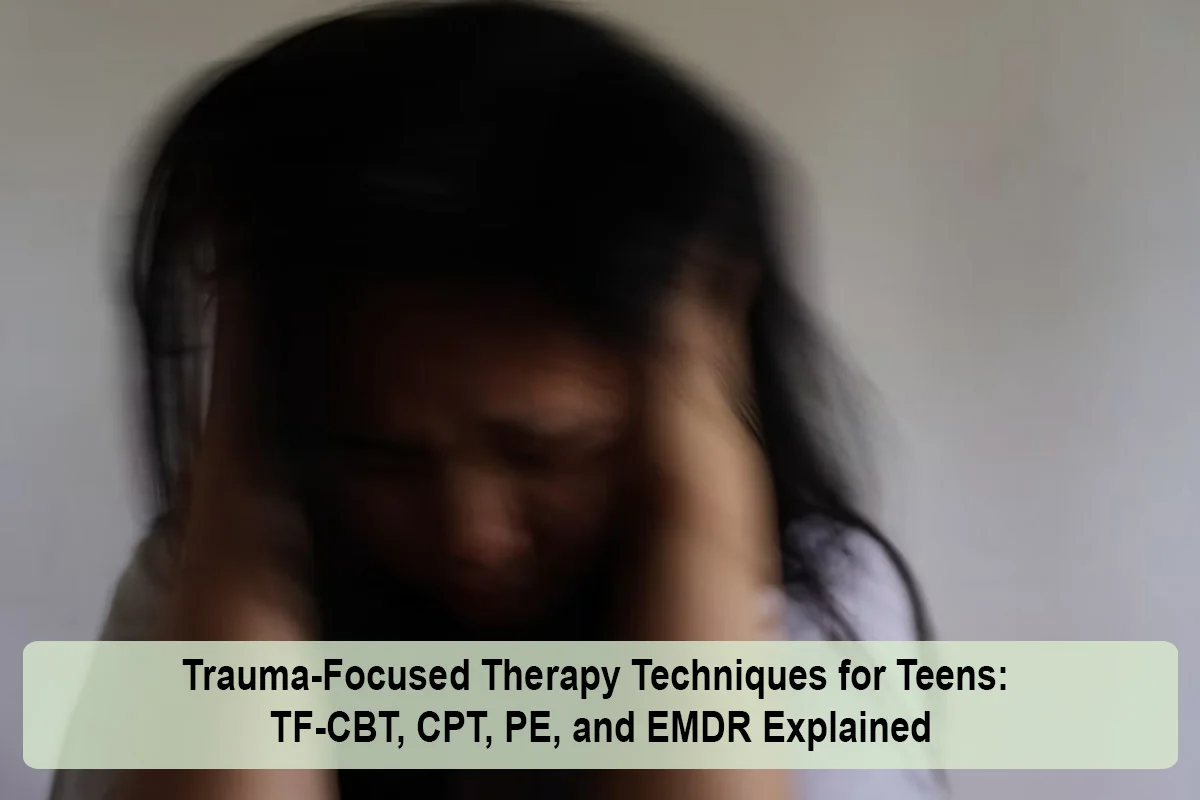
When a teenager has lived through something traumatic, such as abuse, violence, a serious accident, a sudden loss, or ongoing bullying, the effects can show up in sleep, mood, school, relationships, and behavior. Trauma-focused therapy is designed to help teens process what happened and regain a sense of safety and control. But parents often wonder what actually happens in these sessions. This guide explains the most common trauma-focused therapy techniques for teens, including TF-CBT, cognitive processing therapy, prolonged exposure, and EMDR, how each one works step by step, how long treatment usually takes, what to expect, and how to choose the right therapist.
For an overview of trauma symptoms and causes in teens, see our guide to teen trauma signs and effects.
Trauma is common in adolescence. CDC data shows that three in four high school students reported at least one adverse childhood experience in 2023. Most teens recover with support, but some develop post-traumatic stress disorder (PTSD). A large meta-analysis of studies on trauma-exposed children and adolescents found that about 16% developed PTSD, with higher rates among girls. The National Institute of Mental Health estimates that 5.0% of adolescents ages 13 to 18 have had PTSD at some point.
General talk therapy can help with many problems, but trauma-focused therapies use specific, structured techniques to target trauma memories, trauma-related beliefs, and avoidance, which are what keep PTSD symptoms going.
| Therapy | Main Focus | Typical Length | Best Suited For |
|---|---|---|---|
| TF-CBT | Coping skills, trauma narrative, caregiver involvement | About 8 to 25 sessions | Children and teens, especially with caregiver support |
| Cognitive Processing Therapy (CPT) | Changing unhelpful beliefs about the trauma | About 12 sessions | Teens stuck in guilt, shame, or self-blame |
| Prolonged Exposure (PE) | Reducing avoidance by gradually facing memories and reminders | About 8 to 15 sessions | Teens with strong avoidance and PTSD symptoms |
| EMDR | Reprocessing memories using bilateral stimulation | Varies, often 6 to 12 or more sessions | Teens who struggle to talk in detail about trauma |
| DBT skills | Emotion regulation and distress tolerance | Ongoing, often alongside trauma work | Teens with self-harm or intense emotional swings |
Session counts vary depending on the teen, the type of trauma, and co-occurring conditions.
TF-CBT is one of the most researched treatments for children and adolescents with trauma. It combines cognitive behavioral techniques with family involvement. Its components are often summarized with the acronym PRACTICE:
Caregiver involvement is a key strength of TF-CBT, since a supportive parent is one of the strongest protective factors for traumatized teens.
CPT focuses on how trauma changes the way a teen thinks about themselves, others, and the world. Common "stuck points" include self-blame ("I should have stopped it"), distrust ("No one can be trusted"), and danger ("Nowhere is safe").
Some versions include writing a detailed account of the trauma, while others focus only on beliefs.
Avoidance is one of the main things that keeps PTSD going. PE helps teens gradually and safely approach the memories and situations they have been avoiding so that fear decreases over time.
An adolescent version of PE adapts the approach for teens, with more involvement from parents and age-appropriate pacing.
EMDR helps the brain reprocess traumatic memories so they become less distressing. While briefly focusing on a memory, the teen follows the therapist's hand movements with their eyes or experiences other bilateral stimulation, such as alternating taps or sounds.
EMDR can appeal to teens who find it hard to talk at length about what happened.
Many structured trauma therapies are designed to be relatively short, often around 8 to 16 weekly sessions, though some teens need more time, especially with complex or repeated trauma, co-occurring depression, or substance use. Stabilization comes first: if a teen is in crisis or unsafe, the therapist will focus on safety and coping skills before processing trauma memories.
Trauma-focused therapy can feel hard at times. Teens may feel more upset or tired after some sessions, especially when working on trauma memories, before symptoms start to improve. A skilled therapist paces treatment carefully, teaches coping skills first, and checks in regularly. Let the therapist know if symptoms are getting much worse or if your teen has thoughts of self-harm.
Teens with severe PTSD, self-harm, substance use, or an unsafe home environment may need more support than weekly therapy. Intensive outpatient and residential programs can deliver trauma-focused therapy several times a week alongside skills groups, family therapy, and psychiatric care. Learn more in our guide to residential mental health treatment.
Learn more on our trauma treatment, PTSD treatment, and trauma-specific therapy pages, and in our guide to trauma-focused therapy in addiction treatment. Browse programs on our adolescent treatment page, including Nexus Teen Academy in Cave Creek and Nexus Teen Academy in Scottsdale. For free referrals, call the SAMHSA National Helpline at 1-800-662-4357. If your teen is in crisis, call or text 988.
Trauma-focused therapy techniques for teens include TF-CBT and its PRACTICE components, cognitive processing therapy for stuck beliefs, prolonged exposure to reduce avoidance, and EMDR to reprocess memories, supported by grounding, DBT skills, and creative approaches. Many of these treatments are structured and time-limited, often around 8 to 16 sessions, though complex trauma can take longer. With a trained therapist and involved caregivers, teens can process what happened and regain a sense of safety and control.
This article was reviewed by the RehabsNearMe Editorial Team for accuracy, clarity, and relevance. Information may be sourced from publicly available treatment resources, government agencies, and healthcare references where applicable.
Last reviewed: October 2026
Resources
 Resources
 Resources
 Resources