
 Resources
Teen Destroying Property at Home: Is It a Mental Health Crisis?
Published On 18-10-2026
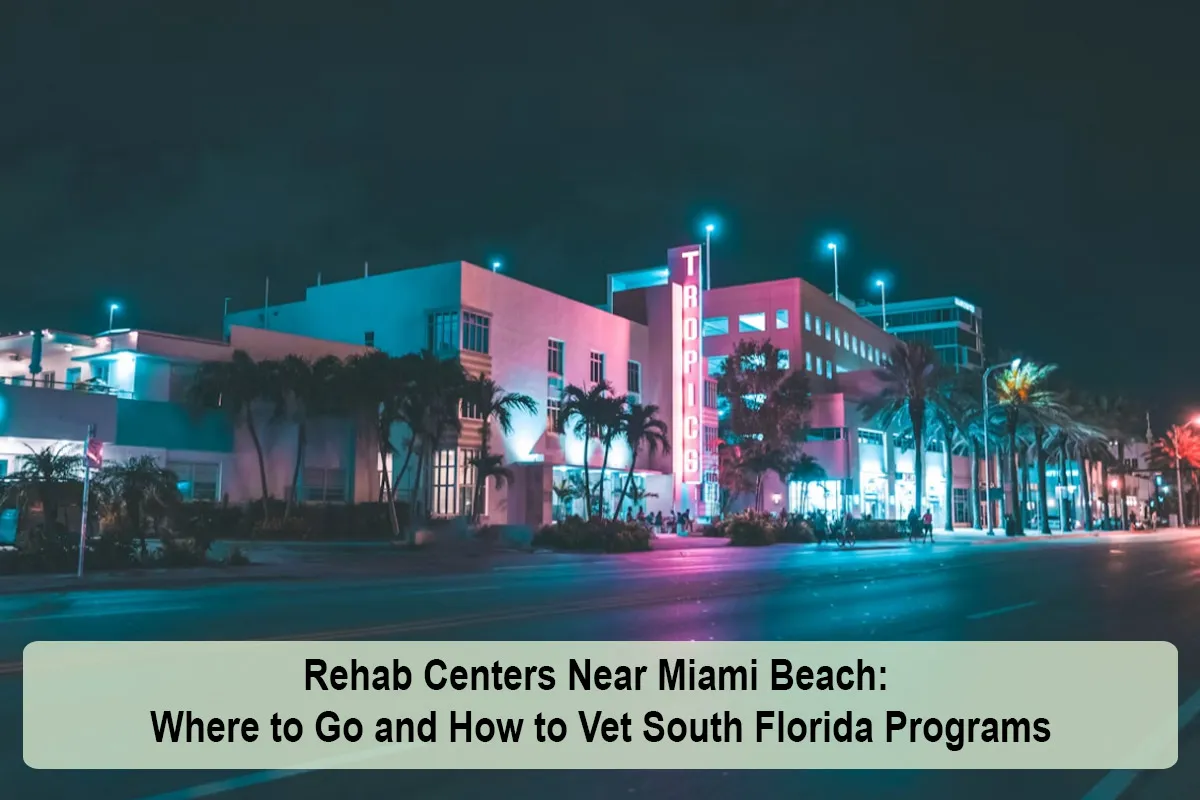
Search for rehab near Miami Beach and you will get a flood of results, ads, and phone numbers that all promise immediate help. What you will not always get is a clear picture of where the licensed programs actually are, or how to tell a solid South Florida provider from one that exists mainly to fill beds. This guide takes a different approach from a standard list. It explains why most people from Miami Beach end up in treatment on the mainland, which programs sit within reach, and how to use Florida's own consumer protection laws to vet a program before anyone signs an admission form.
Miami Beach is a barrier island city connected to the mainland by a handful of causeways. Its economy runs on tourism, hospitality, and nightlife, especially in South Beach. For residents and long-term visitors whose substance use grew inside that environment, staying on the island for treatment can mean staying within walking distance of the people, bars, and routines that are part of the problem.
That is one reason clinicians often recommend some physical distance. Relapse research consistently identifies people, places, and situations associated with past use as major triggers in early recovery. You do not need to fly across the country to get that distance. A program 20 to 60 miles north in Broward or Palm Beach County can provide a meaningfully different environment while keeping family close enough to participate in treatment. Our guide to common triggers during early recovery explains why environment matters so much in the first months.
RehabsNearMe.ai does not currently list a residential program on Miami Beach itself. The closest listed options run north along the Atlantic coast. Drive times assume average traffic from central Miami Beach via Interstate 95 and will vary considerably during rush hour.
| Program | City | Approximate Distance | Typical Drive |
|---|---|---|---|
| Compassion Behavioral Health | Hollywood | About 20 miles | 30 to 40 minutes |
| 1st Step Behavioral Health | Pompano Beach | About 35 miles | 45 to 60 minutes |
| FHE Health | Deerfield Beach | About 40 miles | 50 to 65 minutes |
| LifeSkills South Florida | Deerfield Beach | About 40 miles | 50 to 65 minutes |
| Caron Ocean Drive | Delray Beach | About 50 miles | 60 to 75 minutes |
| Guardian Recovery Immersion | Delray Beach | About 50 miles | 60 to 75 minutes |
| Headwaters, Hanley Center, Beachway, Beachside | West Palm Beach | About 70 miles | 75 to 90 minutes |
| Futures Recovery Healthcare | Tequesta | About 90 miles | 1.5 to 2 hours |
For people arriving by air rather than driving up from the Beach, we have separate guides for rehab centers near Miami International Airport and Fort Lauderdale-Hollywood International, which cover arrival logistics in detail. This article focuses instead on the decision that matters most in South Florida: choosing a program you can trust.
South Florida has one of the densest concentrations of addiction treatment providers in the United States. That density brings real benefits, including choice, specialized programs, and a large recovery community. It also created, during the 2010s, a well-documented pattern of fraud that became known as the "Florida Shuffle."
In the typical version of the scheme, a recruiter would find someone with good commercial insurance, often from out of state, and offer free travel, free housing, or even cash. The person would be placed in a sober home that received kickbacks for sending residents to a particular treatment program. The program would bill the insurer heavily, frequently for expensive urine testing, and when benefits ran out the person would be discharged, sometimes back to active use, and the cycle would start again somewhere else. Palm Beach County formed a dedicated Sober Homes Task Force in response, and state and federal prosecutors brought a significant wave of cases.
The industry today looks very different, and most South Florida programs operate legitimately. But the history explains why Florida now has some of the most specific consumer protection rules in the country, and families can use those rules to their advantage.
Florida Statute 817.505 makes it a crime for any person or facility to offer, pay, solicit, or receive any commission, bonus, rebate, kickback, or bribe, in cash or in kind, in exchange for referring patients to a health care provider or facility. The law is deliberately broad. It covers not only direct payments but benefits such as free rent, waived fees, or other perks used to steer someone into a program. Violations are felonies, and legal analysis of the 2019 amendments noted penalties ranging from $50,000 to $500,000 per violation.
What this means for you in practice: if anyone offers you something of value for choosing a specific program, such as a free flight, free housing, cash, or paid insurance premiums, treat it as a serious red flag. A legitimate program does not need to pay you to accept care.
Florida Statute 397.4873 addresses the sober home side of the problem. Under this law, a licensed treatment provider may not refer a patient to, or accept a referral from, a recovery residence unless that residence holds a valid certificate of compliance under state law and is actively managed by a certified recovery residence administrator. Since mid-2019, providers that violate this rule face administrative fines of $1,000 per occurrence, and repeat violations can lead to suspension or revocation of their license.
In Florida, recovery residence certification is handled through the Florida Association of Recovery Residences (FARR), which is the state-approved credentialing entity. So if a treatment program recommends a sober home for step-down housing, you can check whether that home is certified. If it is not, the program should not be making that referral. For a broader look at how these homes fit into the continuum, see our comparison of sober living versus residential treatment.
Congress also passed the Eliminating Kickbacks in Recovery Act (EKRA) in 2018 as part of the SUPPORT Act. EKRA extends anti-kickback rules to recovery homes, clinical treatment facilities, and laboratories regardless of whether the payer is private insurance or a government program. Florida families therefore have both state and federal law on their side.
Before committing to any program, work through these checks. Most take only a few minutes online or by phone.
Families in Miami Beach sometimes reach the point where a loved one's use has become dangerous, but the person will not agree to treatment. Florida has a specific legal tool for this situation. The Marchman Act allows family members and others to petition the court for involuntary assessment and stabilization when someone has lost self-control over substance use and poses a risk to themselves or others. Miami-Dade County handles these petitions through its court system. Our article on what to do when someone refuses addiction treatment explains how the Marchman Act works, when it is appropriate, and how it compares to other approaches such as CRAFT.
Many Miami Beach residents work in restaurants, bars, clubs, and hotels, industries where alcohol and drug use are often normalized and where shifts run late into the night. Planning a return to work after treatment deserves real attention. Some people need to change roles or employers entirely, at least for a period. Discuss this openly with the treatment team so the discharge plan addresses it. Federal law may also protect your job while you are in treatment, and our article on your legal rights to time off for rehab covers FMLA and ADA basics.
Miami-Dade is one of the most bilingual regions in the country. If Spanish or another language is the primary language for the person or their family, ask programs specifically whether therapy and family sessions can be delivered in that language, not just whether some staff members speak it.
Miami Beach has a large and visible LGBTQ+ community, and research shows higher rates of substance use disorders in LGBTQ+ populations, often connected to minority stress. If this applies to you, ask how programs handle housing assignments, whether they offer affirming group therapy, and whether staff receive specific training. Our guide to LGBTQ+ affirming rehab covers what to look for.
A reasonable middle path for many Miami Beach residents is residential treatment in Broward or Palm Beach County followed by outpatient care closer to home. The residential stay provides distance and structure, while stepping down to an intensive outpatient program in Miami allows the person to rebuild daily life with support. Others prefer to leave Florida entirely, particularly if their social network on the Beach is closely tied to their use. Both approaches can work. What matters most is continuity: a clear plan for each transition so the person is never discharged into a gap.
For most Miami Beach residents, the right treatment is a short drive north rather than across the causeway. South Florida offers strong options, and the market has matured considerably since the worst years of the Florida Shuffle. Florida law now gives families concrete tools for vetting programs: a patient brokering statute that bans kickbacks, a referral rule that ties sober homes to certification, and a licensing system you can check. Use them. A good program will welcome the questions.
This article was reviewed by the RehabsNearMe Editorial Team for accuracy, clarity, and relevance. Information may be sourced from publicly available treatment resources, government agencies, and healthcare references where applicable.
Last reviewed: October 2026
Resources
 Resources
 Resources
 Resources