
 Resources
Teen Destroying Property at Home: Is It a Mental Health Crisis?
Published On 18-10-2026
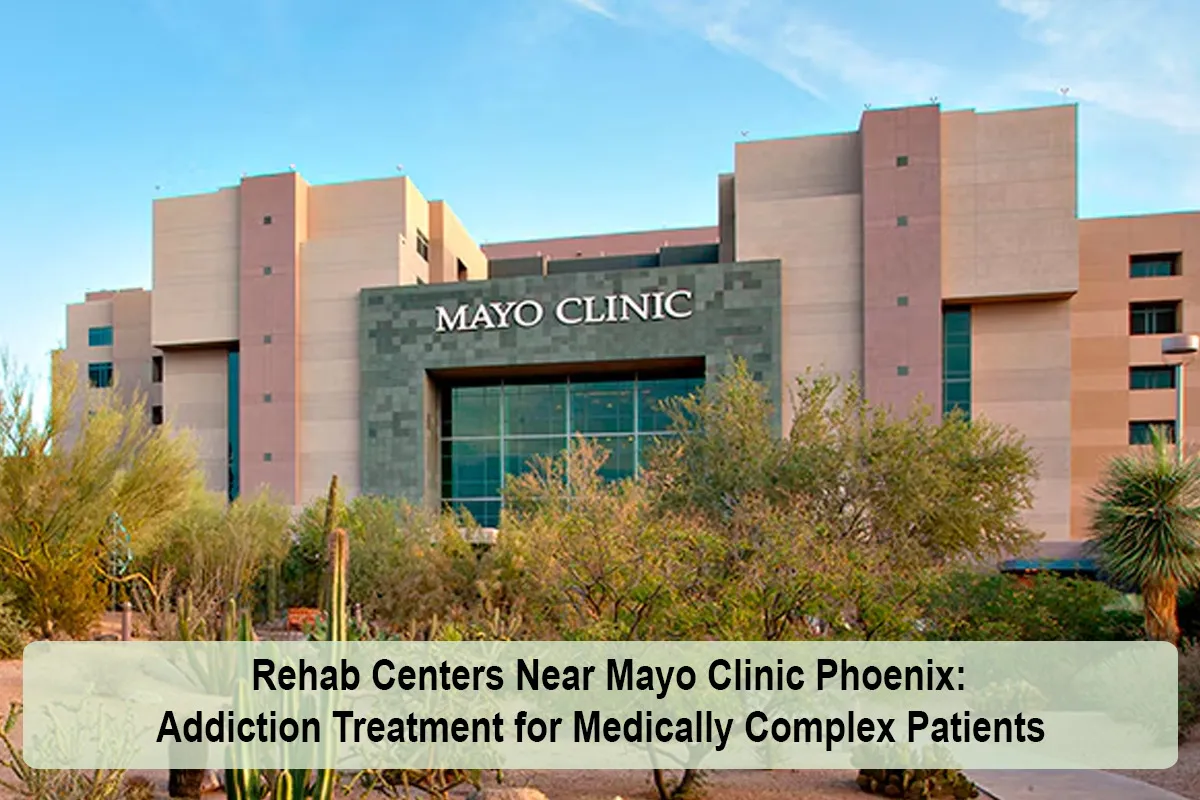
People search for rehab near Mayo Clinic Phoenix for different reasons than they search near an airport or a beach town. Often someone is already a Mayo patient. They may be under evaluation for a liver transplant, recovering from a major surgery, managing chronic pain, or dealing with a serious medical condition that has become tangled up with alcohol or drug use. Sometimes a family member has flown in for a loved one's care and realized that addiction is part of the picture. This guide is written for that situation: finding addiction treatment in the north Phoenix and Scottsdale area that can work alongside complex medical care rather than in isolation from it.
Mayo Clinic's Phoenix campus, home to Mayo Clinic Hospital, is located on East Mayo Boulevard in the far north of the city, near the Loop 101 freeway and 56th Street. It is separate from Mayo's Scottsdale campus on Shea Boulevard, which primarily houses outpatient clinics and research facilities. The Phoenix campus sits close to the Desert Ridge area and within a short drive of north Scottsdale and Cave Creek.
That geography is convenient. Several residential and outpatient addiction programs listed on RehabsNearMe.ai are within roughly 15 to 40 minutes by car, which makes it realistic for a patient to attend follow-up medical appointments at Mayo while in treatment, or for a program's medical staff to coordinate directly with Mayo physicians.
| Area | Programs Listed | Approximate Drive from Mayo Phoenix |
|---|---|---|
| Cave Creek | Soberman's Estate; Nexus Teen Academy (Mesquite) | 20 to 30 minutes |
| Scottsdale | The Hope House; Cornerstone Healing Center; Plugged In Recovery; Nexus Teen Academy (Oak) | 15 to 30 minutes |
| Phoenix | Cornerstone Healing Center Phoenix; Rock View Recovery Residential; Nirvana Recovery | 20 to 40 minutes |
| Peoria | Horizon Recovery Deer Valley | 25 to 35 minutes |
Browse all area listings through our Scottsdale and Phoenix pages. If you are flying in, our guides to rehab centers near Scottsdale Airport and Phoenix Sky Harbor cover travel logistics. The rest of this article focuses on the medical questions that make treatment near a major hospital different.
Alcohol-associated liver disease is now the leading reason people receive liver transplants in the United States. Mayo Clinic in Arizona operates a major transplant center, and many families first confront the need for addiction treatment during a transplant evaluation.
For decades, most U.S. transplant programs required six months of documented sobriety before a patient with alcohol-related liver disease could be listed. A 1996 survey found that 85 percent of liver transplant programs enforced this rule. The original reasoning was partly medical, since a damaged liver can sometimes recover enough with abstinence to avoid transplant, and partly behavioral, since six months was seen as proof a person would not return to drinking.
The evidence has since complicated that picture. A landmark European study published in 2011 showed a significant survival benefit from early transplant for carefully selected patients with severe alcohol-associated hepatitis. A 2021 study in JAMA Surgery examining 163 patients at Johns Hopkins found that those transplanted with less than six months of abstinence had one-year survival, graft survival, and relapse-free survival that were statistically similar to those who waited. Many centers now evaluate candidates individually rather than applying a fixed six-month cutoff.
Whether or not a center uses a strict timeline, transplant teams almost universally want to see engagement in alcohol use disorder treatment, a relapse prevention plan, and a strong support system. For patients in this situation, the right addiction program is one that can:
Before choosing a program, ask the transplant team what documentation they need and share that list with the admissions staff. A program that has worked with transplant candidates before will understand the stakes.
Major surgery is another common pathway into addiction treatment near large medical centers. A widely cited 2017 study in JAMA Surgery by Brummett and colleagues found that about 6 percent of patients who had never used opioids before surgery were still filling opioid prescriptions three to six months afterward, a pattern the researchers called new persistent opioid use. The rate was similar for minor and major procedures, suggesting the risk was driven more by patient factors than by the surgery itself.
Not everyone with persistent use develops opioid use disorder, and not everyone who needs long-term pain management is misusing medication. The distinction matters. A good assessment looks at whether use has become compulsive, whether the person is taking more than prescribed or seeking additional sources, and whether use continues despite harm. For people whose post-surgical use has crossed that line, treatment often involves transitioning to buprenorphine, which treats both pain and opioid use disorder, rather than abrupt tapering.
Programs that understand chronic pain are especially important here. Our guide to rehab for chronic pain explains how integrated programs approach pain management without relying on the substances that caused the problem.
People being treated at a major hospital often have conditions that affect what kind of addiction treatment is safe. Heart disease, diabetes, advanced liver disease, recent surgery, cancer treatment, or pregnancy can all change the picture. Before a residential program accepts someone with complex medical needs, it should complete a thorough pre-admission review.
The American Society of Addiction Medicine criteria describe a range of care intensities. In the current fourth edition, Level 3.7 refers to medically managed residential care with 24-hour nursing and daily physician availability. Level 4 is medically managed inpatient treatment, typically in a hospital setting, for people who need acute medical care alongside withdrawal management. A person with unstable vital signs, a history of severe withdrawal seizures, or active medical complications may need Level 4 before stepping down to residential care.
Alcohol withdrawal deserves particular attention. For people with liver disease, withdrawal management requires careful medication choices because the liver processes many of the drugs used for it. Our article on why alcohol withdrawal can require medical supervision covers the monitoring protocols involved.
Addiction treatment records have historically been protected more strictly than other medical records under a federal regulation known as 42 CFR Part 2. This protection exists for good reason, since people fear discrimination if their treatment history is disclosed. It also created real barriers to coordinated care.
In 2024, the Department of Health and Human Services finalized changes to Part 2 that align it more closely with HIPAA. Under the updated rule, a patient can sign a single consent that allows their substance use treatment records to be shared for treatment, payment, and health care operations, with compliance required by February 2026. In practical terms, this makes it easier for a rehab program and a hospital team to share information when the patient agrees.
Patients should still expect to sign release forms. Ask the program early which forms it needs, and ask the Mayo care team the same. Getting consents in place during admission prevents delays later when the transplant team or surgeon needs an update.
Mayo Clinic draws patients from across the country and internationally. Families who come to Phoenix for one person's medical treatment sometimes find themselves also arranging addiction treatment for that person or for someone else in the family. That can be overwhelming, especially far from home.
A few practical steps help. First, ask whether Mayo's social work or patient services staff can help identify local treatment resources, since they field these requests regularly. Second, consider whether residential treatment in Arizona or a program near home makes more sense for the long term. Local treatment keeps the person close to their medical team, while a program near home makes family involvement and aftercare easier. Third, verify insurance carefully. A plan that covers Mayo care may have different network rules for behavioral health, and many plans route addiction treatment through a separate behavioral health administrator.
Many patients at large medical centers are older adults, and addiction in later life often looks different. It may involve prescription medications such as benzodiazepines or opioids, alcohol use that has increased after retirement or bereavement, or interactions between substances and multiple prescription drugs. Older adults also metabolize alcohol and many medications more slowly, which raises the risk of falls, confusion, and dangerous interactions. When evaluating programs, ask whether they have experience with older adults and whether groups include people of similar ages. You can explore programs focused on this population through our older adults treatment page.
Choosing a rehab near Mayo Clinic Phoenix is less about proximity and more about medical partnership. The best program for a transplant candidate, a surgical patient with persistent opioid use, or someone managing a serious chronic illness is one that can document progress, coordinate with the hospital team, manage complex medications safely, and recognize when a patient needs a higher level of medical care. Fortunately, the north Phoenix and Scottsdale area has multiple options within a short drive. Ask detailed questions, get the right consents signed early, and make sure the addiction program and the medical team are working from the same plan.
This article was reviewed by the RehabsNearMe Editorial Team for accuracy, clarity, and relevance. Information may be sourced from publicly available treatment resources, government agencies, and healthcare references where applicable.
Last reviewed: October 2026
Resources
 Resources
 Resources
 Resources