
 Resources
Teen Destroying Property at Home: Is It a Mental Health Crisis?
Published On 18-10-2026
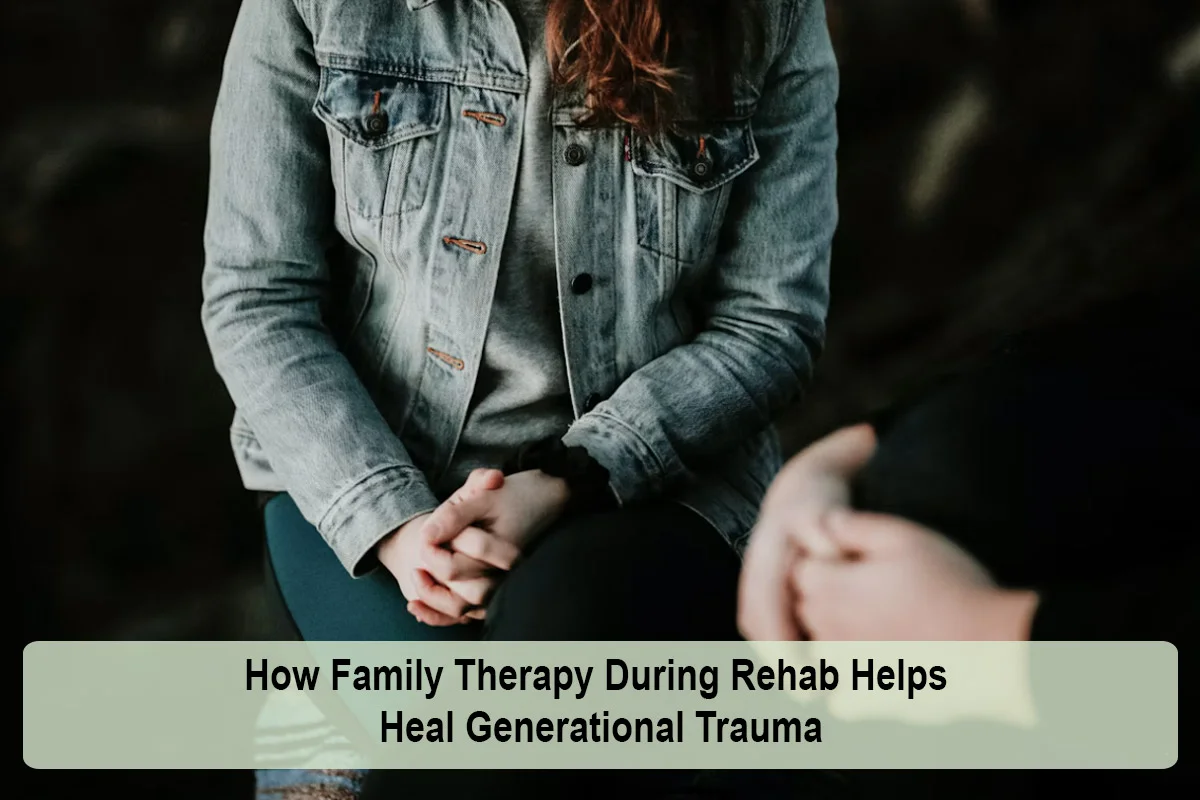
Addiction rarely begins with one person, and it rarely affects only one person. Many people entering treatment grew up in homes shaped by a parent's drinking or drug use, by violence, by silence, or by unresolved grief, and many of those parents grew up the same way. Patterns pass down: how a family handles conflict, whether feelings are spoken or hidden, who takes care of whom, and what people reach for when life hurts. This is often called generational or intergenerational trauma. Family therapy during rehab is one of the few moments when an entire family can step back, see those patterns clearly, and begin changing them. This guide explains how that works.
Generational trauma describes the way the effects of trauma can be passed from one generation to the next. It does not require that every family member experienced the same event. Instead, the effects travel through:
Federal data show how widespread these experiences are. A 2023 analysis published in the Centers for Disease Control and Prevention's Morbidity and Mortality Weekly Report, drawing on survey data from all 50 states and the District of Columbia, found that about 64 percent of U.S. adults reported at least one adverse childhood experience (ACE), and about 17 percent reported four or more. Growing up with household substance use was the second most common ACE, reported by about 26.5 percent of adults, behind only emotional abuse.
Research on ACEs has consistently linked them to higher risks of depression, anxiety, chronic disease, and substance use disorders in adulthood. This is one of the clearest ways generational patterns show up: a child exposed to a parent's addiction faces a higher risk of developing problems themselves, and the cycle can continue.
Family systems theory views a family as an interconnected unit in which each person's behavior affects everyone else. When addiction enters a family, members often adapt in ways that help the family survive in the short term but cause harm over time. Commonly described roles include:
| Role | What It Looks Like | Long-Term Cost |
|---|---|---|
| Caretaker or enabler | Covers for the person, manages consequences, keeps the peace | Exhaustion, resentment, loss of self |
| Hero | High achiever who makes the family look good | Perfectionism, anxiety, difficulty asking for help |
| Scapegoat | Acts out and draws attention away from the addiction | Trouble at school or with the law, own substance use |
| Lost child | Withdraws and stays invisible | Isolation, difficulty forming relationships |
| Mascot | Uses humor to relieve tension | Difficulty expressing real feelings |
These roles are not diagnoses, and real families are more complicated. But many people recognize themselves in them, and seeing the roles can help families understand why everyone behaves as they do. Our guide to codependency explores the caretaker pattern in more depth.
The Substance Abuse and Mental Health Services Administration's guidance on the importance of family therapy in substance use disorder treatment, based on its Treatment Improvement Protocol 39, emphasizes that substance use disorders affect the entire family and that involving family members can improve treatment engagement and outcomes. Family therapy addresses the system the person will return to after rehab, not just the individual.
If the individual changes but the family system does not, old patterns often pull them back. If the family heals alongside them, home can become a source of support rather than a trigger.
Many families have never talked openly about addiction, abuse, or loss across generations. A therapist can help create a family history, sometimes using a tool called a genogram, a family tree that maps relationships, substance use, mental health, and significant events across three or more generations. Seeing that a grandfather drank heavily, a mother learned to stay silent, and a son now uses opioids to numb anxiety can shift the conversation from blame to understanding.
Understanding how patterns were passed down does not excuse harmful behavior, but it can soften shame and anger. Parents can see how their own childhood shaped their parenting. Adult children can see their parents as people who were also hurt. This context often makes honest accountability possible.
Families affected by addiction often communicate through avoidance, criticism, or explosive conflict. Family therapy teaches skills such as listening without interrupting, expressing feelings directly, using "I" statements, and resolving conflict without escalation.
Trust broken by lies, broken promises, or relapses does not return quickly. Therapy helps families set realistic expectations and recognize small, consistent changes as meaningful.
Families learn the difference between support and enabling, and how to set boundaries that protect everyone's wellbeing without cutting off love.
When children are part of the family, therapy can explain addiction in age-appropriate ways, reassure them that it is not their fault, and help parents build more stable routines. Protecting the next generation is often what motivates parents most.
Formats vary by program, but common elements include:
You can explore programs that emphasize this work on our family therapy page and family involvement approach page.
Much of the healing happens between sessions. Families can support change by:
Our guide on what to avoid saying to someone struggling with addiction offers practical language guidance.
Family therapy is not appropriate in every situation. If there is ongoing domestic violence, abuse, or a family member who poses a danger, joint sessions can put someone at risk. Survivors of abuse should never be pressured to reconcile with an abuser. In these cases, therapists may work with family members separately, focus on safety planning, or help the person in treatment build a chosen family of supportive relationships instead. A good program screens for safety before beginning family sessions.
Patterns that developed over generations will not change in 30 days. Family therapy during rehab is a starting point. Many families continue with outpatient family therapy, individual therapy for each member, and support groups such as Al-Anon, Nar-Anon, and Adult Children of Alcoholics after discharge.
The SAMHSA National Helpline at 1-800-662-4357 provides free, confidential referrals for individuals and families. For a mental health crisis, call or text 988.
Generational trauma passes through parenting patterns, unspoken family rules, coping behaviors, and stress biology, and addiction is one of its most common forms. CDC data show that about one in four U.S. adults grew up with household substance use. Family therapy during rehab helps families name these patterns, replace blame with understanding, build new communication skills, rebuild trust, set healthy boundaries, and protect children from repeating the cycle. SAMHSA's guidance supports involving families in treatment. Healing takes longer than one program, but it often starts there.
This article was reviewed by the RehabsNearMe Editorial Team for accuracy, clarity, and relevance. Information may be sourced from publicly available treatment resources, government agencies, and healthcare references where applicable.
Last reviewed: October 2026
Resources
 Resources
 Resources
 Resources