
 Resources
Teen Destroying Property at Home: Is It a Mental Health Crisis?
Published On 18-10-2026
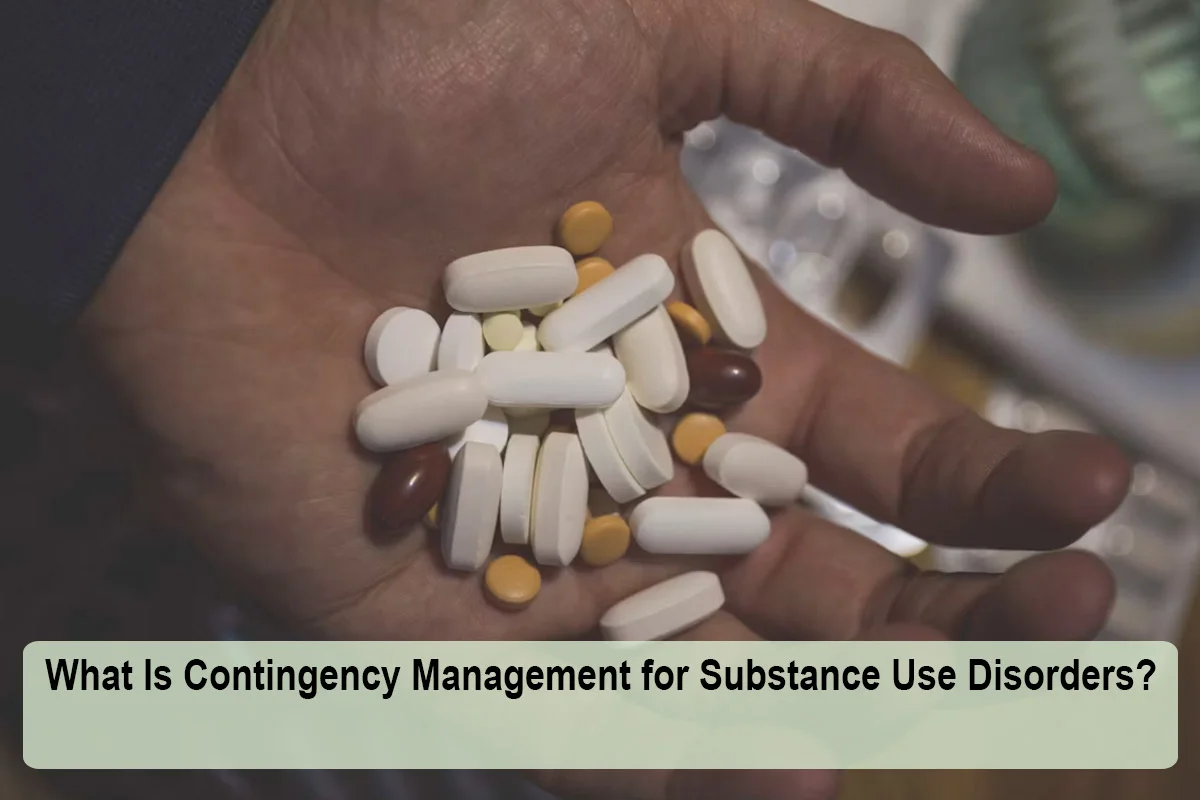
Ask most people what addiction treatment looks like and they will describe talk therapy, medication, or group sessions. Few have heard of the approach that decades of research consistently rank as the single most effective treatment for stimulant use disorder specifically: paying people, in small amounts, to stay abstinent. Contingency management (CM) sounds almost too simple to be real medicine. The evidence says otherwise.
Contingency management is a behavioral treatment that provides tangible incentives, cash, vouchers, gift cards, or prize drawings, contingent on objectively verified evidence of a target behavior, most commonly a negative drug test confirming abstinence. It is grounded in basic behavioral psychology: consistently and immediately rewarding a desired behavior increases the likelihood that behavior continues. In addiction treatment specifically, CM applies this principle directly to the behavior that matters most, staying substance-free, rather than relying solely on insight, willpower, or the more delayed rewards recovery eventually provides.
This is the most important context for understanding why CM has gained serious clinical and policy attention recently. Unlike opioid use disorder, there are currently no FDA-approved medications for stimulant use disorder, meaning cocaine and methamphetamine use disorder have no equivalent to buprenorphine or methadone. With stimulant-involved overdose deaths having risen sharply in recent years, increasingly overlapping with fentanyl contamination in what researchers have called a distinct wave of the overdose crisis, the absence of an approved medication treatment makes CM's strong evidence base unusually consequential. According to addiction medicine researchers, CM has accumulated nearly four decades of empirical support specifically for stimulant use disorder, more evidence than exists for many other behavioral interventions in the field.
This context matters because it reframes what CM is actually competing against clinically. For opioid use disorder, CM is one strong option among several, alongside buprenorphine, methadone, and naltrexone, each with a robust evidence base of its own. For stimulant use disorder, CM is not one option among several comparably strong choices; according to addiction medicine researchers, it is currently the single most effective treatment available, full stop, precisely because no pharmacological alternative exists. This distinction matters enormously for anyone specifically seeking help for cocaine or methamphetamine use, since a program that does not offer CM may genuinely be missing the strongest evidence-based option available for that particular condition.
Meta-analyses of contingency management studies report mean effect sizes in the range of Cohen's d equal to 0.46 to 0.68, generally interpreted as medium to large therapeutic effects, a notably strong result for a behavioral intervention. A more recent systematic review found something particularly striking: for cocaine abstinence specifically, CM's real-world effects consistently exceeded what would be predicted based on the value of the incentives alone, suggesting the mechanism involves more than simple payment, possibly including social reinforcement from staff and peers, and the structure of the reward schedule itself. Research has also found CM effective for alcohol, cannabis, tobacco, and opioid use, and for improving broader treatment engagement, including medication adherence, not just abstinence directly.
Programs vary in exact structure, but research has identified several factors specifically associated with stronger outcomes: CM tends to work best when the contingent condition is abstinence confirmed by an objective urine drug screen rather than self-report, when incentive values are meaningful rather than token, and when reinforcement happens promptly after the verified behavior rather than being delayed. This last point matters more than it might seem; behavioral research consistently shows that the closer in time a reward follows a behavior, the more effectively it reinforces that behavior, which is part of why CM programs are typically built around frequent testing rather than a single monthly or milestone-based reward.
| Element | How It Typically Works |
|---|---|
| Target behavior | Most commonly a negative urine drug screen, though treatment attendance and medication adherence are also used |
| Testing frequency | Often two to three times per week, allowing for regular, timely reinforcement |
| Incentive structure | Voucher-based (redeemable for goods or services) or prize-based (a drawing with escalating odds for consecutive negative tests) are the two most common models |
| Incentive value | Typically modest; the Department of Veterans Affairs' program averages about $200 in incentives across a 12-week course of treatment |
| Escalating reinforcement | Many programs increase reward value for consecutive negative tests, and reset it after a missed or positive test, to reinforce sustained abstinence specifically |
The Department of Veterans Affairs offers the largest, most established real-world example in the United States, with more than 100 VA medical centers running CM programs and over 6,300 veterans having received this treatment since 2011, primarily using a prize-based model with twice-weekly testing over a 12-week course.
CM represents one of the more striking research-to-practice gaps in addiction medicine. Despite decades of strong evidence, implementation outside the VA system has remained limited. Barriers include historical uncertainty about whether paying patients for abstinence violated federal anti-kickback regulations, a concern that newer state-level policy guidance has increasingly clarified does not apply to clinically structured CM programs, along with practical challenges around funding, staff training, and the specific infrastructure needed to run frequent, reliable drug testing. A small number of states, including California and Washington, have approved Medicaid section 1115 waivers specifically to fund CM programs, with several more states, including Delaware, Hawaii, and Montana, following, and Michigan and Rhode Island with applications pending. This state-by-state expansion suggests CM's practical availability is growing, even though it remains far from universal.
There is also a cultural barrier worth naming honestly. Paying someone to not use drugs can strike people as counterintuitive, or even as rewarding behavior that should simply be expected rather than incentivized. This reaction, while understandable, runs counter to what the research actually shows: behavioral science has long demonstrated that immediate, tangible reinforcement changes behavior more reliably than delayed, abstract rewards, and recovery's genuine long-term benefits, better health, stronger relationships, financial stability, are exactly the kind of delayed rewards that are hardest for the brain to weigh against an immediate craving. CM does not replace those long-term benefits; it bridges the gap until they become tangible enough to sustain change on their own.
Consider someone in outpatient treatment for methamphetamine use disorder, a condition with no approved medication option. Alongside counseling, they participate in a CM program: twice-weekly urine tests, with a prize drawing for each negative result, the odds and potential value increasing with each consecutive clean test. A missed test or a positive result resets the escalation, creating an immediate, tangible incentive tied directly to the specific behavior that matters most. This does not replace counseling or address the underlying reasons someone developed a stimulant use disorder in the first place, but research consistently shows it meaningfully improves the odds that a person stays engaged and abstinent long enough for those other components of treatment to take hold.
Our guide to motivational interviewing covers a different, complementary evidence-based approach often paired with CM, and our guide to what evidence-based treatment actually looks like is a useful resource for evaluating a program's overall clinical approach.
This article was reviewed by the RehabsNearMe Editorial Team for accuracy, clarity, and relevance. Information may be sourced from publicly available treatment resources, government agencies, and healthcare references where applicable.
Last reviewed: September 2026
Resources
 Resources
 Resources
 Resources